United Nations Security Shuttle
Property
Copyright: MOONext Consortium / © 01/01/2092
History
The construction of GlassCity as a new administrative capital for the entire planet at a secret location, though secured against digital attacks and leaks posed an additional logistical challenge in maintaining its anonymity from a supply and migration point of view.
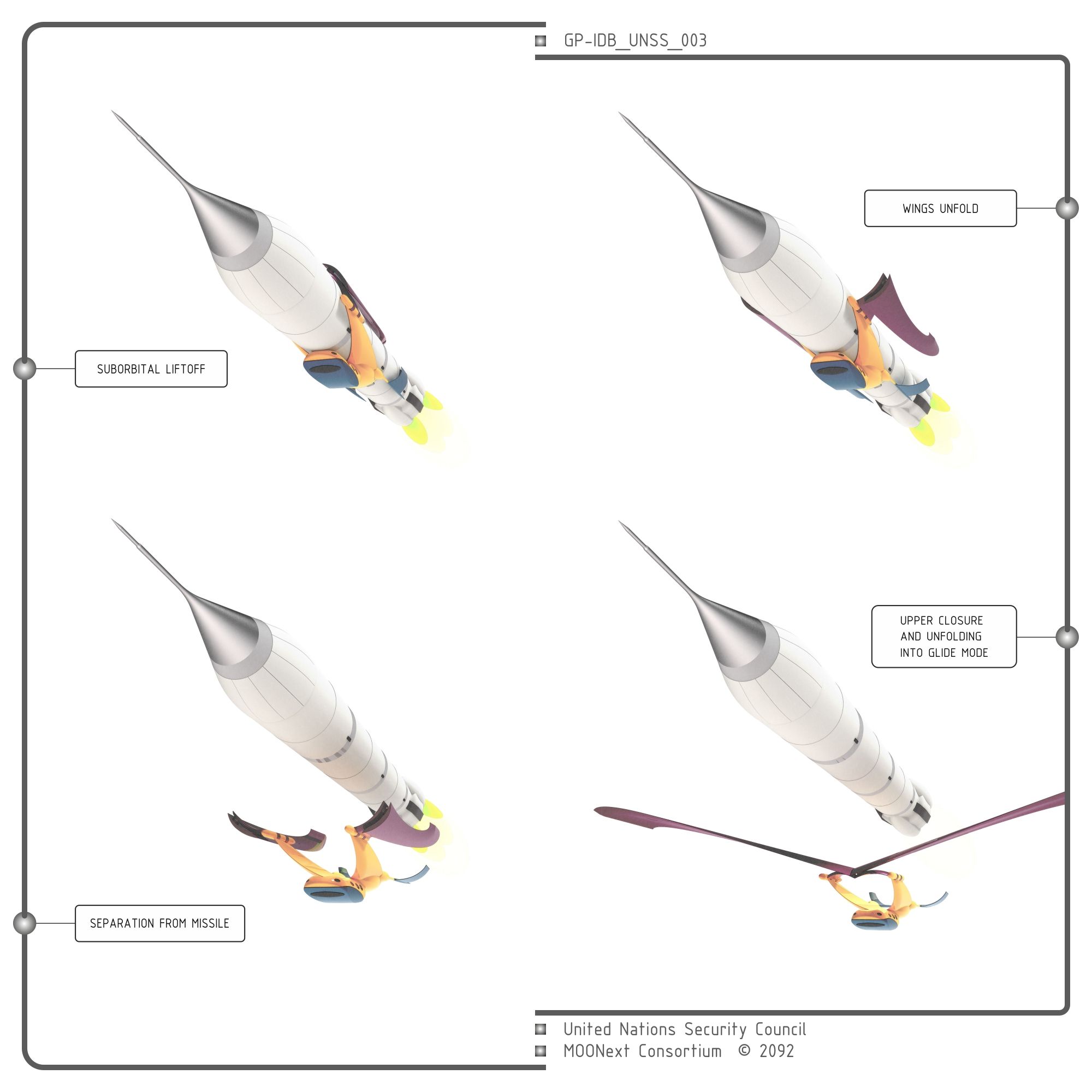
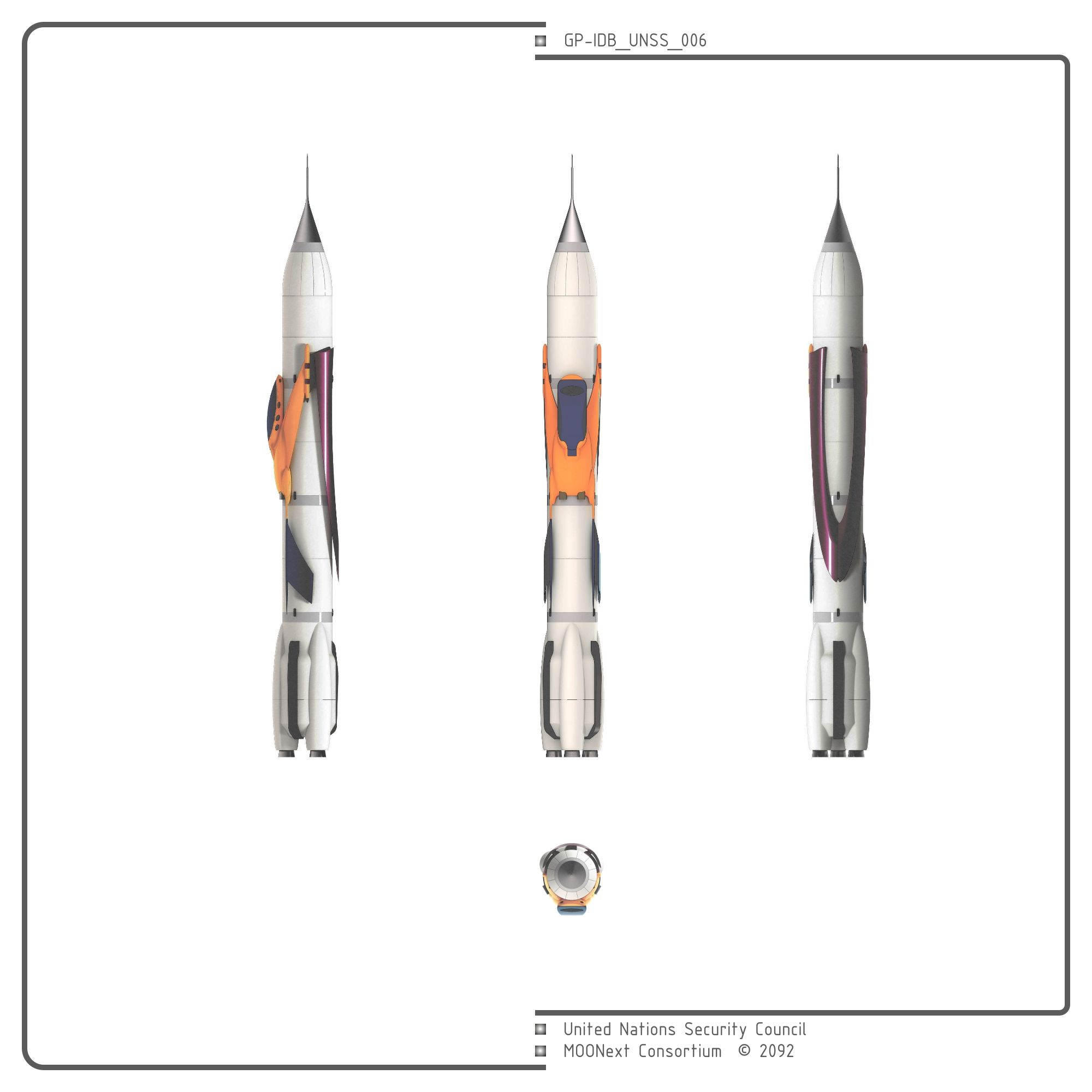
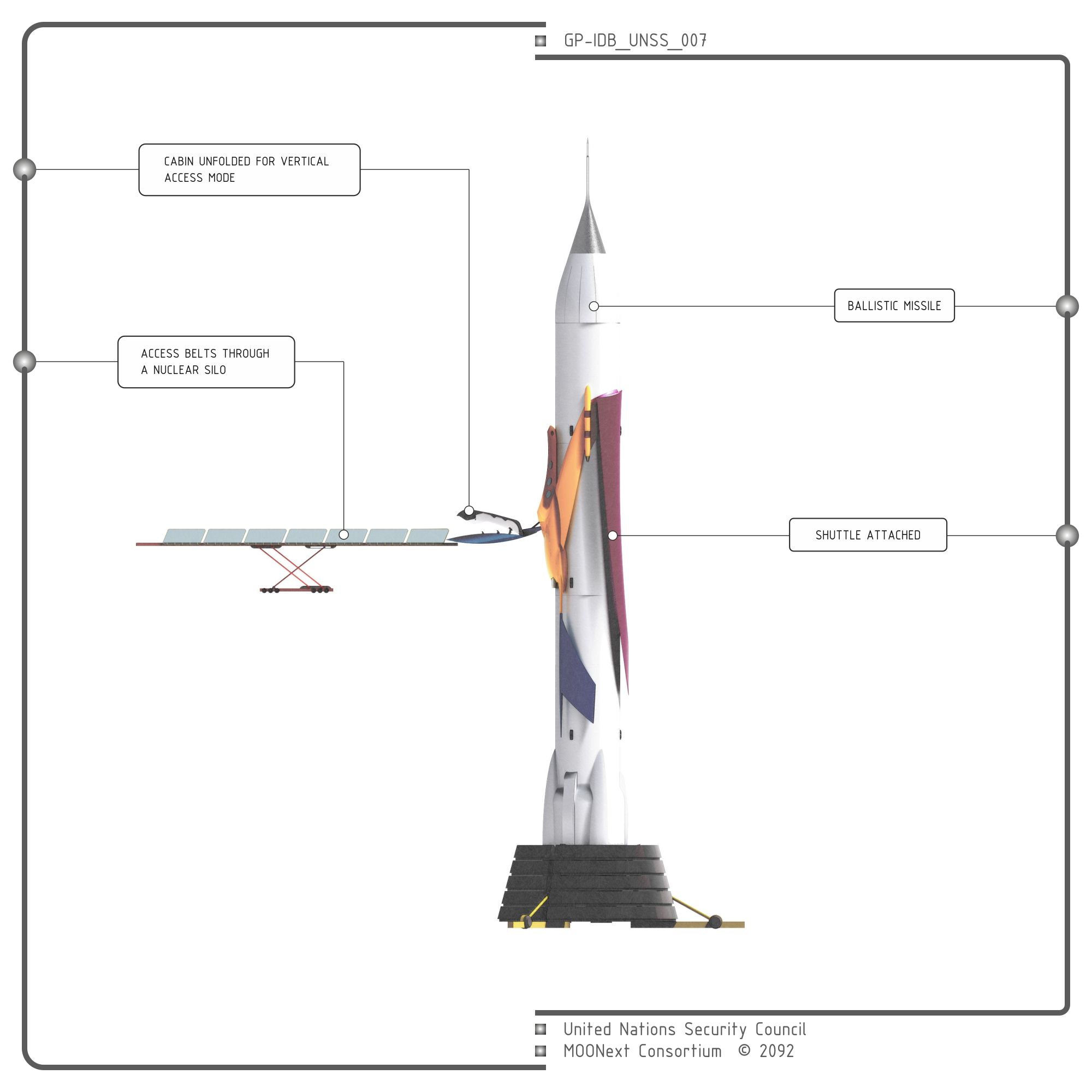
The winning solution, after many proposals from the academic and business worlds, came from the Polytechnic University of Valencia. It was original, economically viable and achieved the maximum consensus: it proposed to recycle the ballistic missile arsenals of the entire planet as launch pads for small glider ships attached to their fuselages.
The UNSS system takes advantage of all the old nuclear defense technology, its different types of rockets and the entire network of hidden nuclear silos, to place small sailing ships at stratospheric altitude that can then be directed anywhere on land or sea, or even to a potential station in orbit. This has allowed GlassCity to maintain its anonymity to date.
While UNSS technology remains mostly secret, various sightings of its takeoffs and of recycled missiles near sea routes has forced the Security Council to divulge some information about these peculiar aircraft at the end of the past century.
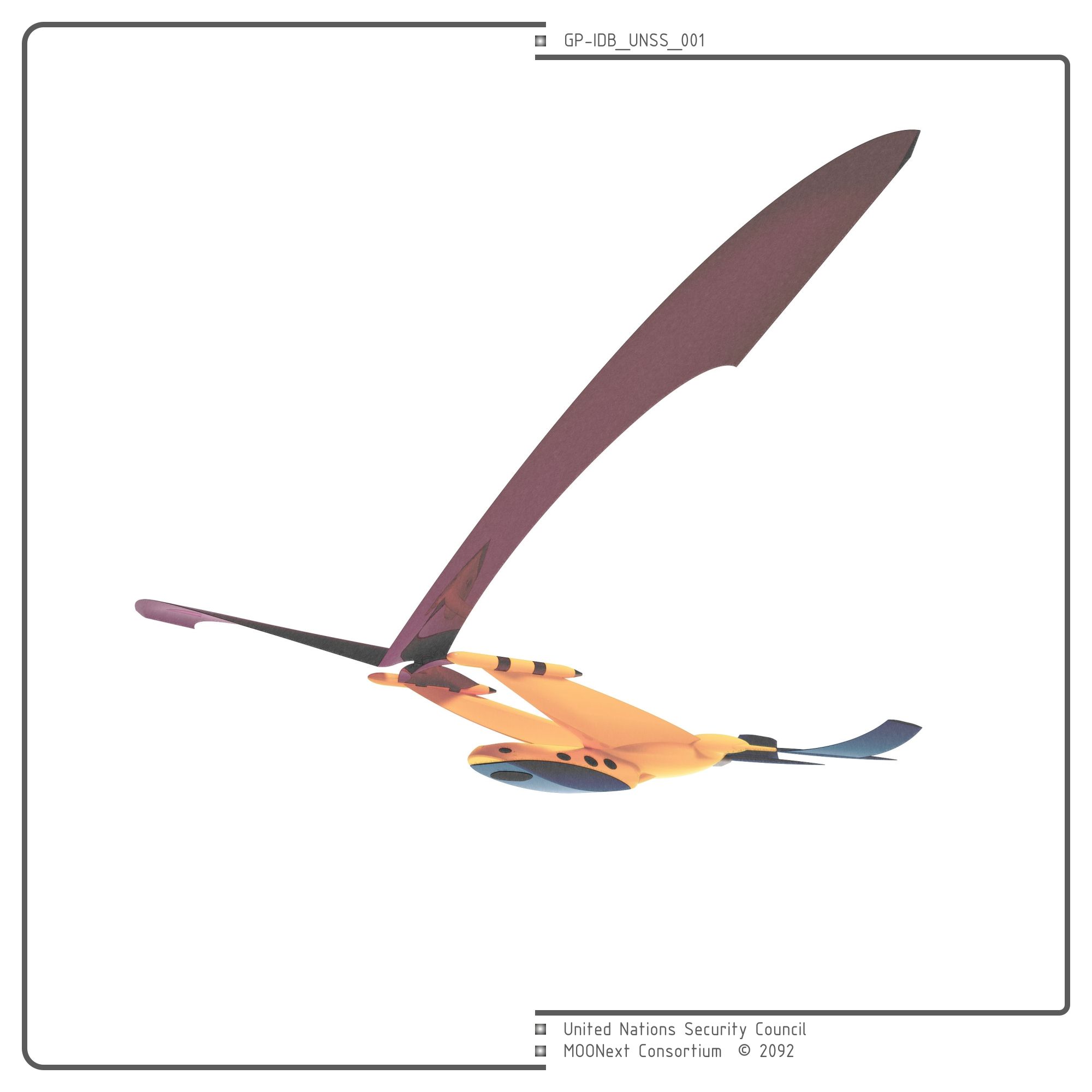
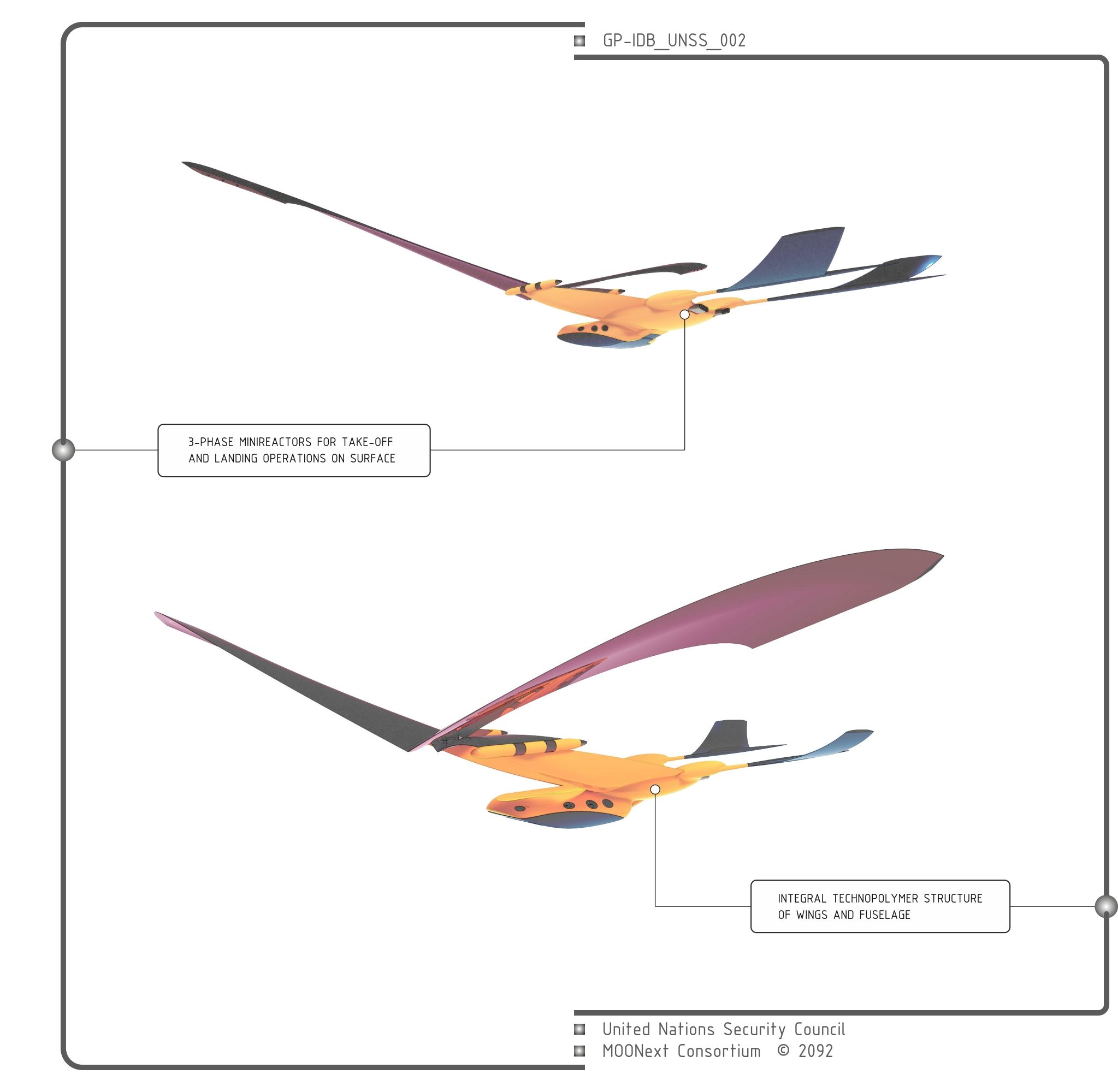
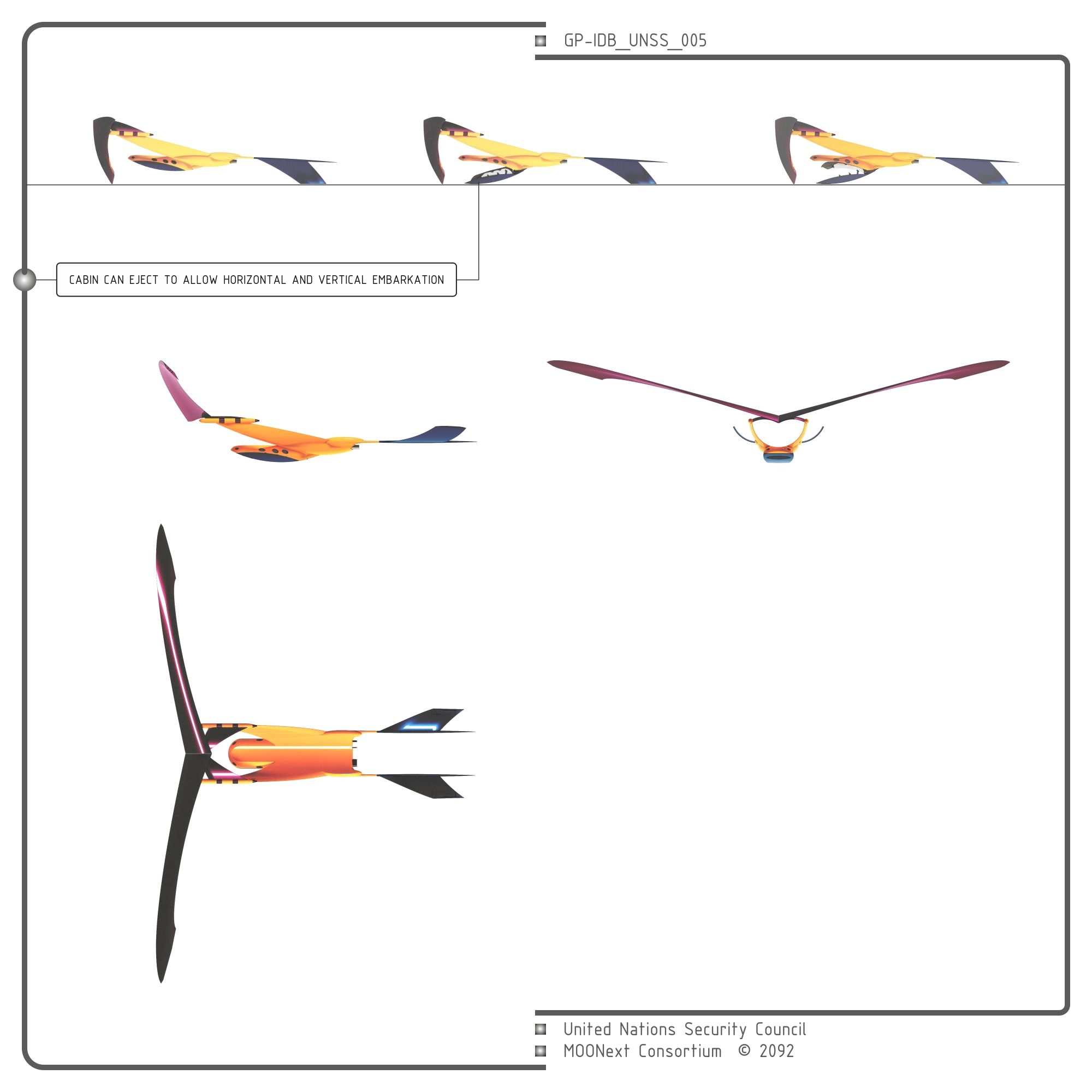
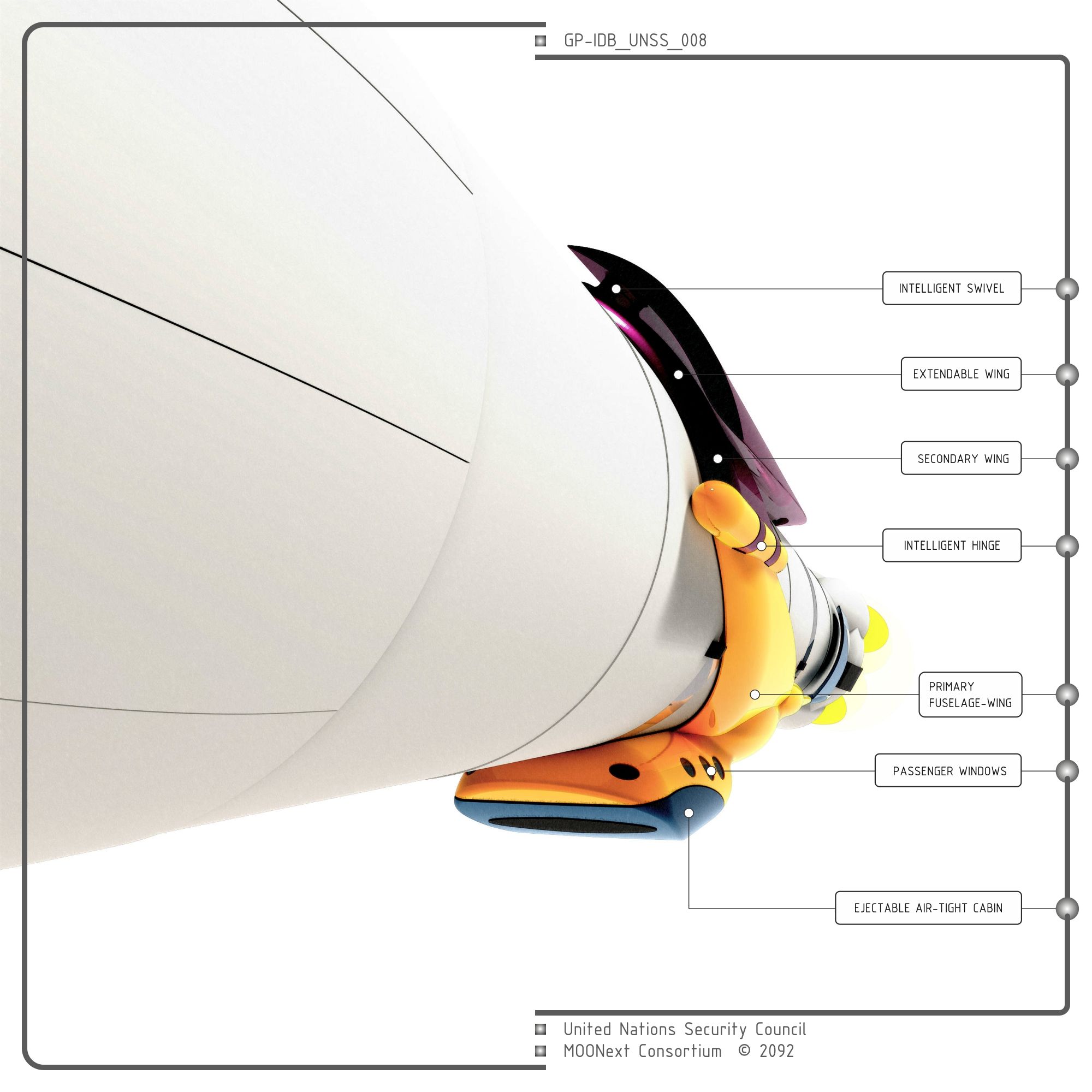
The shuttle is known for its bat-like appearance when embracing the missile and for geometry in its wings, never seen before in the field of aeronautics.
Characteristics
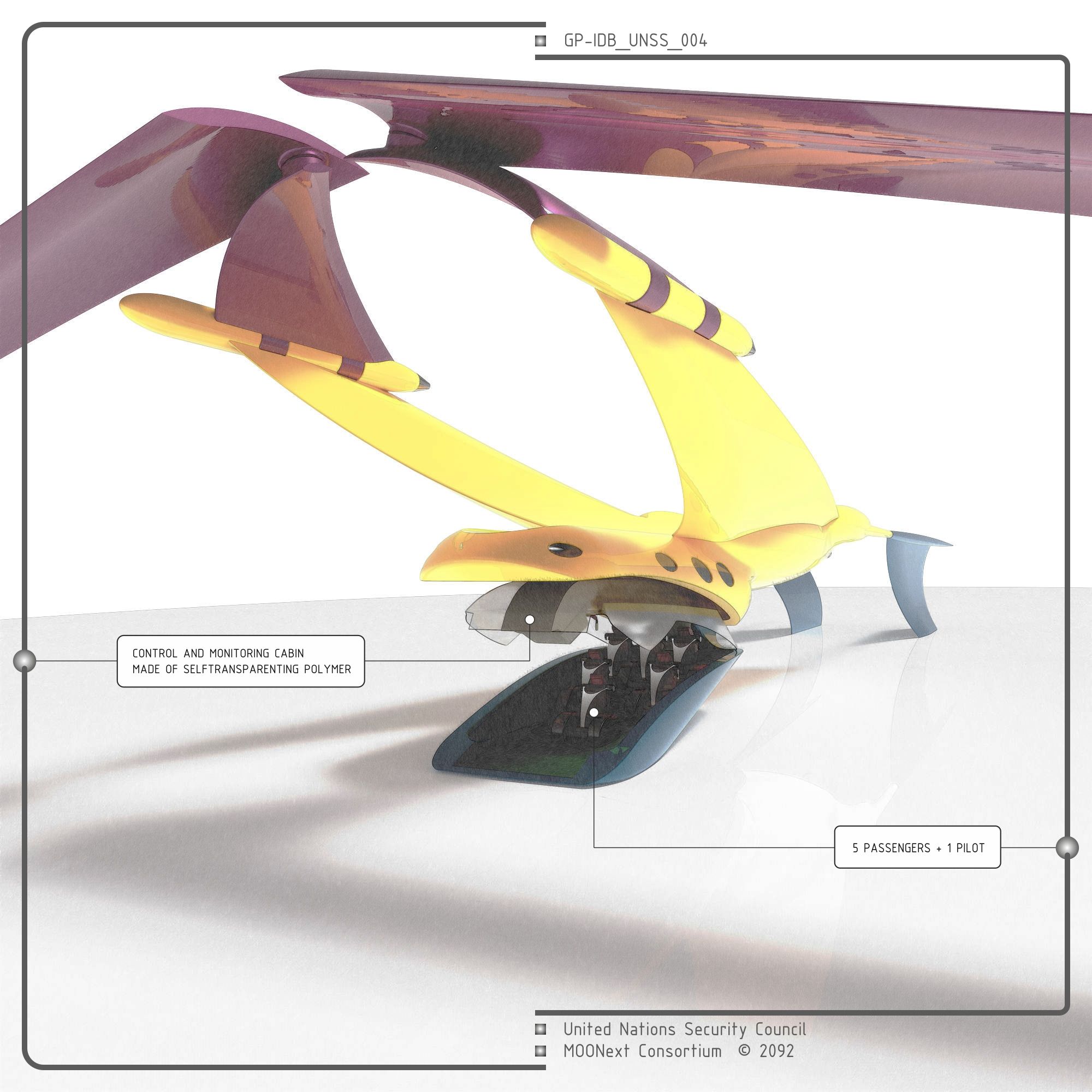
CAPACITY: 5 passengers + 1 pilot
USEFUL LOAD: 1,800 kg
POWER SOURCE: Classified
ECOENERGETIC RATIO: Classified
DIMENSIONS: 46,000 x 6,870 x 24,600mm