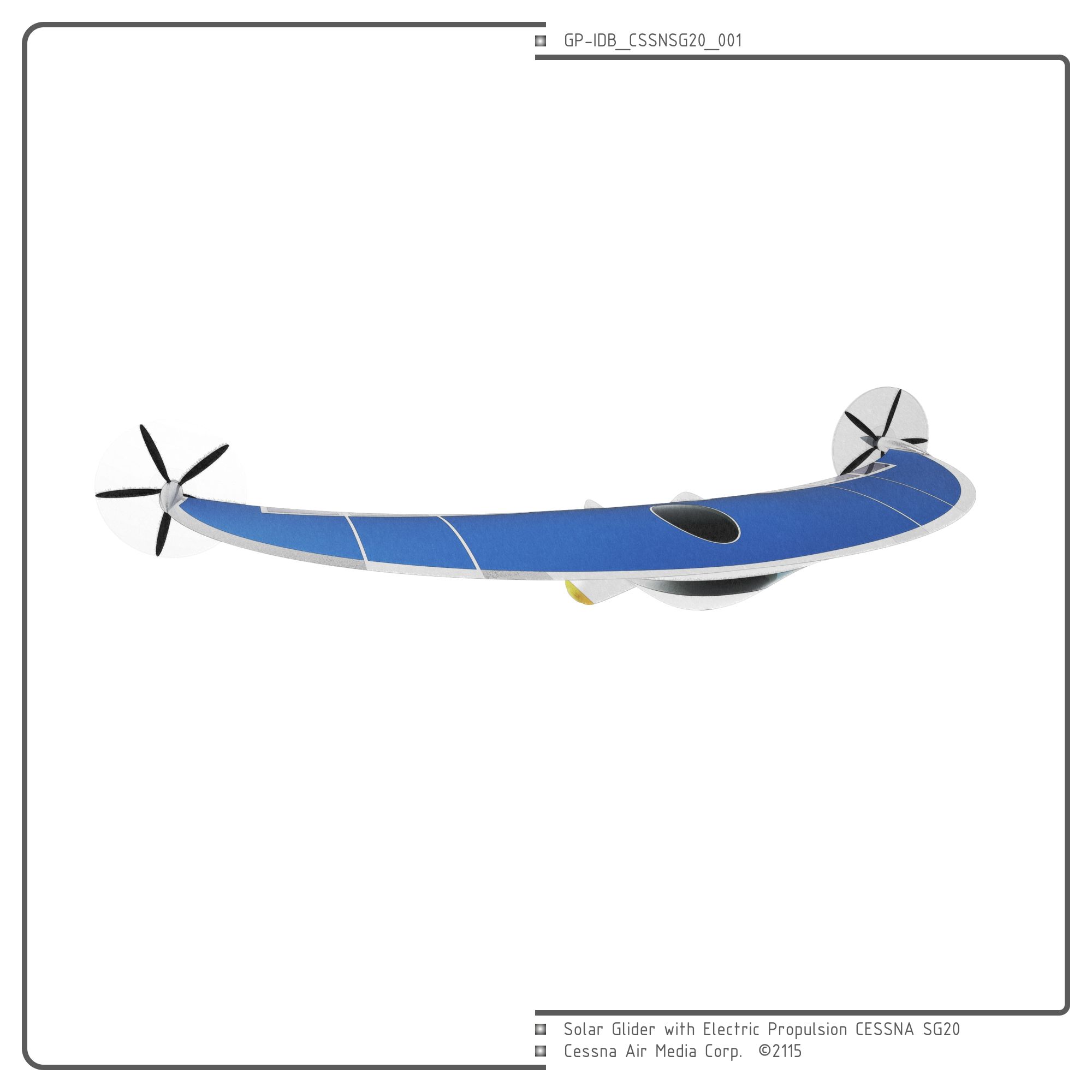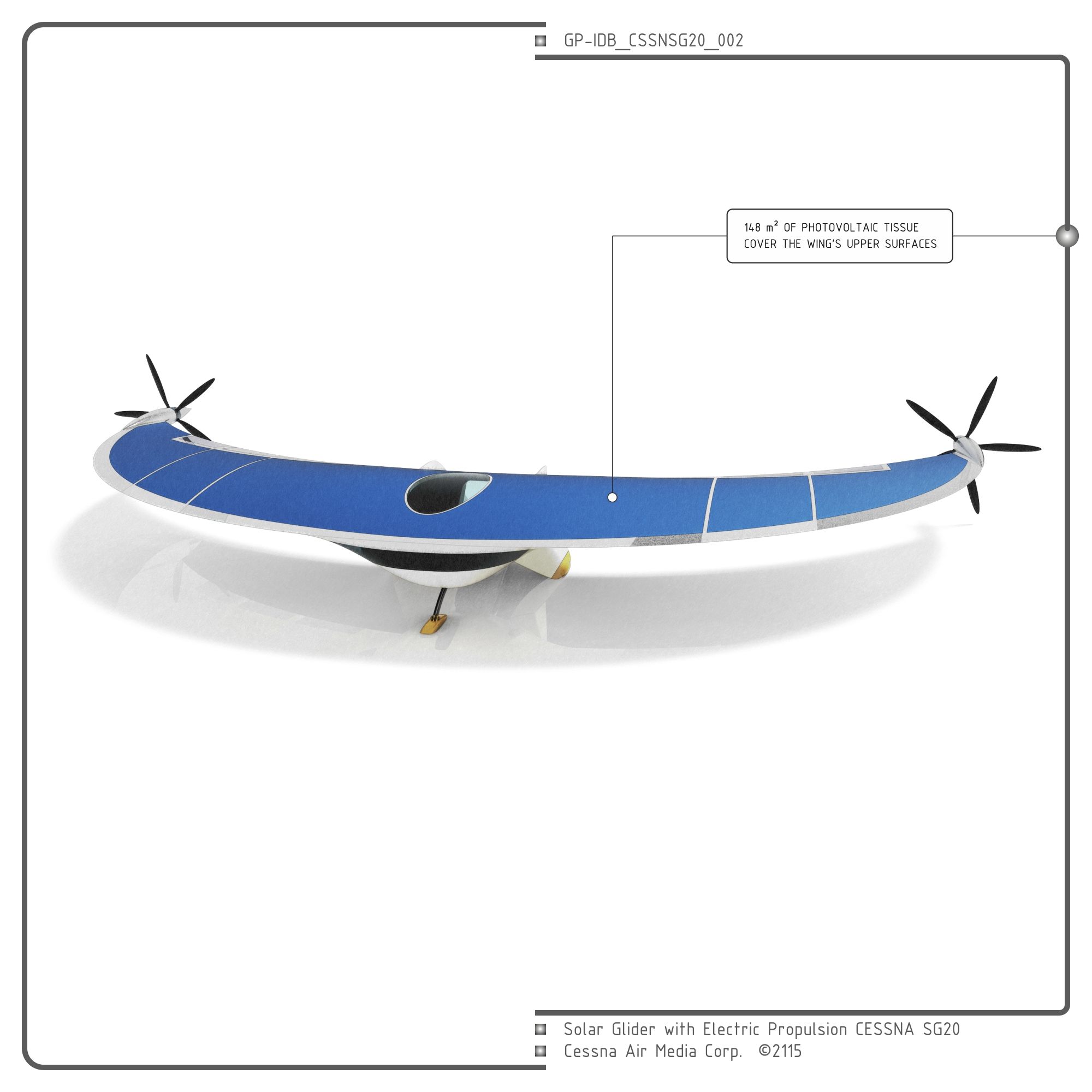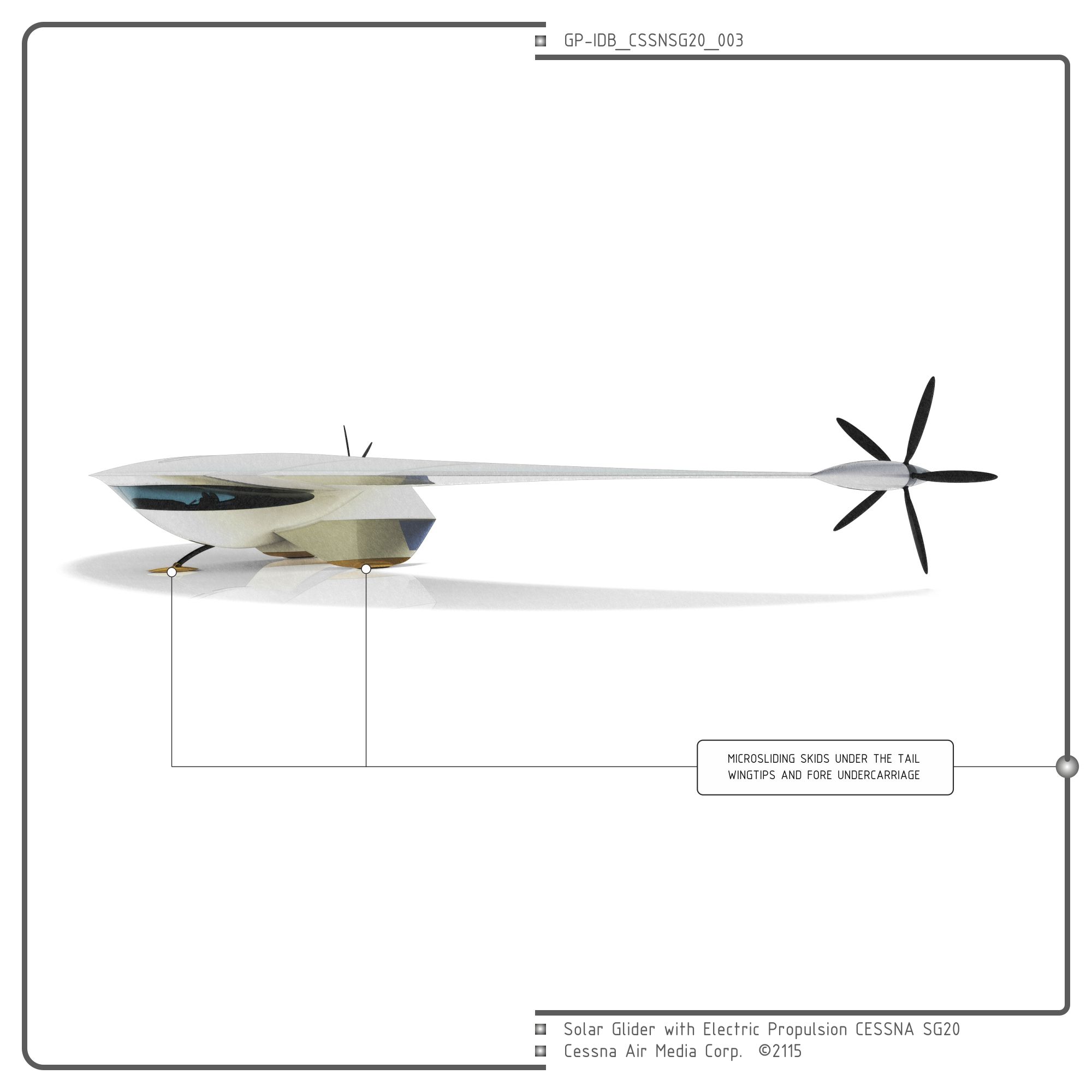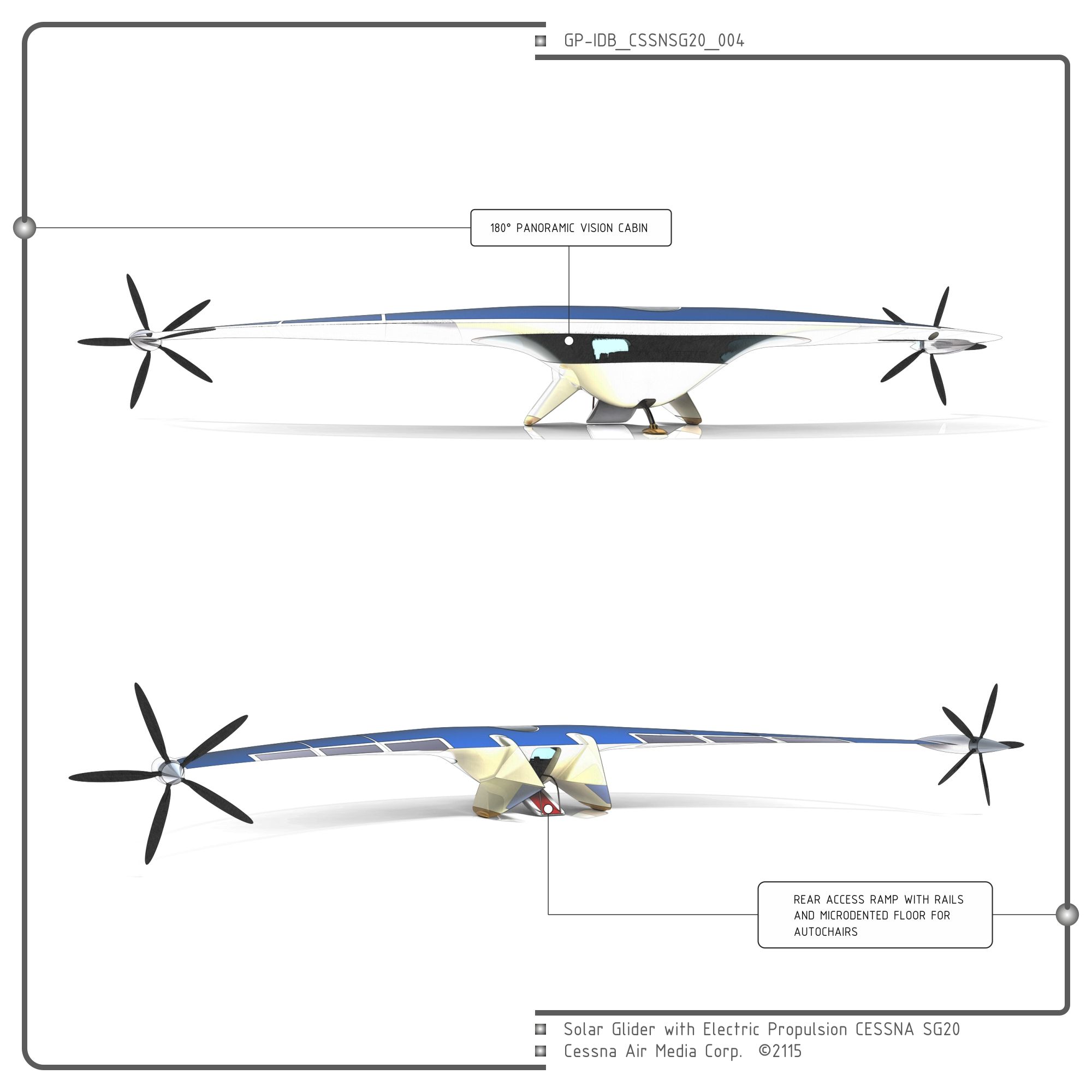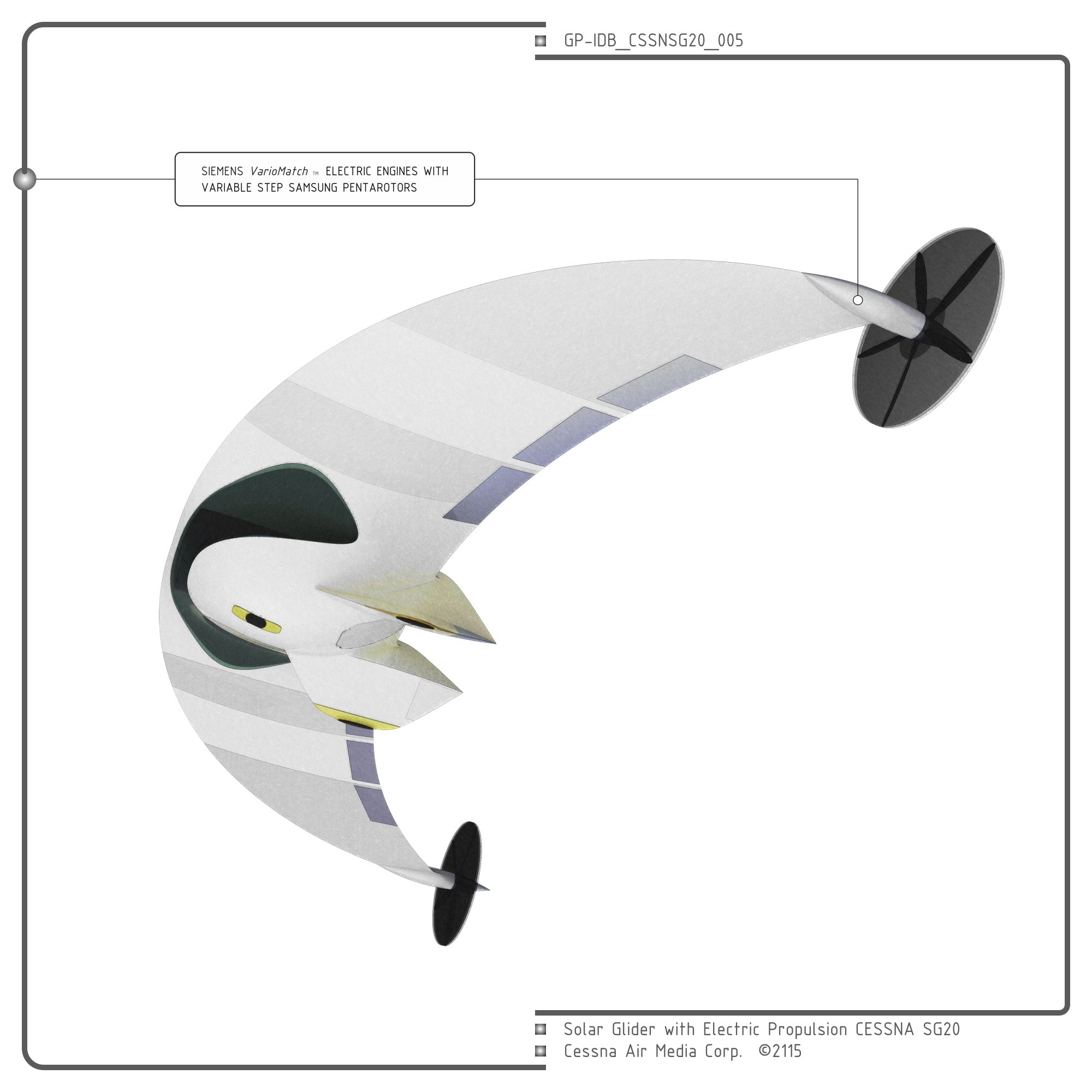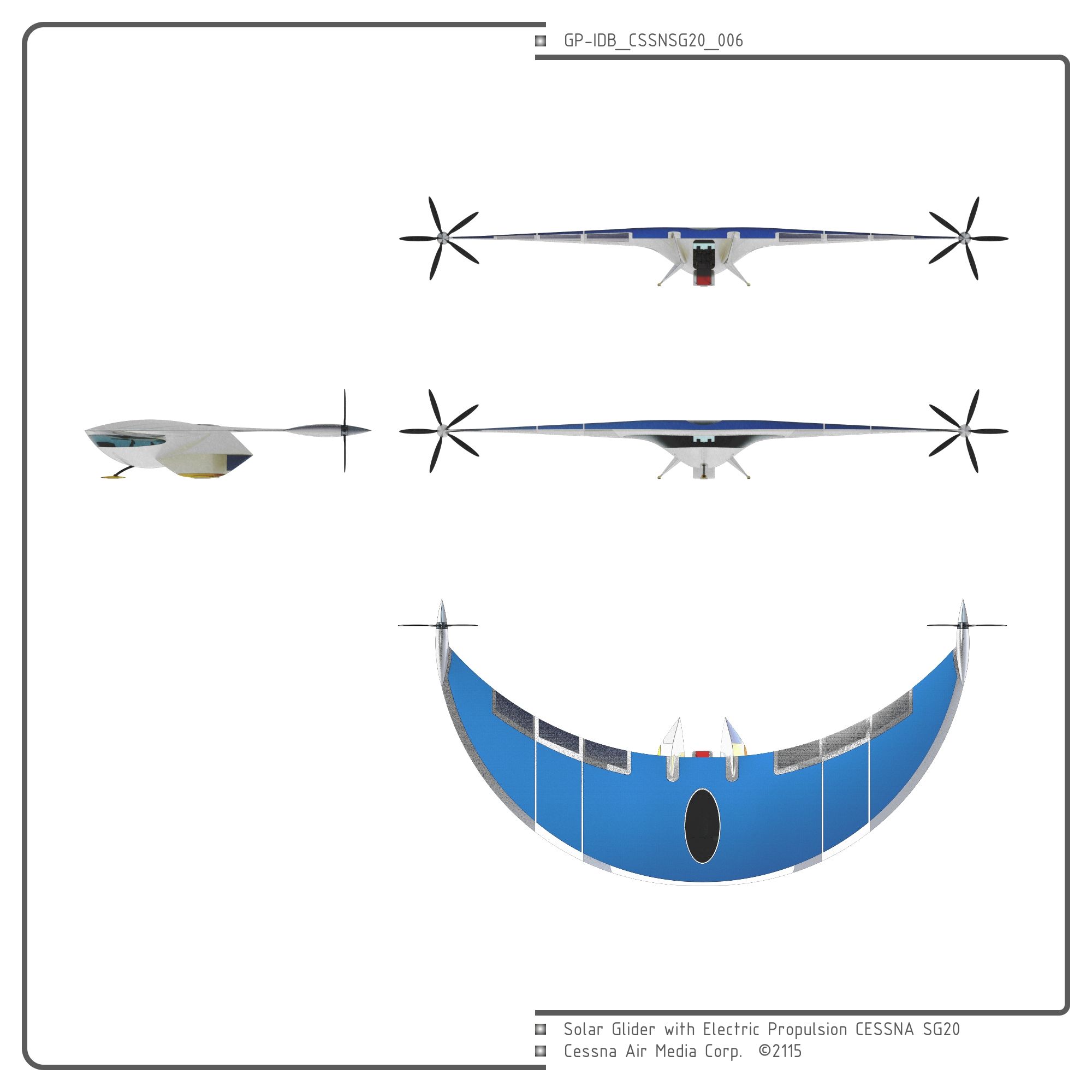
Solar Glider with Electric Propulsion
Property
Copyright: Cessna Air Media Corp. / © 12/02/2115
History
The spectacular progress in Net weather forecasting over the past century has led to new technological approaches in the field of aeronautics. Until the 2050s, gliding yachts had only been used for recreational purposes. Then they began to be an interesting option for executive transport. The multinational Cessna, still a market leader in the light aircraft and small business transport, invested heavily in the glider segment and took advantage of the new photovoltaic fabric technologies available.
The SG 20 model, presented just 5 years ago, is still the preferred solar glider for top corporate executives nowadays. Its reasonable price, combined with its zero emissions and an unbeatable performance, currently make it the sales leader in its segment.
This glider uses the latest real-time weather prediction software, which, added to the information provided by the Global Surface Image Network through the United Nations’ HelyaCam platforms, allows it to optimize its flight path and take advantage of thermals, hillside winds and mountain waves with unparalleled levels of efficiency.
Its 2 small electric motors, developed specifically by a consortium between Siemens and Samsung for this version, are used to make altitude and heading corrections only when necessary, apart from the take-off and occasional landing functions. These features give it a virtually unlimited range, except in cases of long night flights or very cloudy skies.
Characteristics
CAPACITY : 2 pilots + 4 passengers in Emperor class
BASIC EMPTY WEIGHT: 1,240kg
RANGE: indefinite at an average speed of 250kmh – 6,800km at an average of 420kmh
GLIDING COEFFICIENT: 50:1
SERVICE CEILING: 15,000m
POWER SOURCE: Photovoltaic 90% – Outer Grid Batteries: 10%
ECOENERGETIC RATIO: 0.920
DIMENSIONS:
Fuselage: 30,100 x 16,145 x 3,300mm
Rotors: Diameter 4,950mm