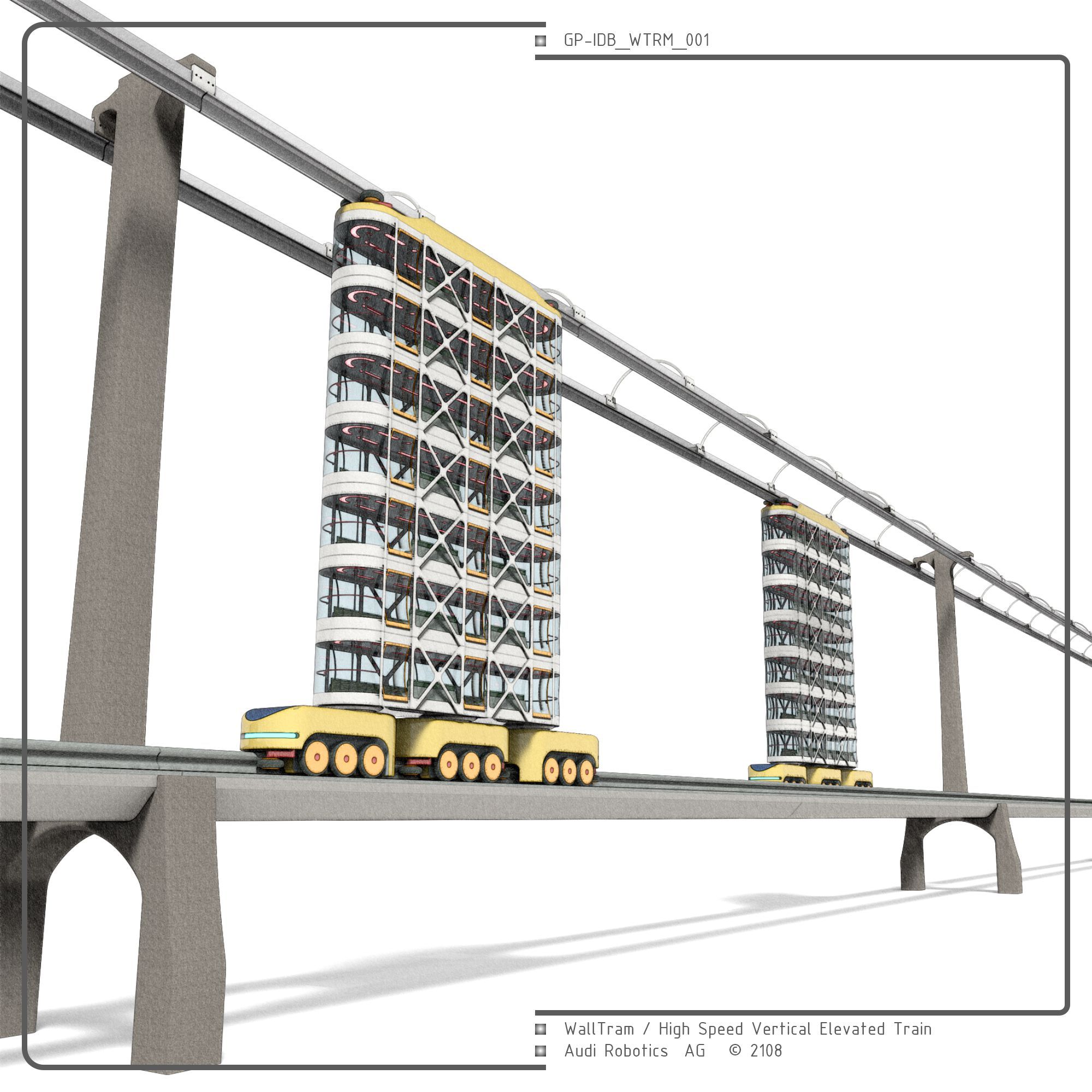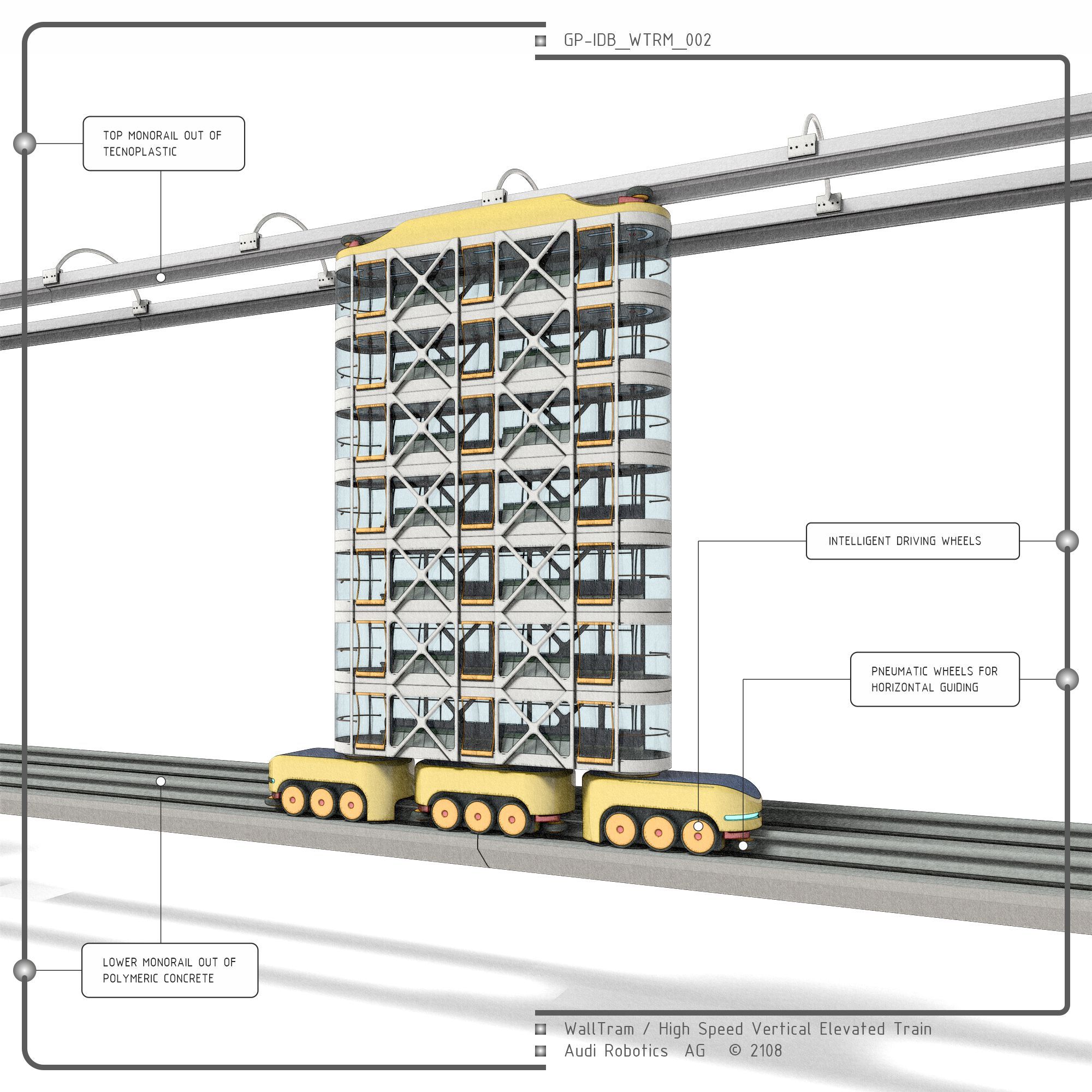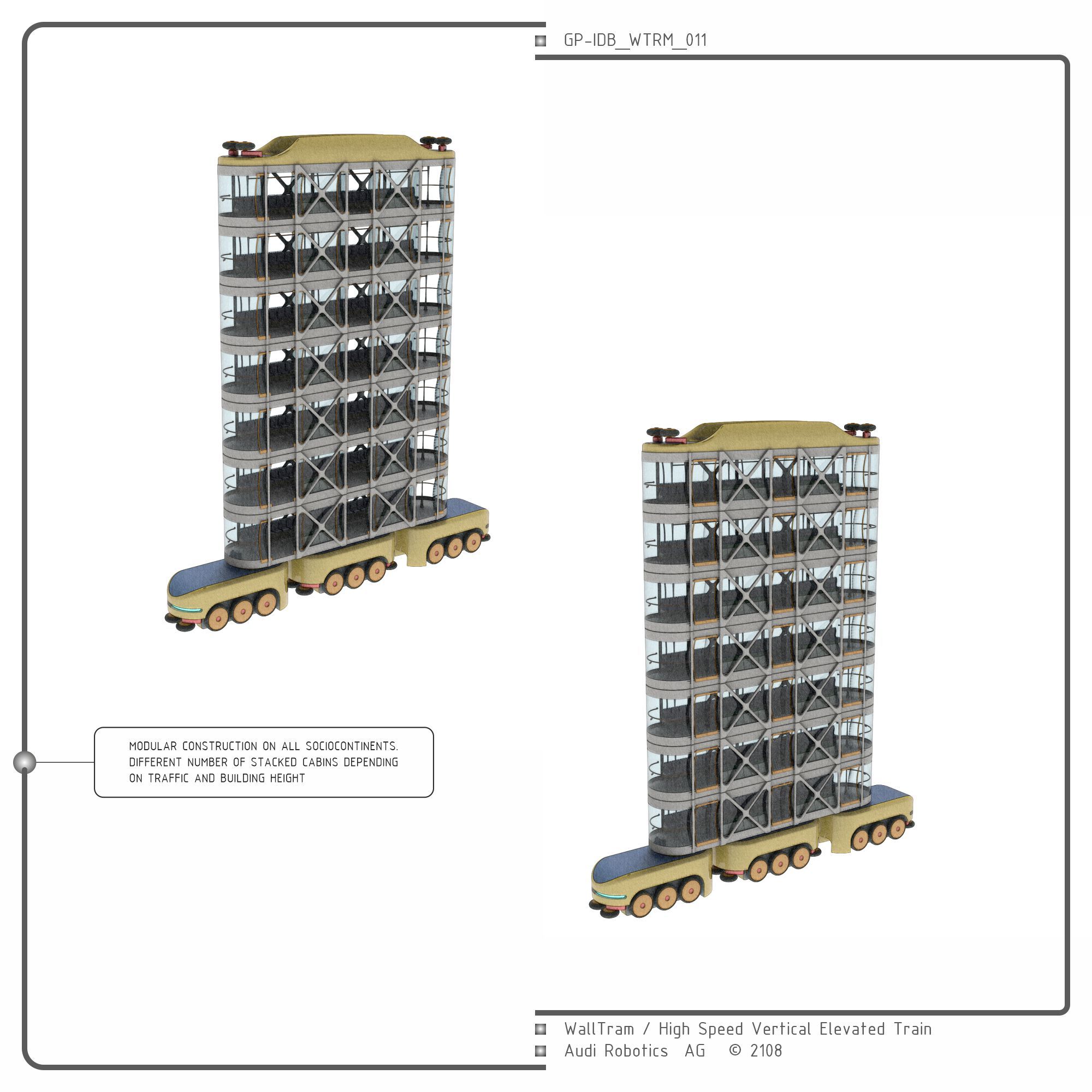
High Speed Vertical Elevated Train
Property
Copyright: Audi Robotics AG / © 12/04/2108
History
The gradual increase in population from the 2060s onwards, motivated mainly by the Vatican III Council and its defence of the faith in the “New Motherhood”, caused a serious urban planning problem in the great Western capitals.
With the subway and bus lines saturated two decades later, the United Nations promoted great remodelling works for the AeroBus concept all over the planet. The relief of subway traffic, with the new large quadcopters carrying 300 people per cabin, solved the problem during the end of the century. However, the new science of PredicTology warned in 2105 of a possible collapse within just 10 years. Airspace was beyond its saturation limit and ground and subway lines were close to maximum capacity, with little possibility to expand.
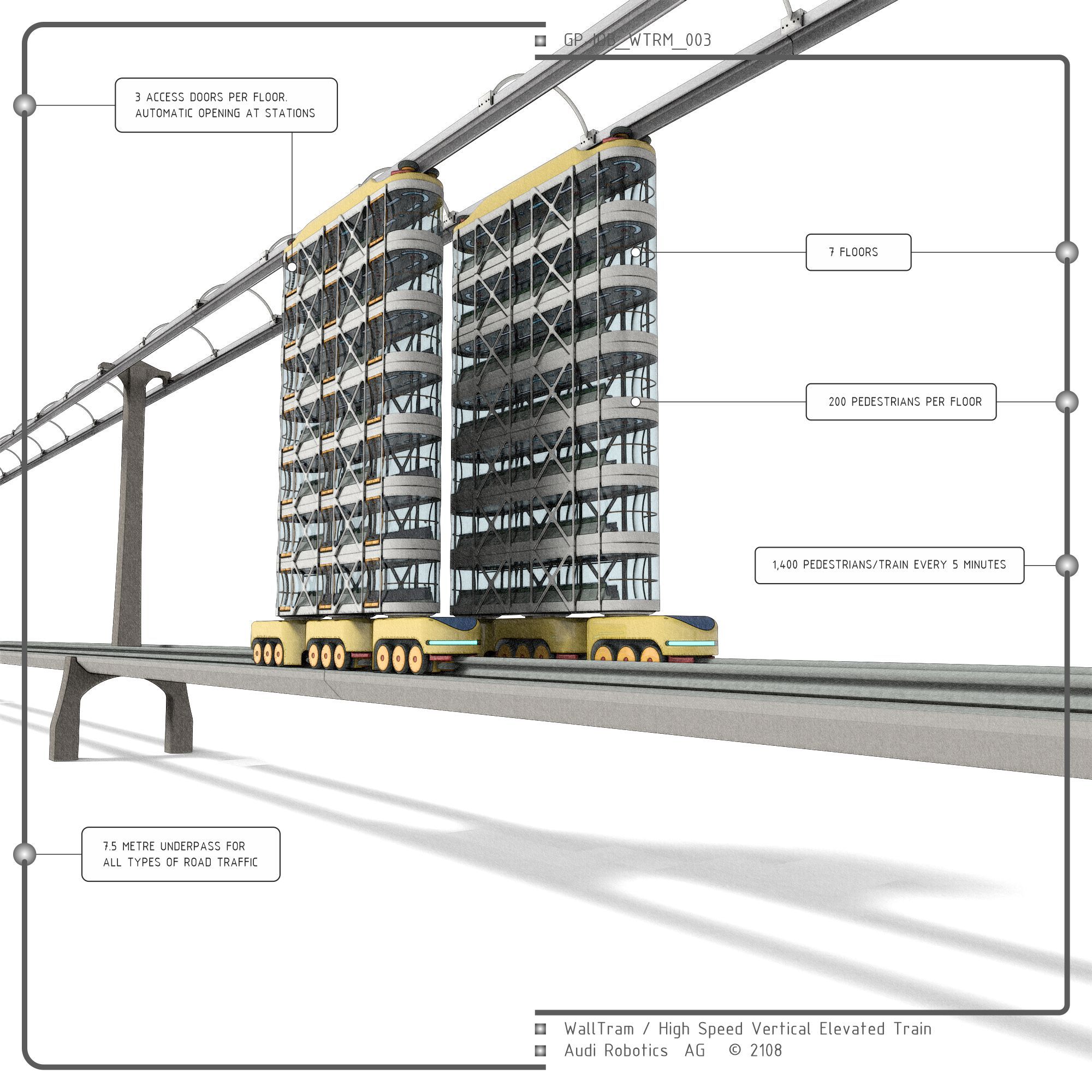
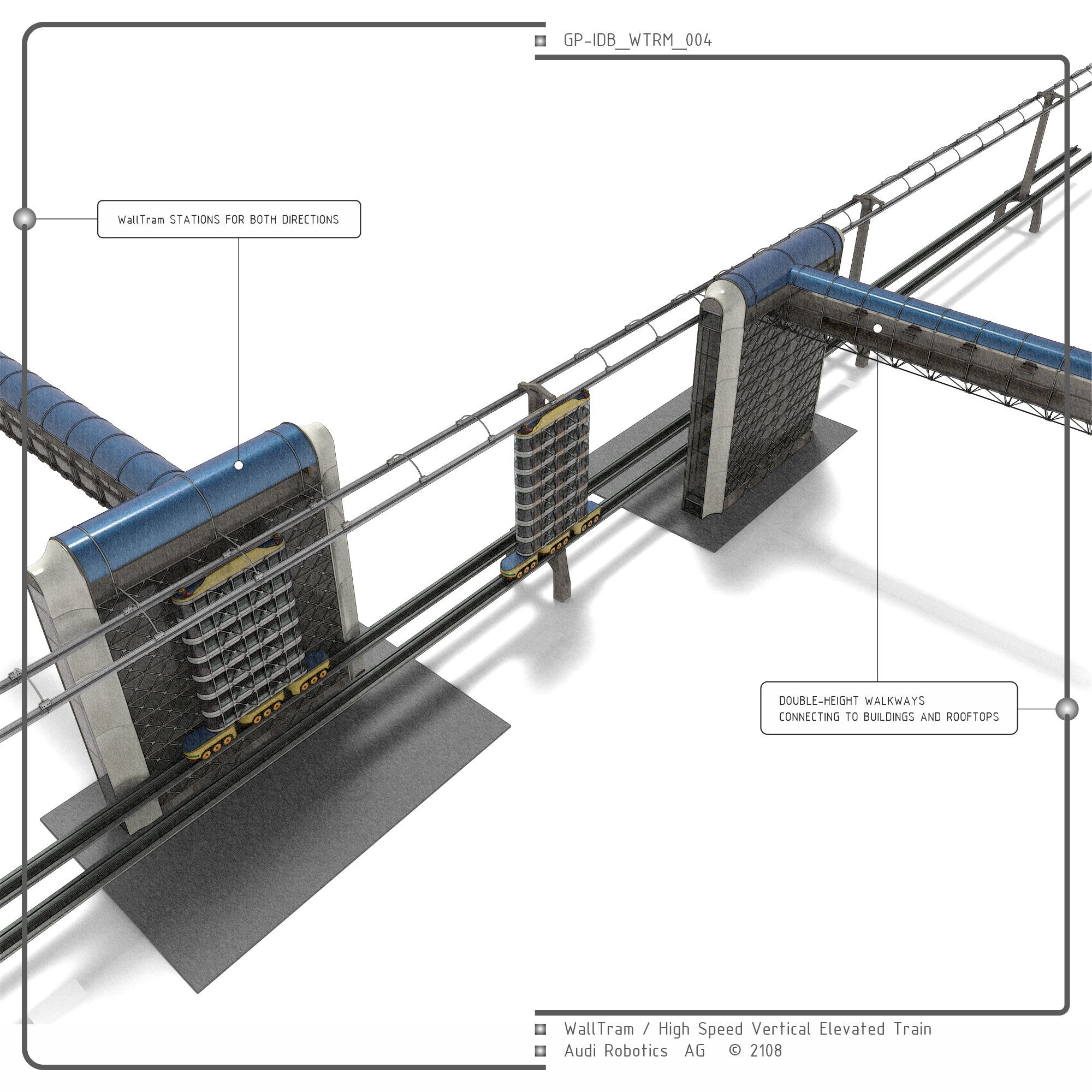
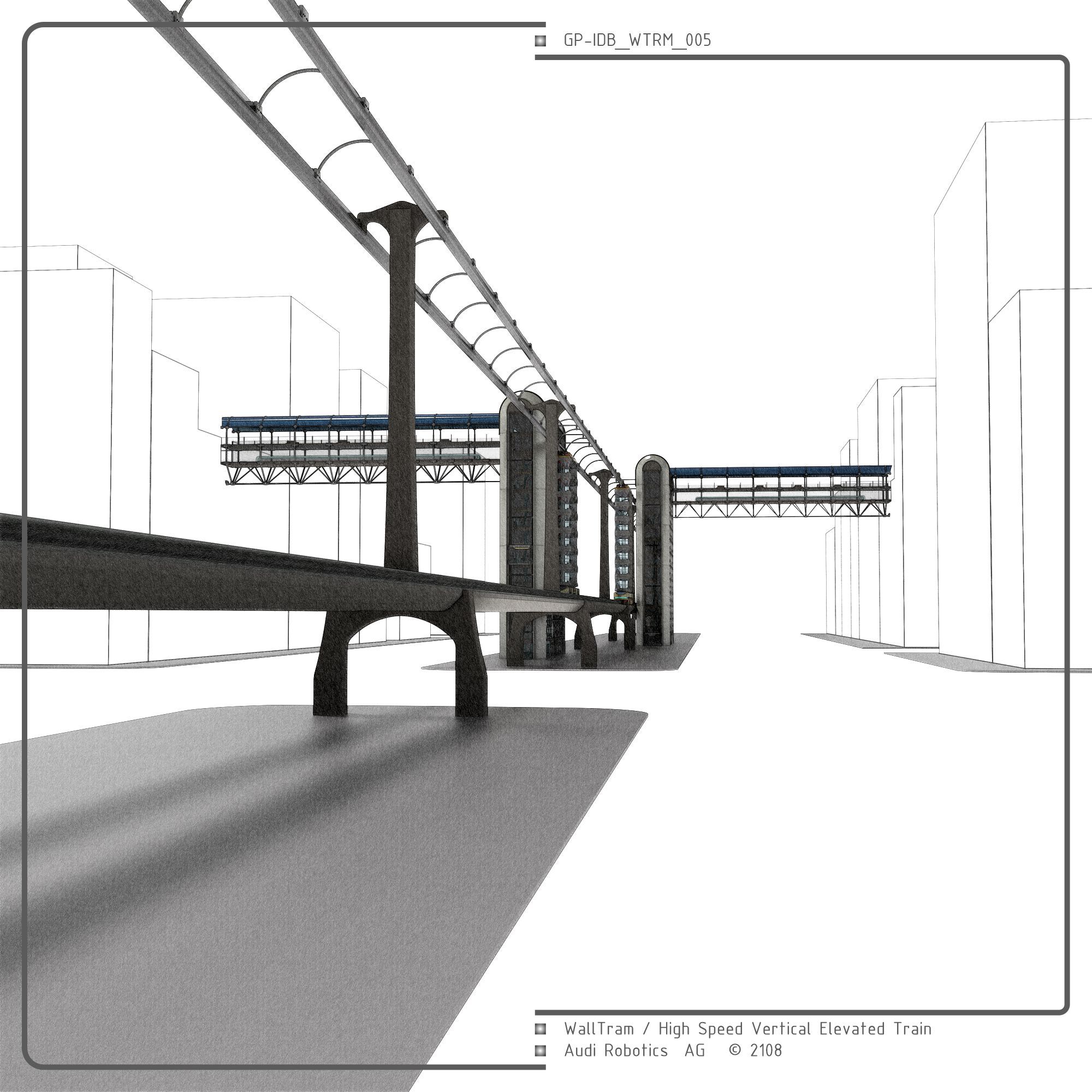
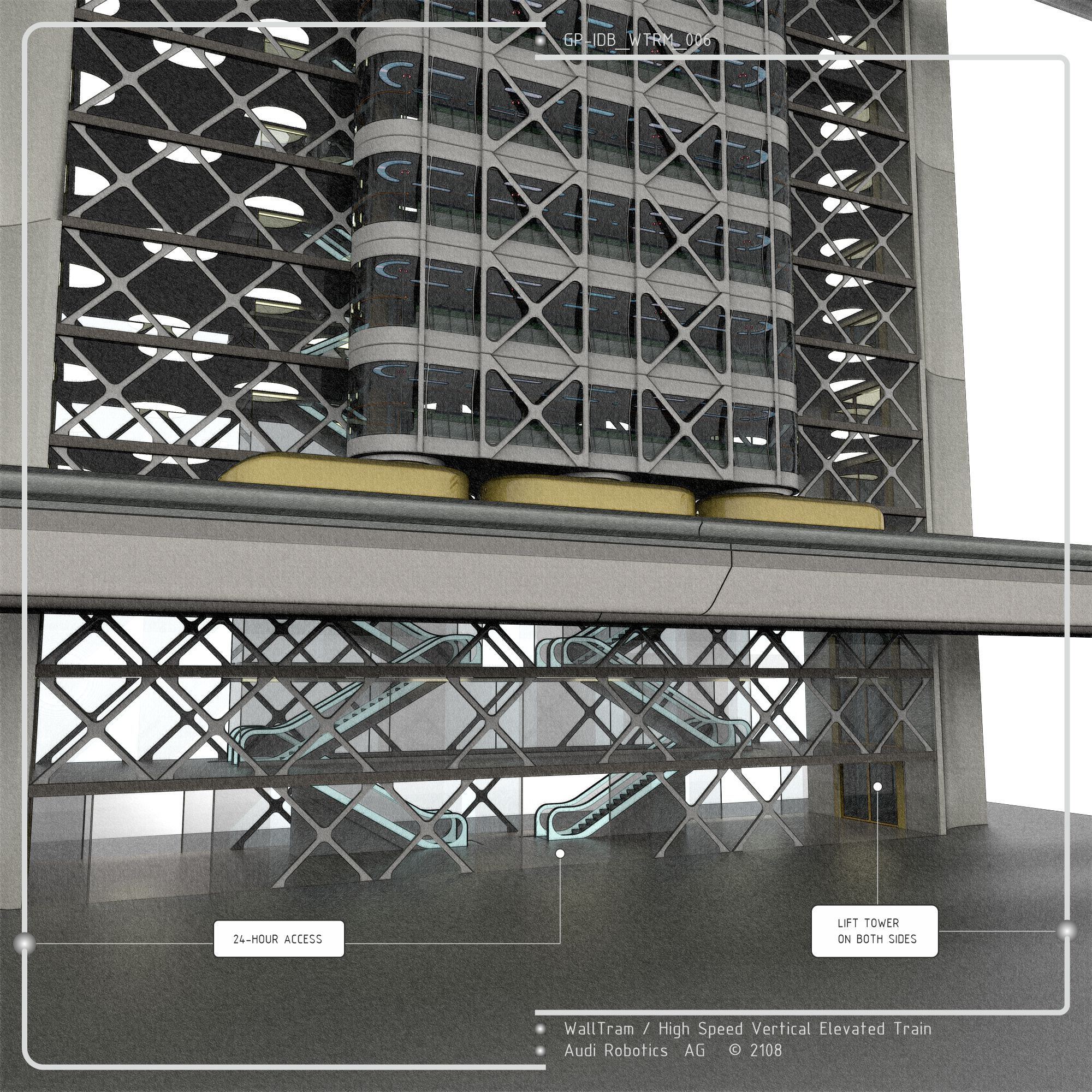
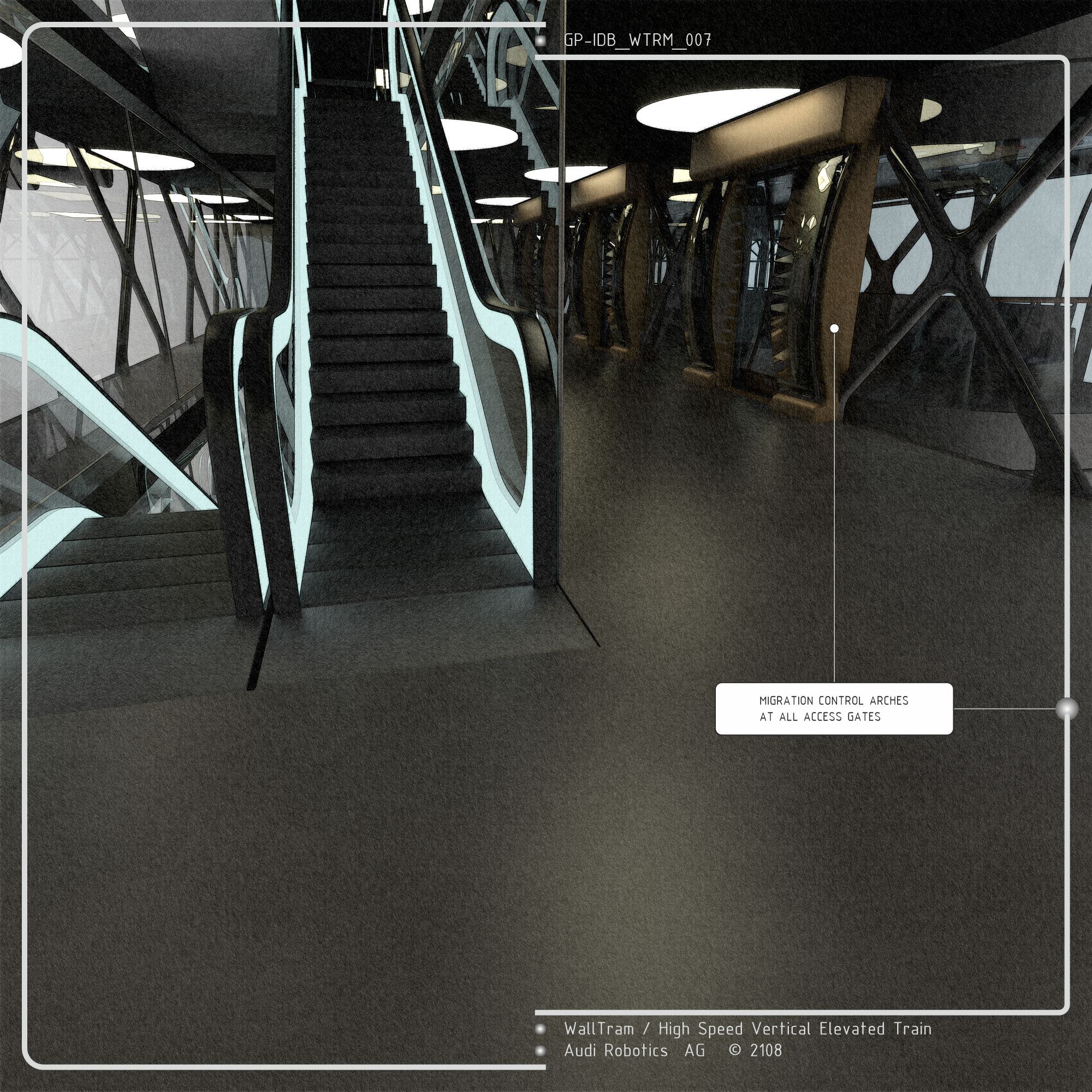
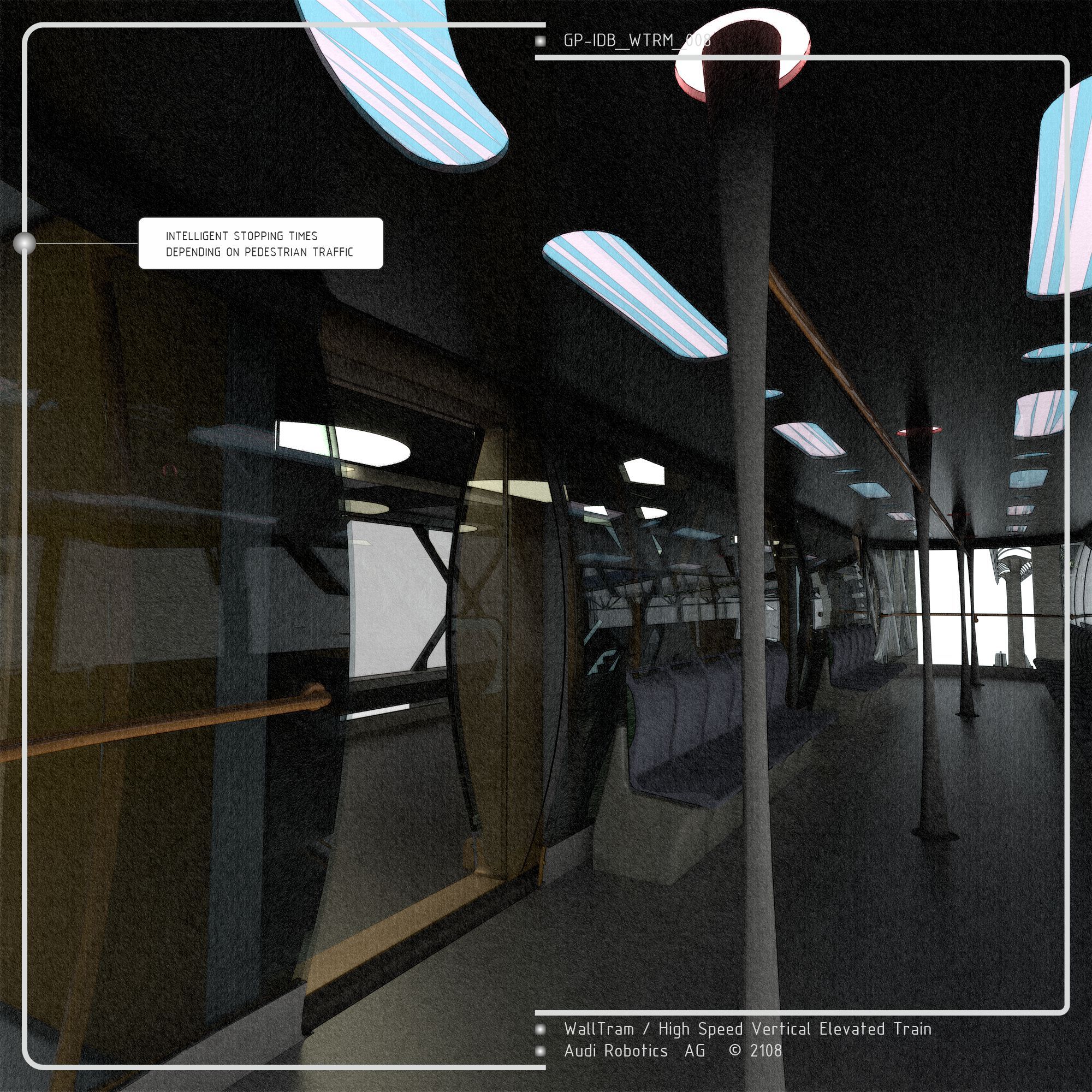
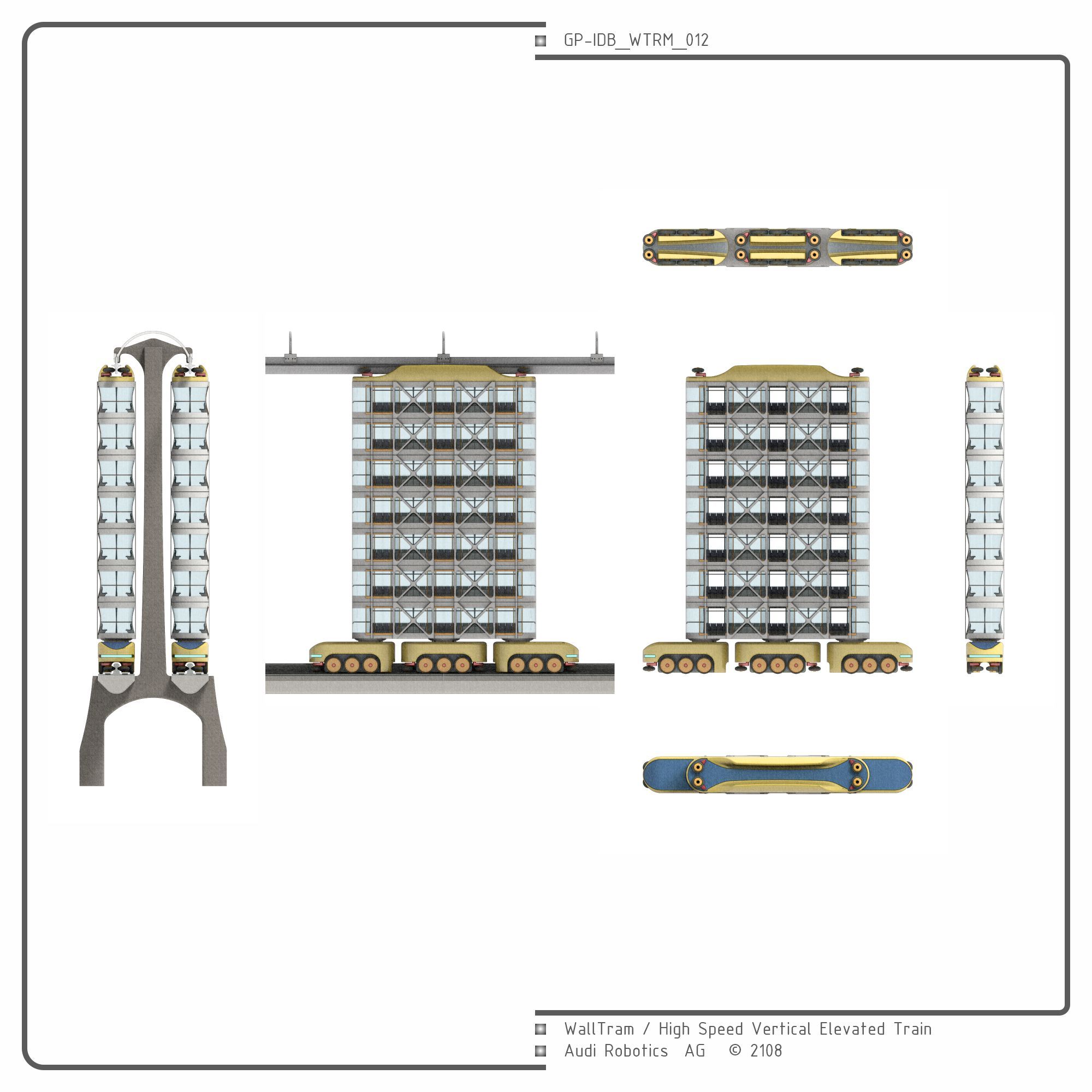
That same year, the United Nations launched a restricted ideas competition, the finalist being the Audi Robotics corporation with a revolutionary concept, very bold but apparently feasible: to increase the frequency of convoys by vertically stacking railcars. The concept surprised the industry, but within just 3 years it was proven viable. The first WallTram line debuted in 2108 on Barcelona’s Avenida Diagonal, where the new monorail concept was installed along the centre, with high-rise vertical stations to minimise boarding times. The new convoy system was just 15 metres long, unlike the long metro trains. Braking time was shorter and equivalent to that of a single carriage. Its autonomous robotic control system made it possible to count passengers and close the doors as soon as the last passenger entered or left. It reached a top speed of 120 km/h between stations thanks to its advertised intelligent progressive acceleration in the shortest possible time, without prejudice to passengers. It was a resounding success, and since then all major socioSystemic capitals have modified certain urban layouts to create elevated circular lines with the new “high-speed walls”. Today, speeds of up to 180 km/h and frequencies of less than 5 minutes between convoys can be achieved.
The only drawback is its cost, which is not supported by the United Nations. Today it is a private means of transport, without subsidy. Reason for political conflicts in more than one election campaign in these transCapitalist times of the New Age.
Characteristics
CAPACITY : 200 pedestrians/floor (36 seated + 164 standing). 7 floors.
AUTONOMY: Indefinite, powered by monorail.
SPEED: 60 – 180 km/h.
FUEL: Lithium-Anamadium Accumulators / SocioSystemic Electric Grid.
ECO-ENERGY RATIO: 0.824
DIMENSIONS:
Modular wagon: 15,100 x 3,100 x 3,100 x 3,000 mm.
Height of 7 Cars: 21.000 mm
Total Train Height: 25.000 mm