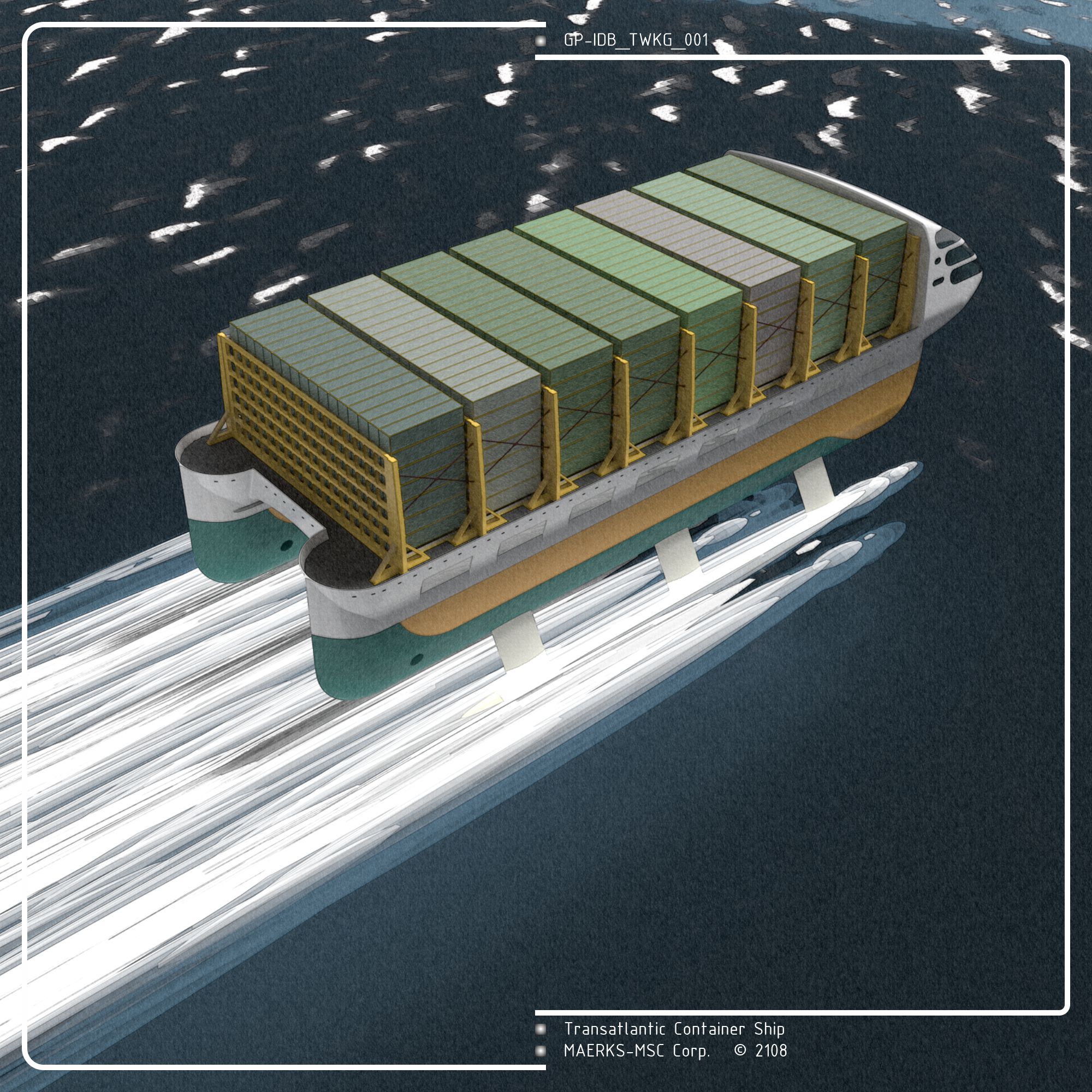
Transatlantic Container Ship
Property
Copyright: MAERSK-MSC Corp. / © 07/07/2108
History
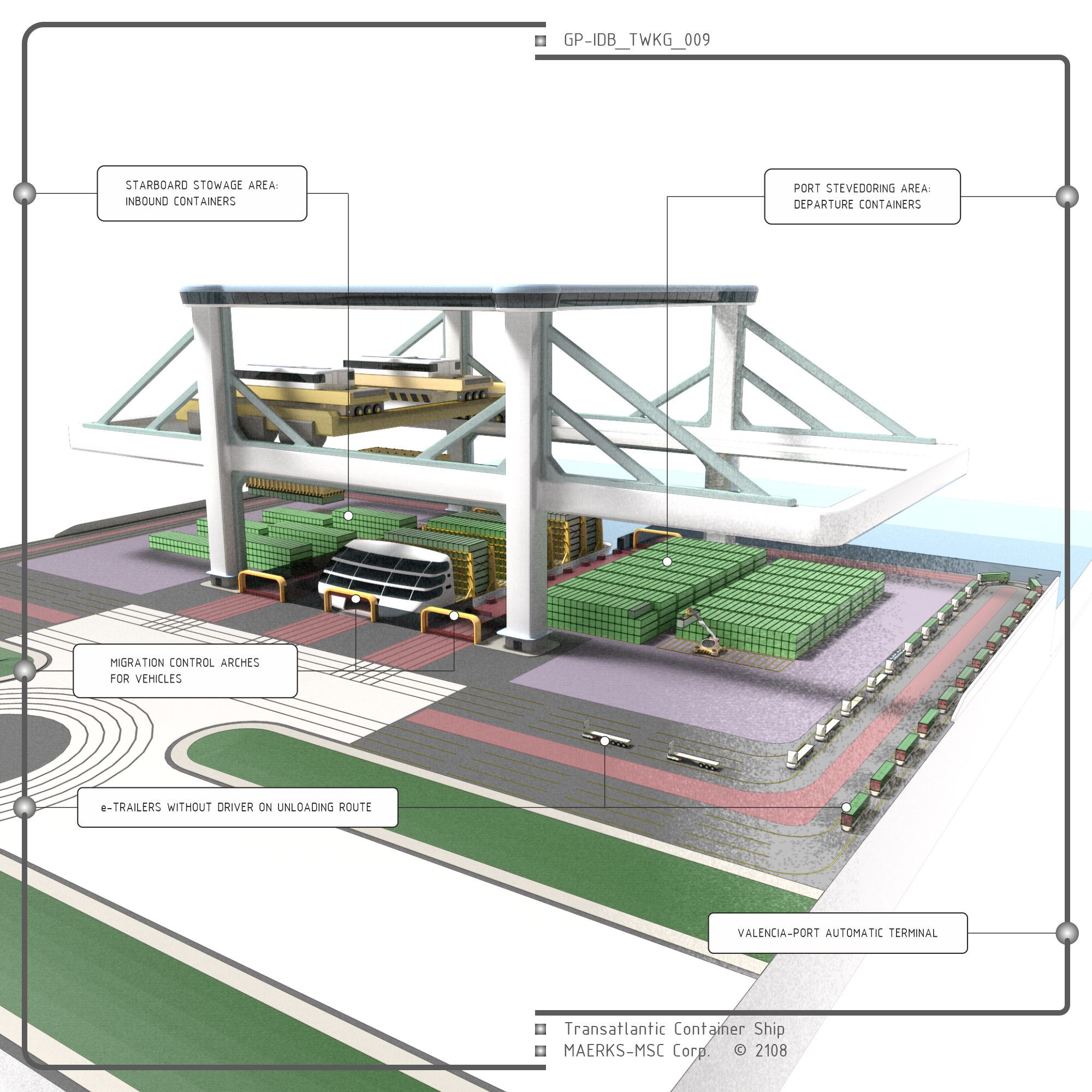
Climate change caused significant sea level rises in various parts of the world which substantially changed the container shipping market. The giant UltraPanamax Class ships, with capacities of around 30,000 TEUs, became uneconomical in the mid-2050s.
Many small ports had increased their draught by more than two metres, following obvious major infrastructure works to accommodate new sea levels around the globe. This enabled them to accommodate larger vessels, competing directly with the large ports of Eastern and Northern Europe.
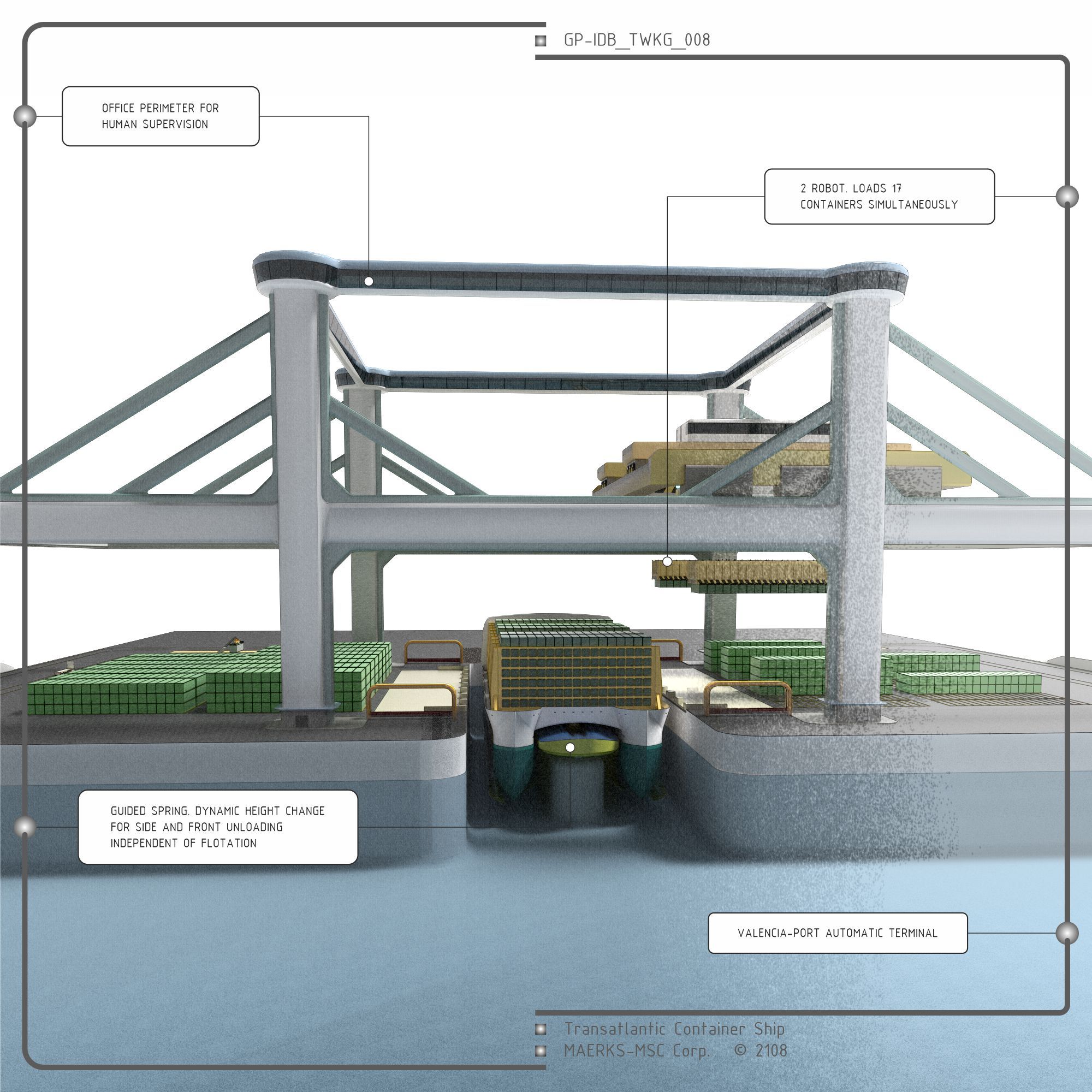
In the continuing global port competition, a paradigm shift was decisive, prioritising speed of stevedoring over the disproportionate capacity of the large ships of the past. The payback of nuclear propulsion on a ship depends directly on the number of voyages, not on fuel consumption. The reactor that powers the turbines does not stop generating energy during its lifetime, estimated at 30-40 years.
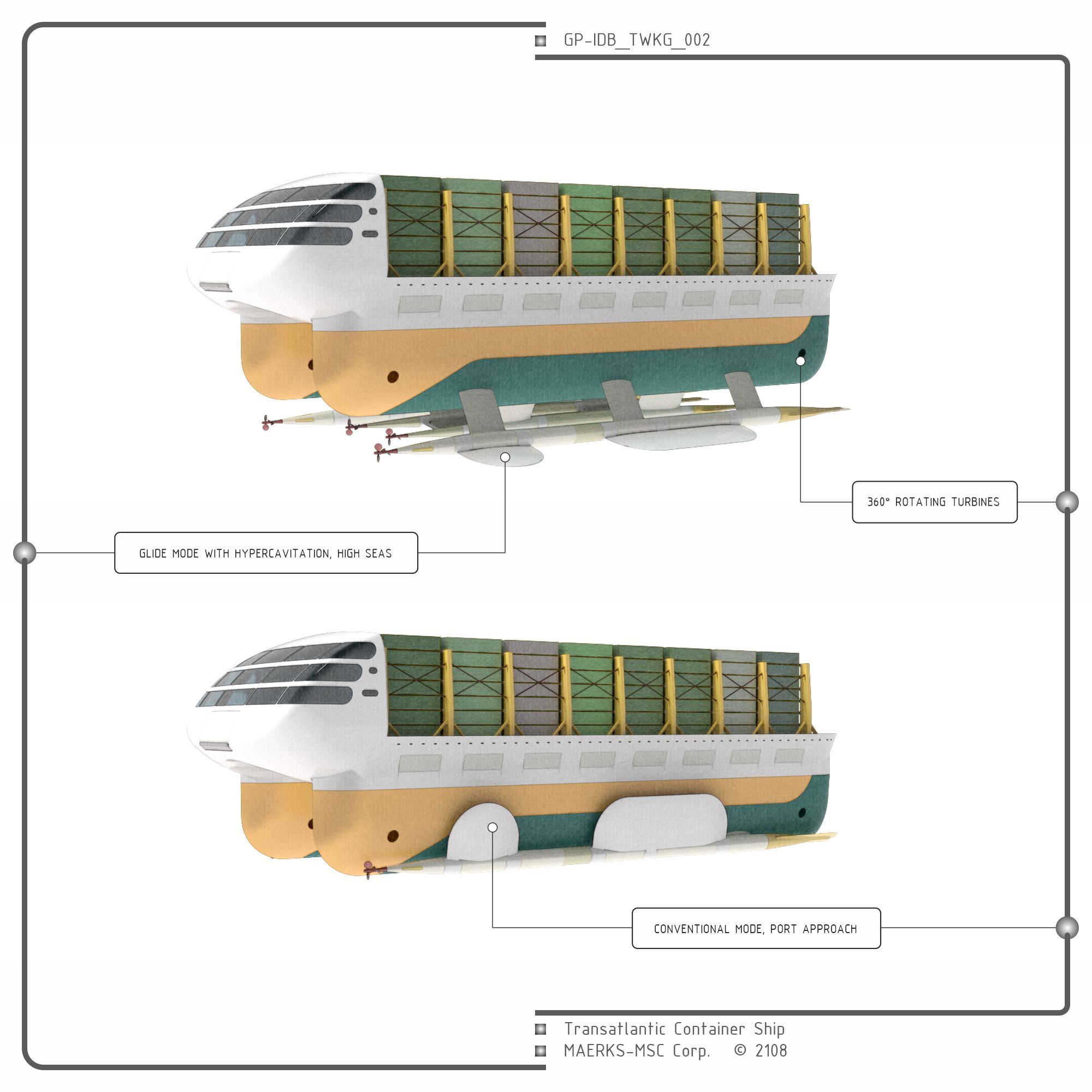
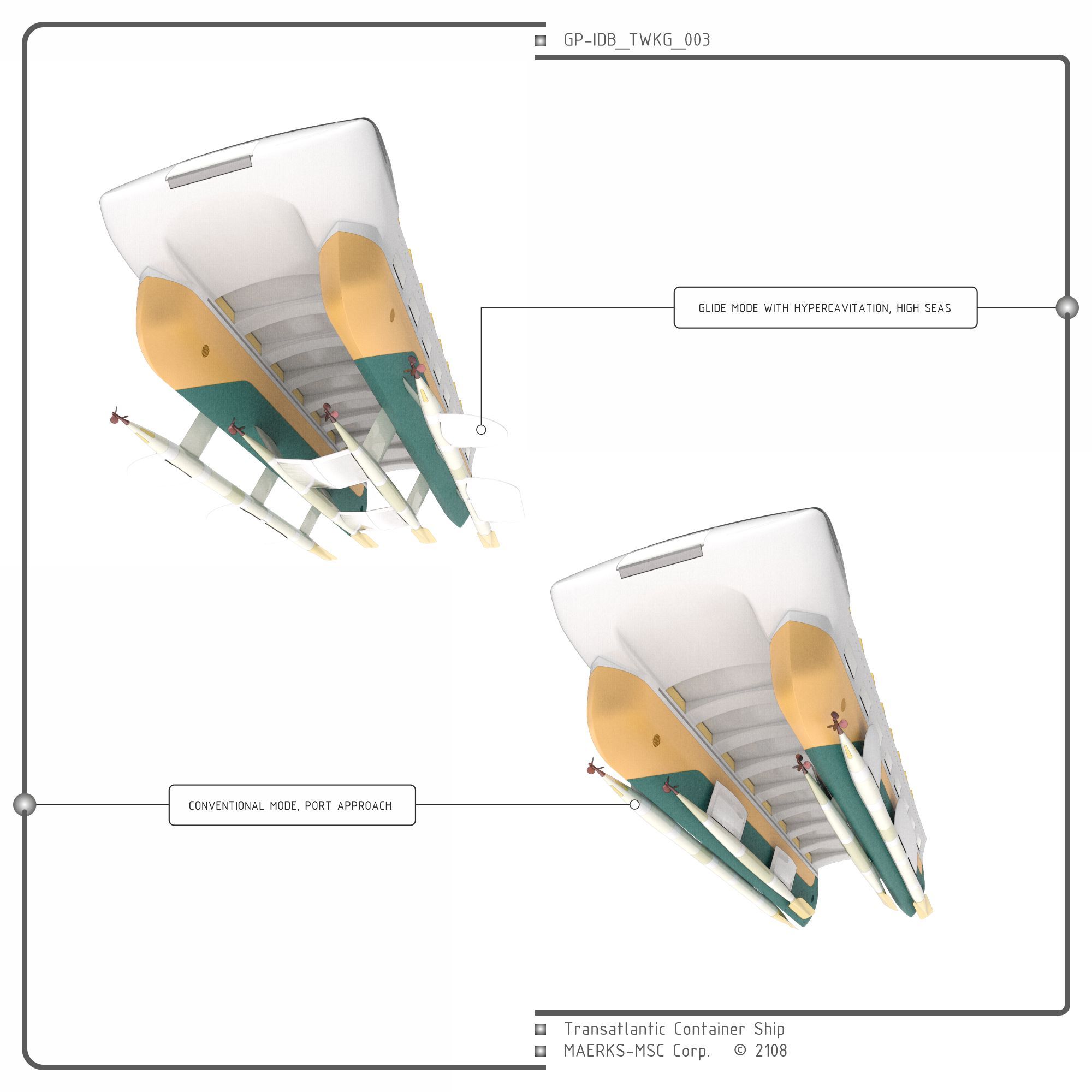
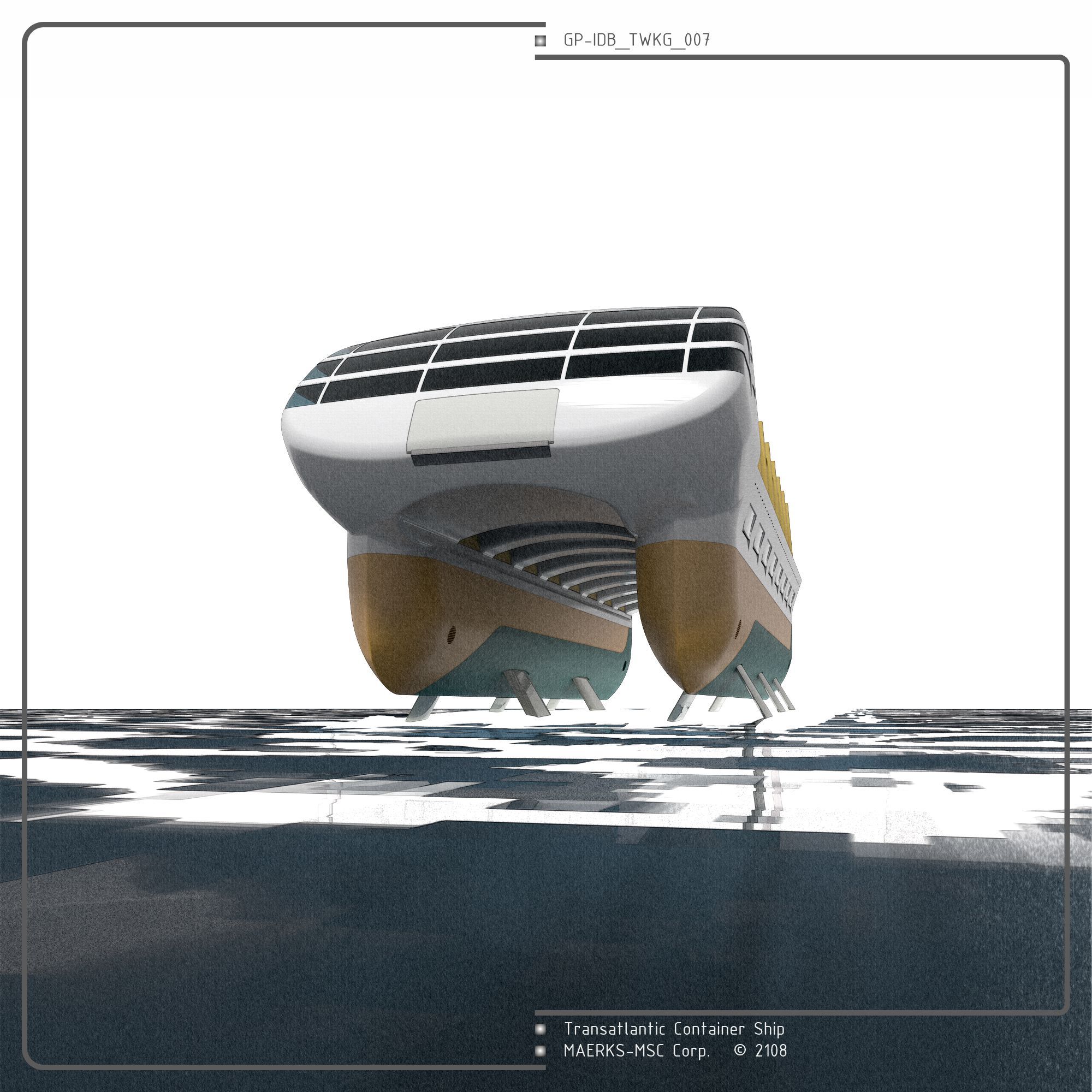
Logistical speed could be achieved with new stevedoring robot technologies. Speed at sea, always limited by the length of the ship, remained an unsolvable problem until the mid-2070s. New hypercavitation thrusters, combined with classic hydrofoil ship technologies, then made it possible to take a ship’s hull completely out of the water and propel it by planing at over 45 knots, with container loads of up to 15,000 mt.
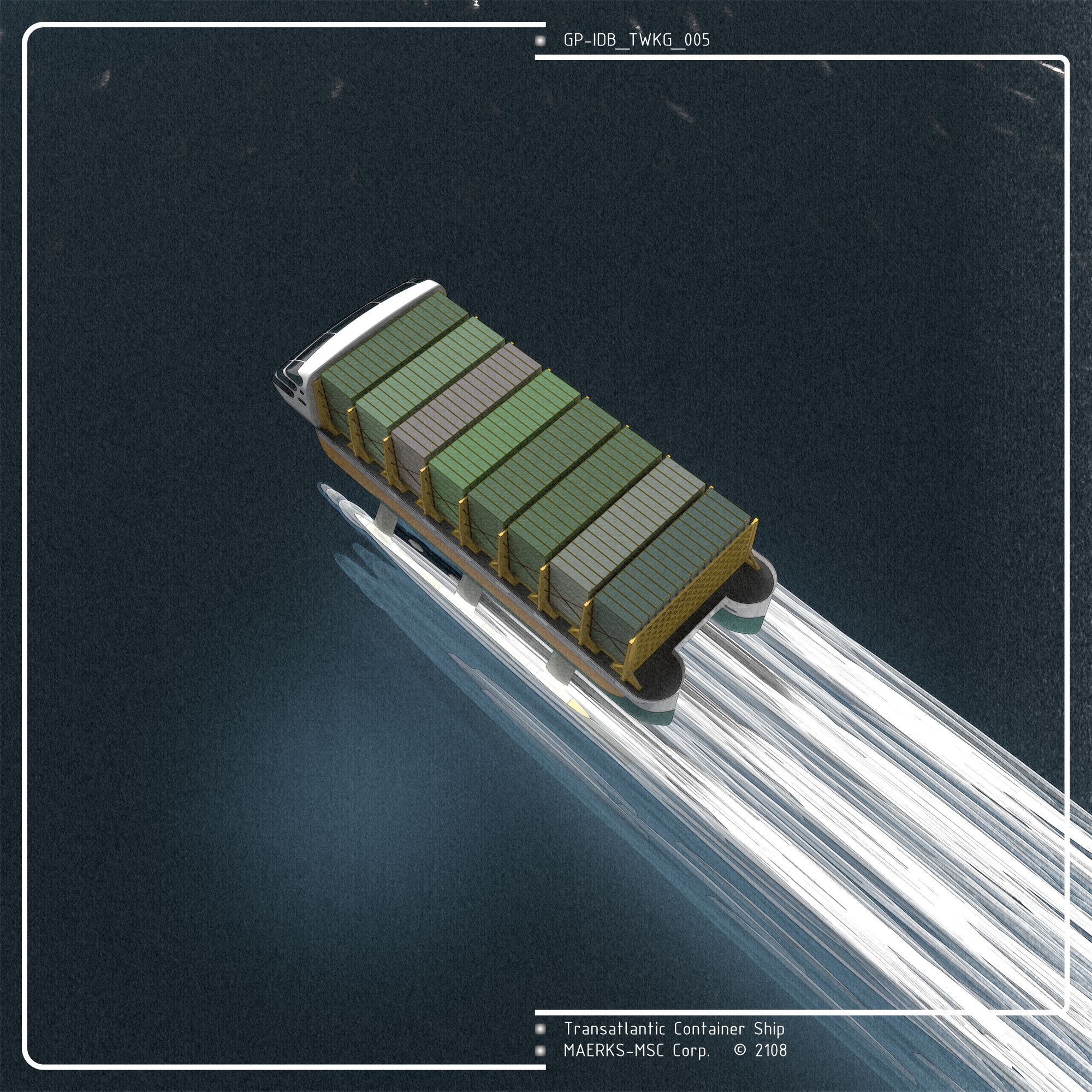
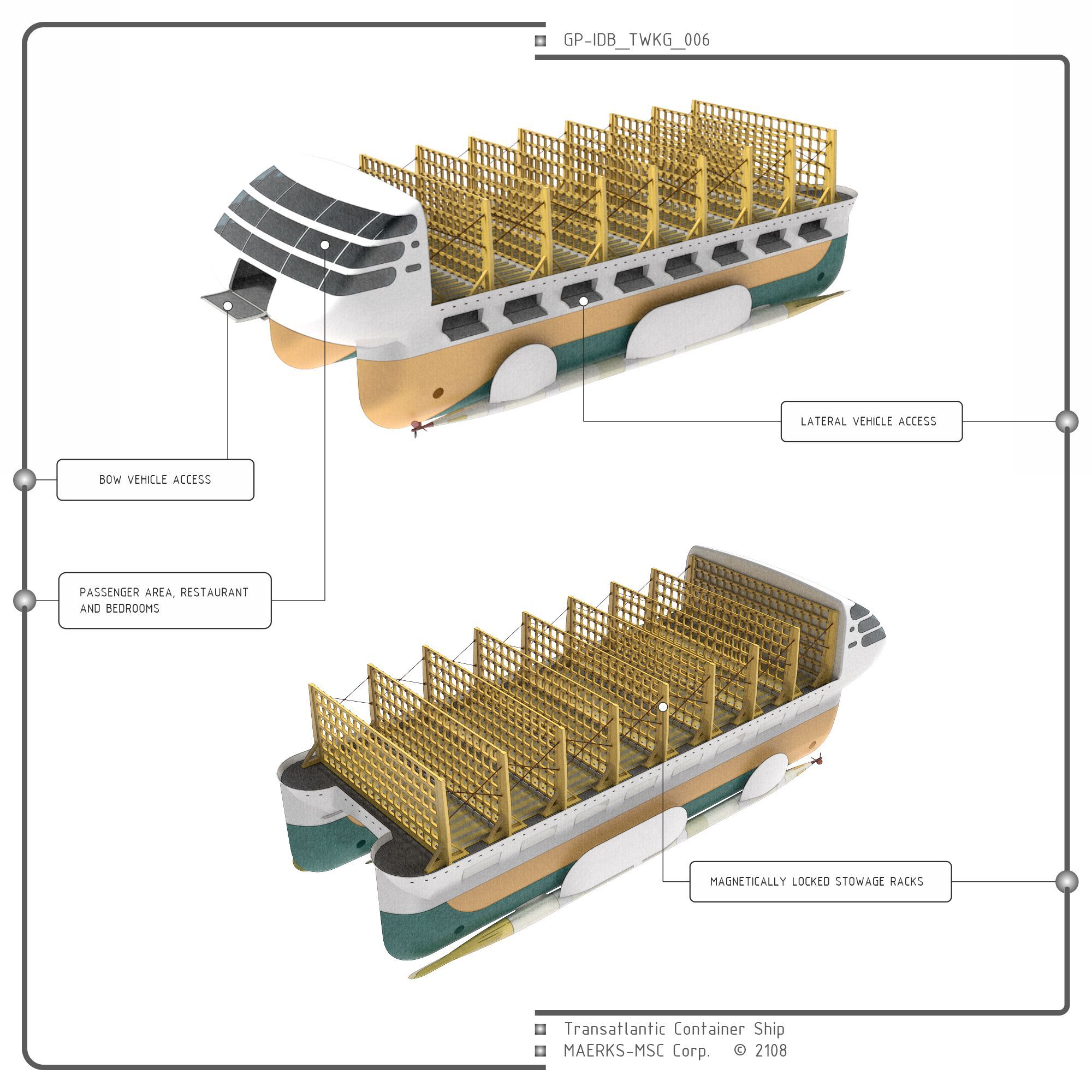
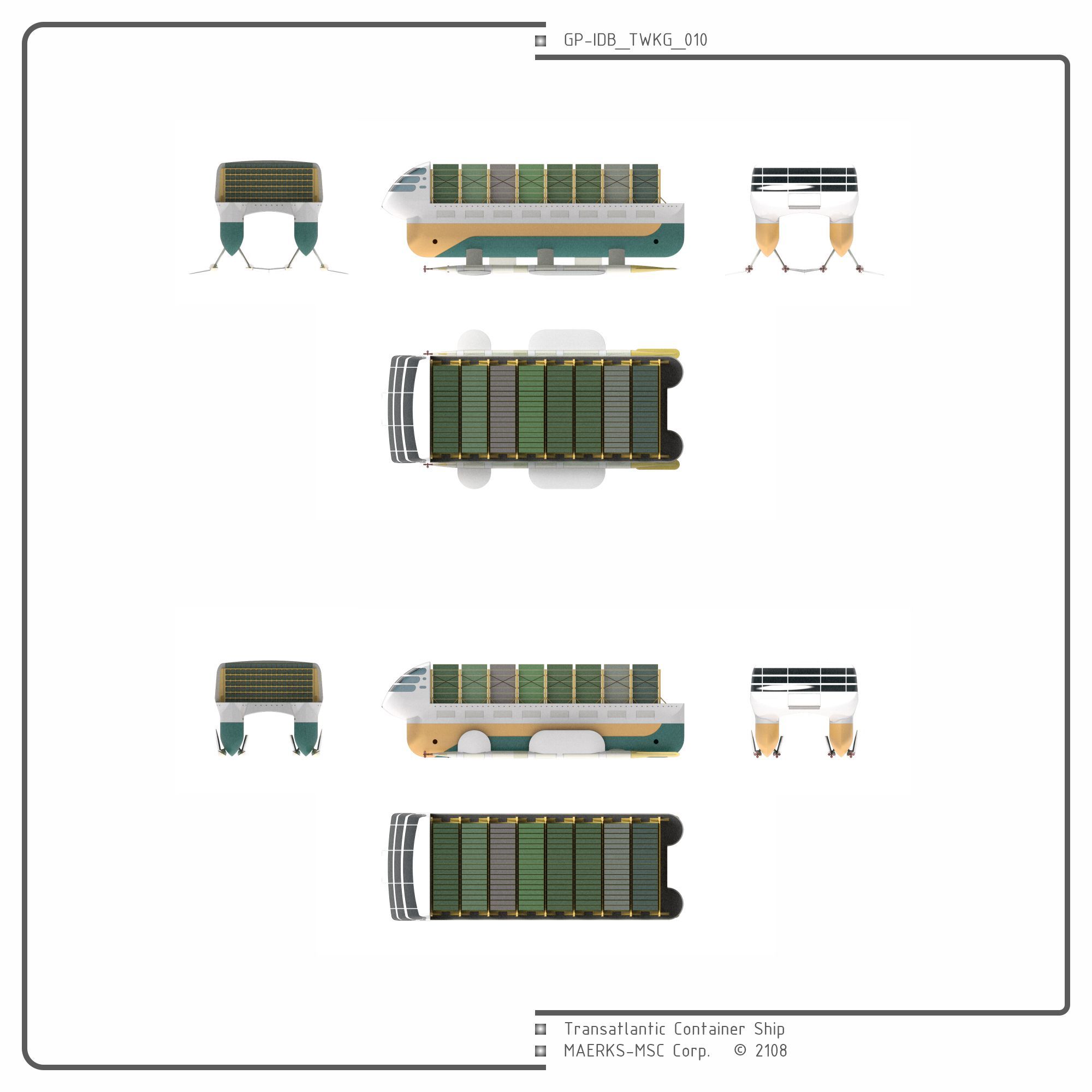
Today these figures have been surpassed with the gliding catamaran type. TwinKargo Class vessels reach 65 knots (120 km/h) speed, carrying around 25,000 tonnes of container cargo. This means that a Lisbon-Miami voyage can be completed in just 5 to 6 hours, an absolute revolution in maritime transport since the beginning of this century. Given their speed, the latest models have space for buses, trucks and cars. In the upper part of the bow, they have rooms, a living area and a restaurant for the professional and technical passengers who use this type of transatlantic journey.
Characteristics
LENGTH: 131 m.
BREAM: 48 m.
DRAFT: 15 m.
DISPLACEMENT: 32.000 Tm.
MAX. SPEED: 65 Knots – 120 km/h
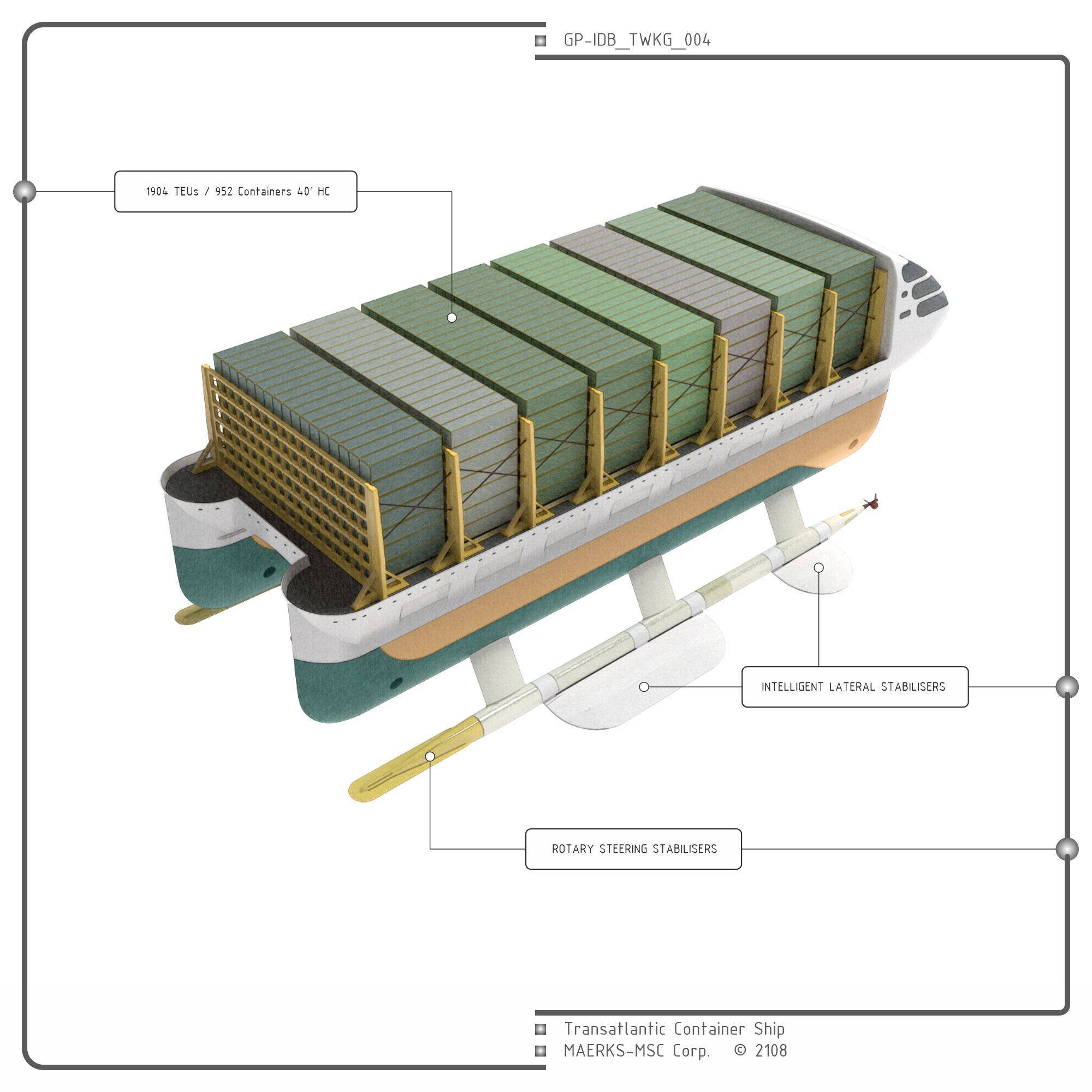
CAPACITY: 1904 TEUs / 952 Containers 40’HC
AUTONOMY: Indefinite
ENERGY SOURCE: Nuclear Fission / Pressurised Water Reactor T8W
ECO-ENERGY RATIO: 0,920