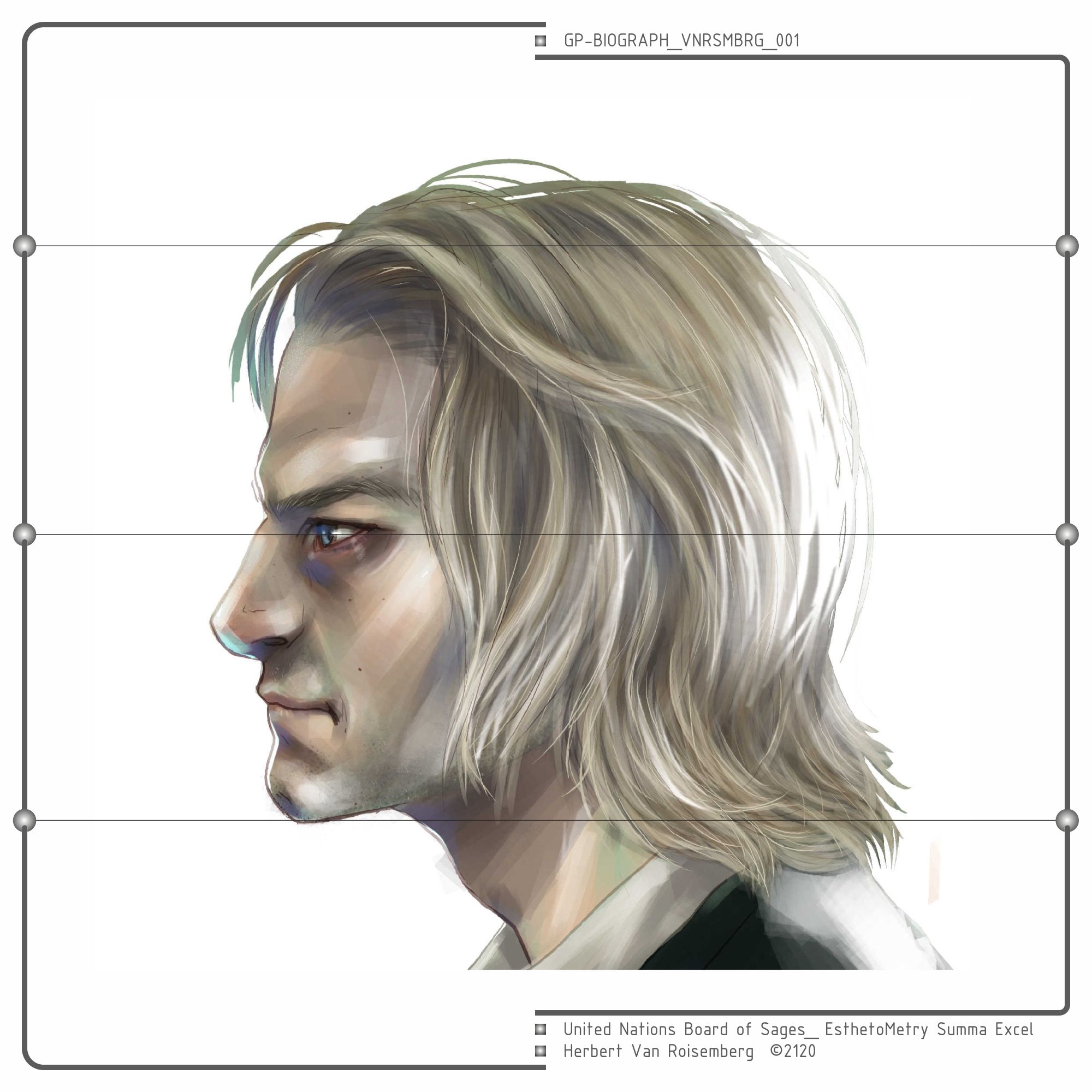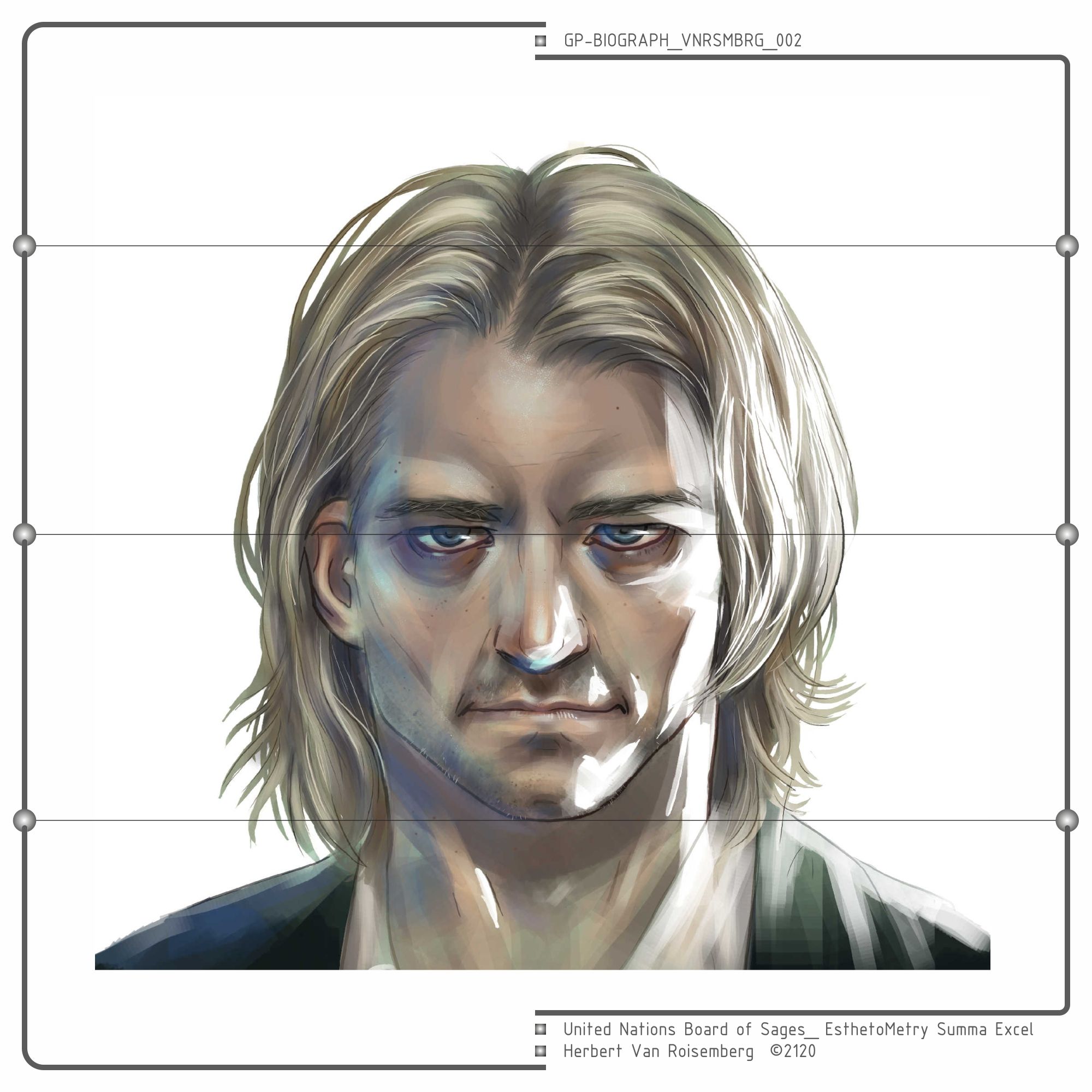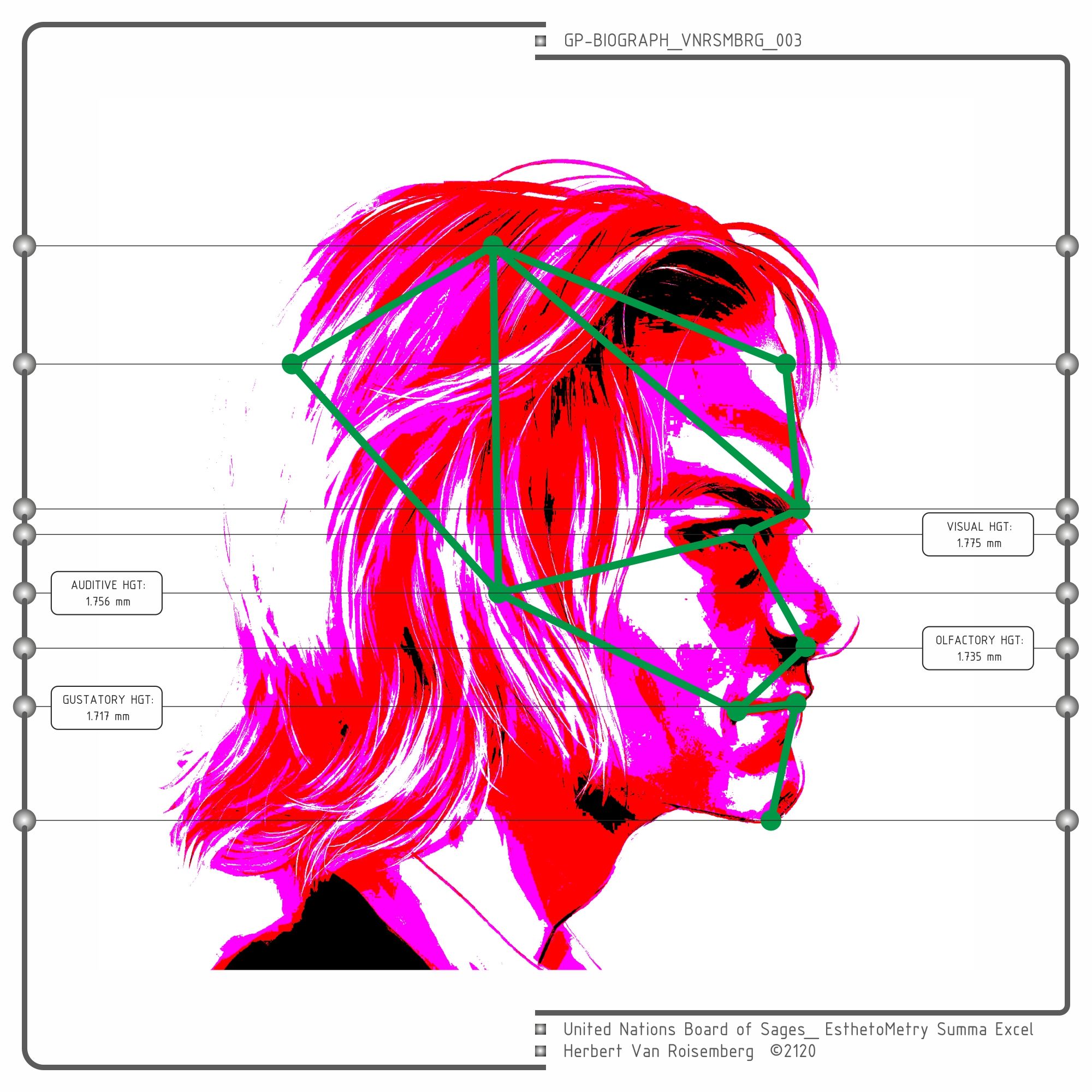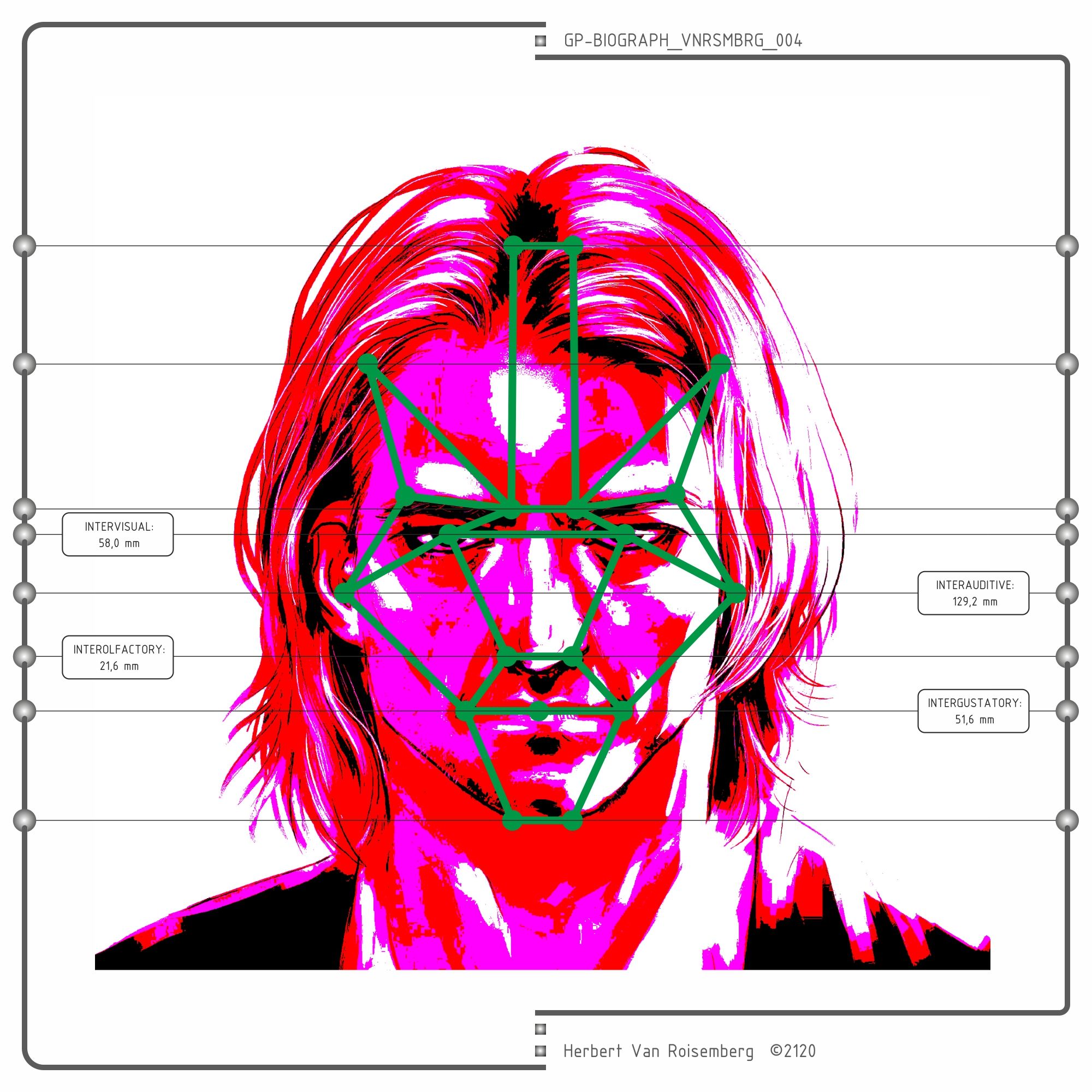
United Nations Board of Sages_ EsthetoMetry Summa Excel
Property
Copyright: H.L. Van Roisemberg © 01/09/2120
History
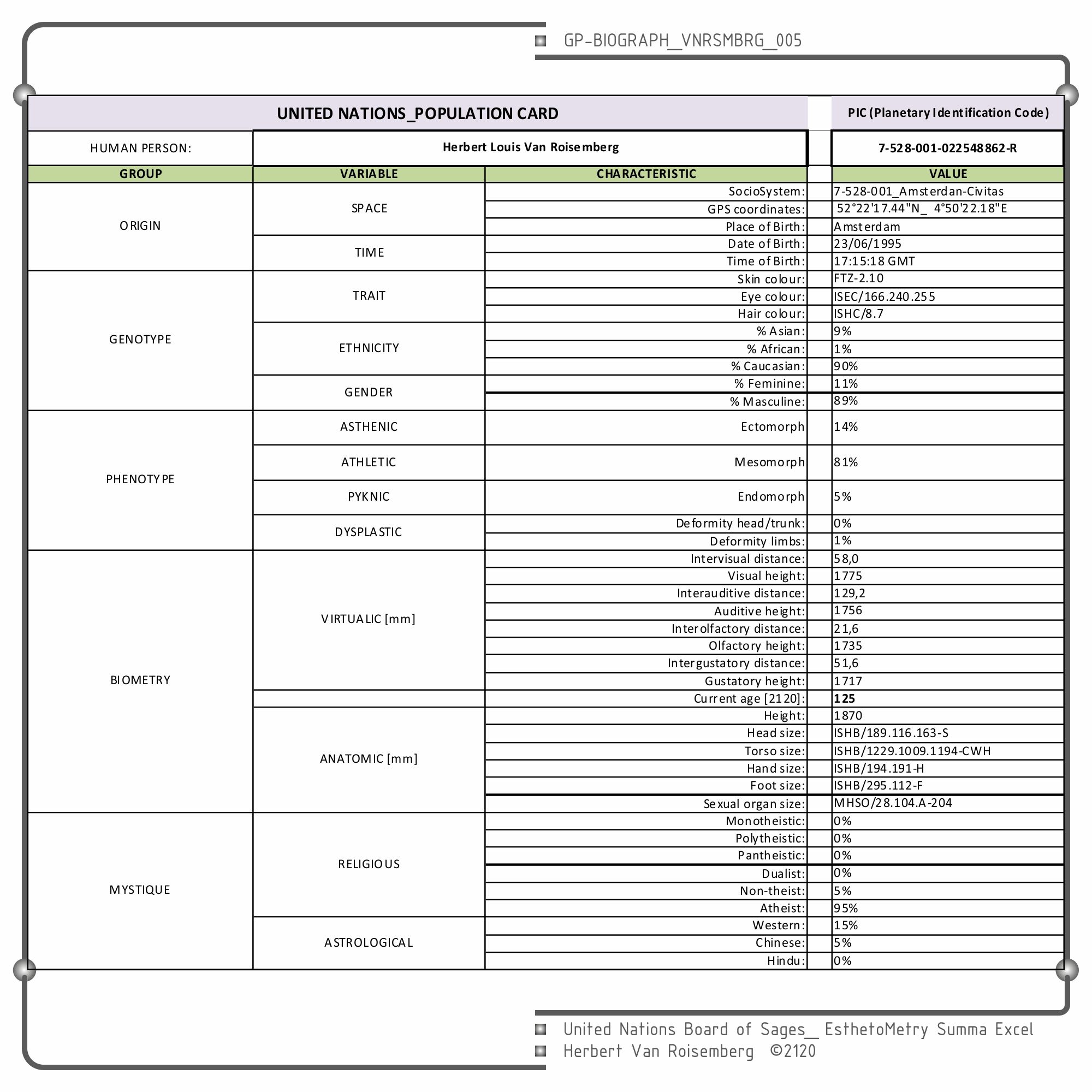
The third child of a family of translators, he was born at 17:15 in the OLVG Ziekenhuis hospital in Amsterdam on June 23, 1995. An extremely brilliant student, he studied Art History at the Sorbonne in Paris, obtaining his doctorate in 2015. He changed his residence to Valencia, studying Exact Sciences and earning his doctorate in Big Data from the Polytechnic University of Valencia. In 2019, at the age of 24, he moved to Berlin to study a double degree in Theology and History of Religions at the Humboldt University, where he became friends with Akira Isozaki.
Having exhausted the family funds available, in 2024 he traveled to the United States with a trainee contract at the multinational Amazon. His transversal skills made him stand out immediately, improving the corporation’s geolocation and product distribution algorithms. The then owner and founder Jeff Bezos took notice of him and appointed Roisemberg as Amazon Prime Video’s content consultant. At this time he developed his first theories on iconicity and consumption, with new algorithms for script writing that would substantially increase the company’s audiovisual sales.
After the revolution caused by digital simultaneous translators in 2035, which changed the structures of audiovisual consumption, commerce and human relations in general, he moved to Boston as a founding member of the Digital Development Institute in 2039.
As an associate professor at the School of Digital Art and Consumption, associated with MIT, he became the most influential scientist of his time, his theories being a must in all new degrees related to Big Data.
It was in 2063, at the age of 58, that he published “Mutational Algorithmics. Postulates for a Digital EstethoMetry”, considered the foundational work for the digital philosophy of the New Era. Together with the essays of Isozaki (2065) and Kaplan (2066) of the “Harvard Group”, an unthinkable field of applications was opened with the revolutionary Mutational Algebra, genesis of the new Digital Intelligence and therefore of the so-called “New Era”.
Currently, at the age of 125, his professional work is limited to the Direction of the EstethoMetry Section, acting as a Summa Excel member of the Council of Sages of the United Nations.
Characteristics:
| SocioSystem: | 7-528-001_Amsterdan-Civitas |
| GPS coordinate: | 52°22’17.44″N_ 4°50’22.18″E |
| Date of birth: | 23/06/1995 |
| Time of birth: | 17:15:18 GMT |
| Place of birth: | Amsterdam |
| Skin color: | FTZ-2.10 |
| Eye color: | ISEC/166.240.255 |
| Hair color: | ISHC/8.7 |
| % Asian: | 9% |
| % African: | 1% |
| % Caucasian: | 90% |
| % Feminine: | 11% |
| % Masculine: | 89% |