InterPol Transport Full Motion Robot
Property
Copyright: PSA-GMC-Toyota Consortium / InterPol / © 25/12/2088
History
Introduced in the late 2080s, the concept of a modular, urban robot responded well to the new needs of citizen security in the midst of the postDigital era. The levels of control achieved through satellite and horizontal imaging around the world made the enormous resources dedicated to police street patrolling unnecessary. The NEKSIA system could supply these agents and their armed presence in cities around the world instead. The implementation of the backpalm bioChip contributed greatly towards this decision, in addition to the refoundation of InterPol as the new global security agency.
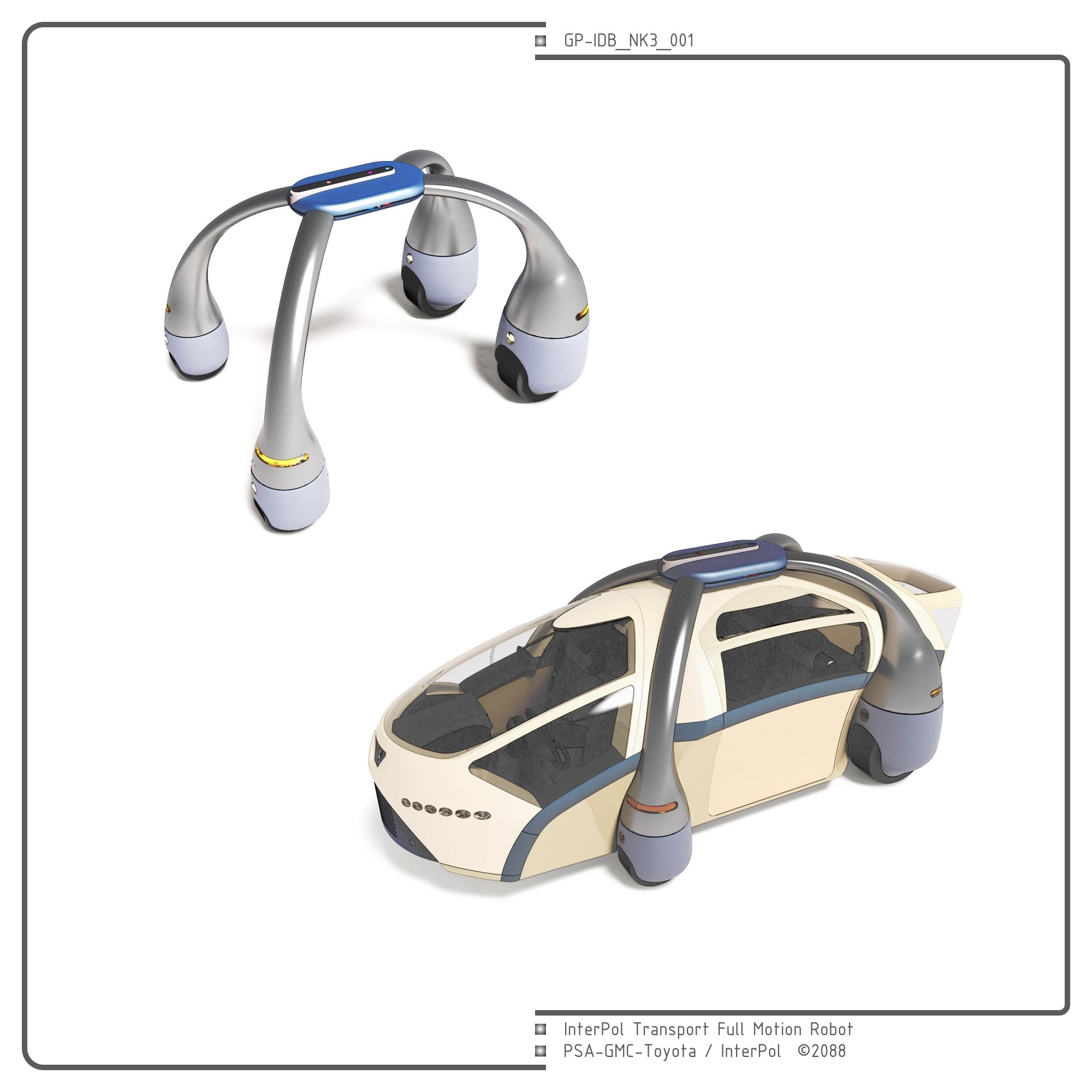
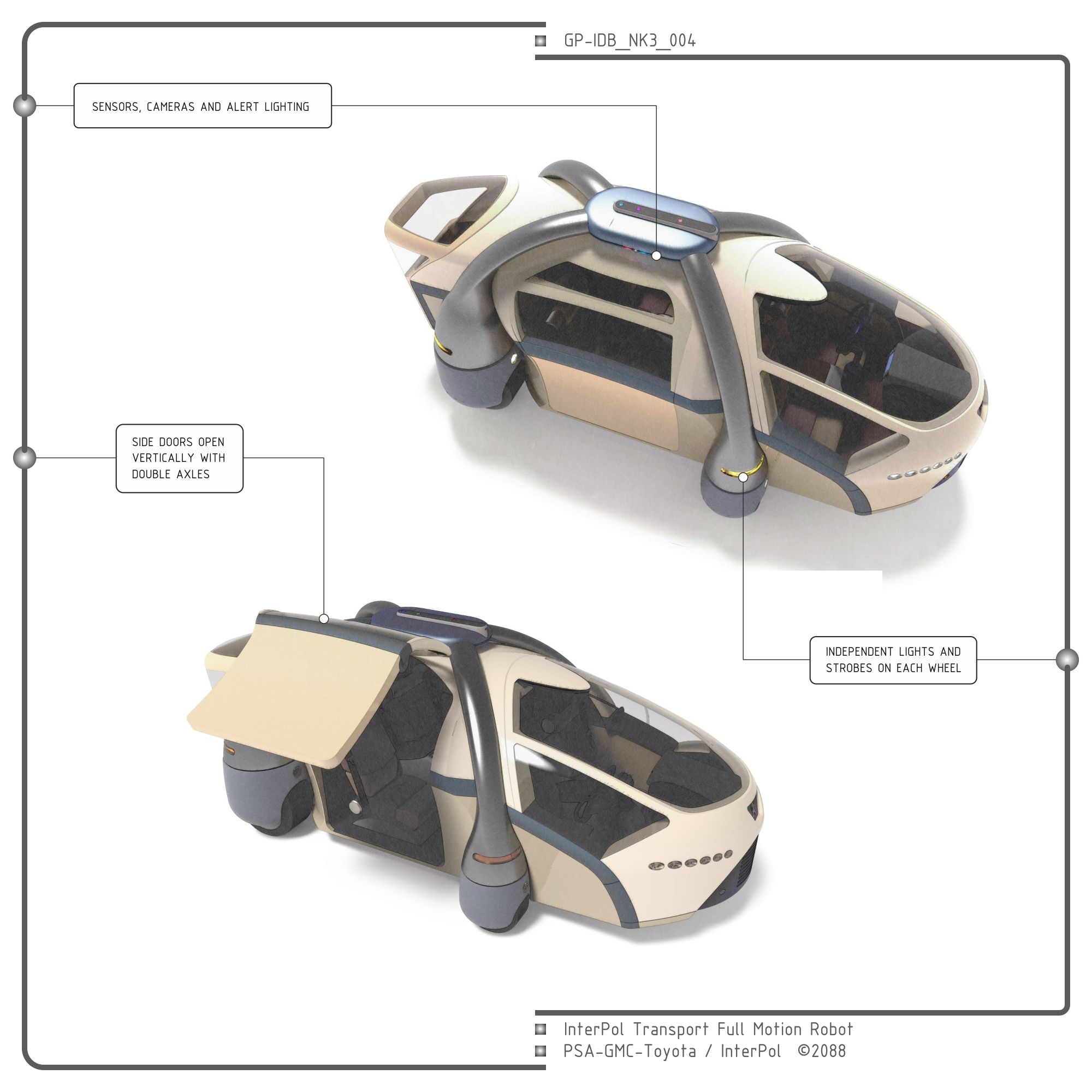
The NEKSIAs have stereoscopic and holographic cameras and their anamorphite processor allows them to detect weapons with electronic ammunition. They operate in coordination with each other globally and with the InterPol centers of each continent. They can pursue, block and stop any suspicious vehicle fleeing a migration control.
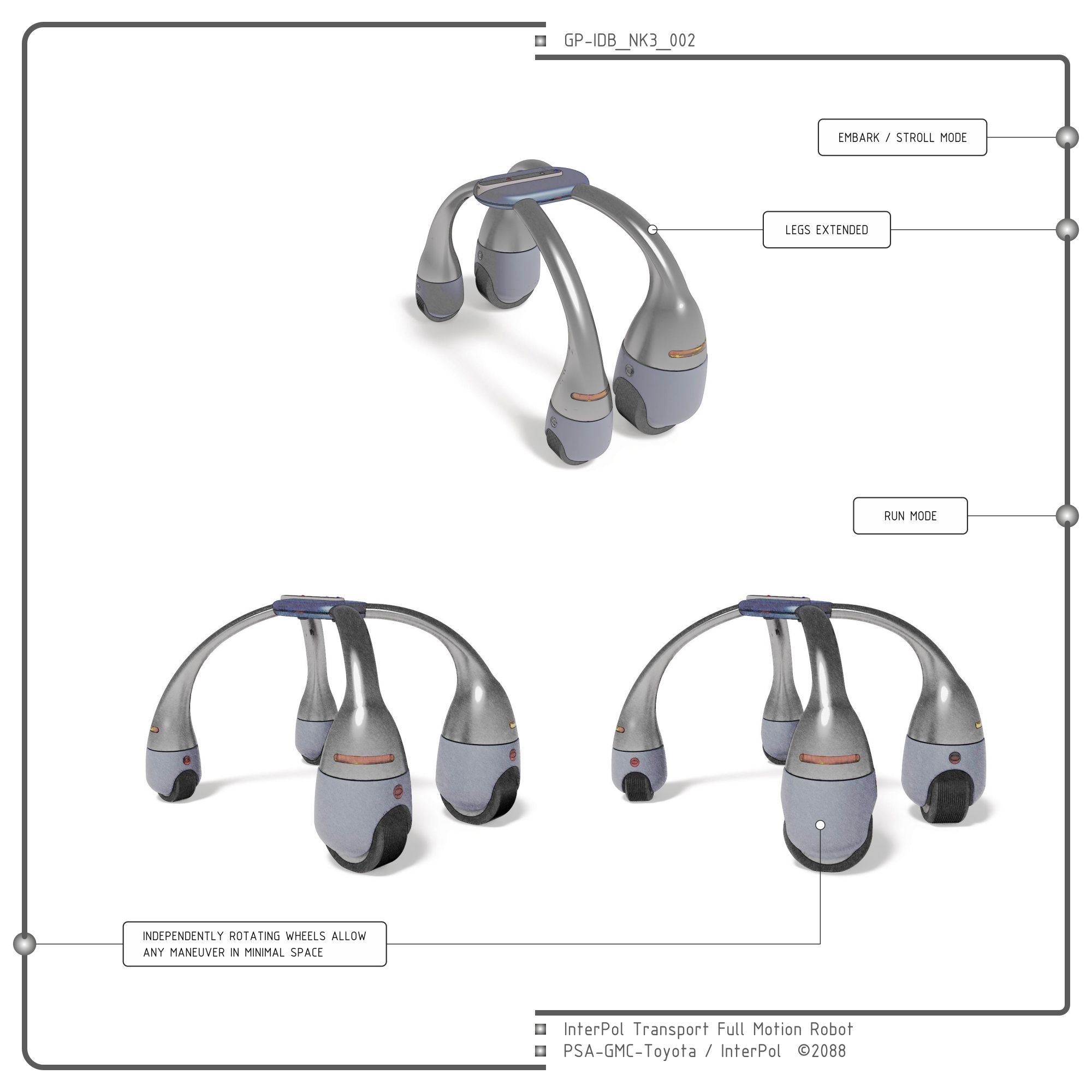
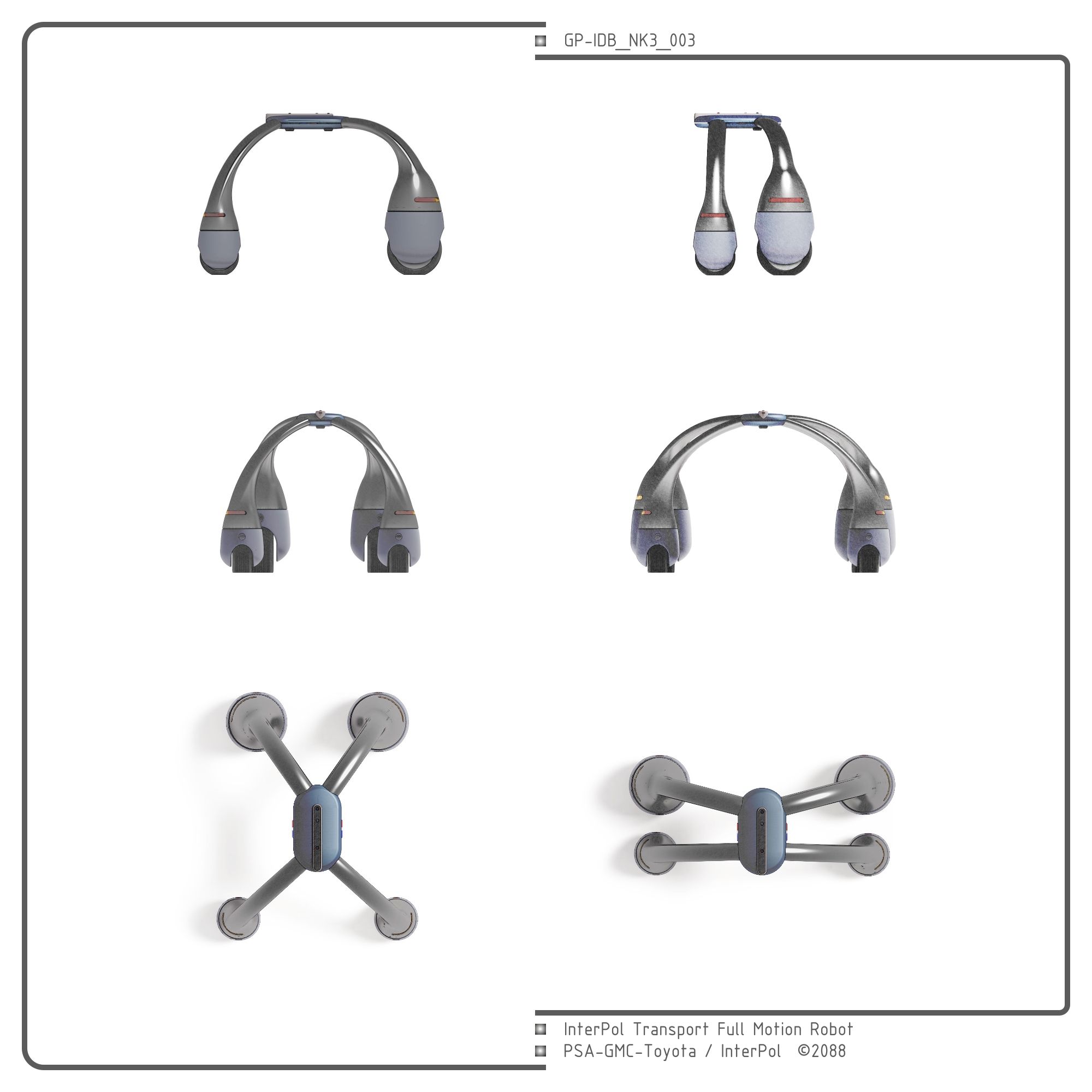
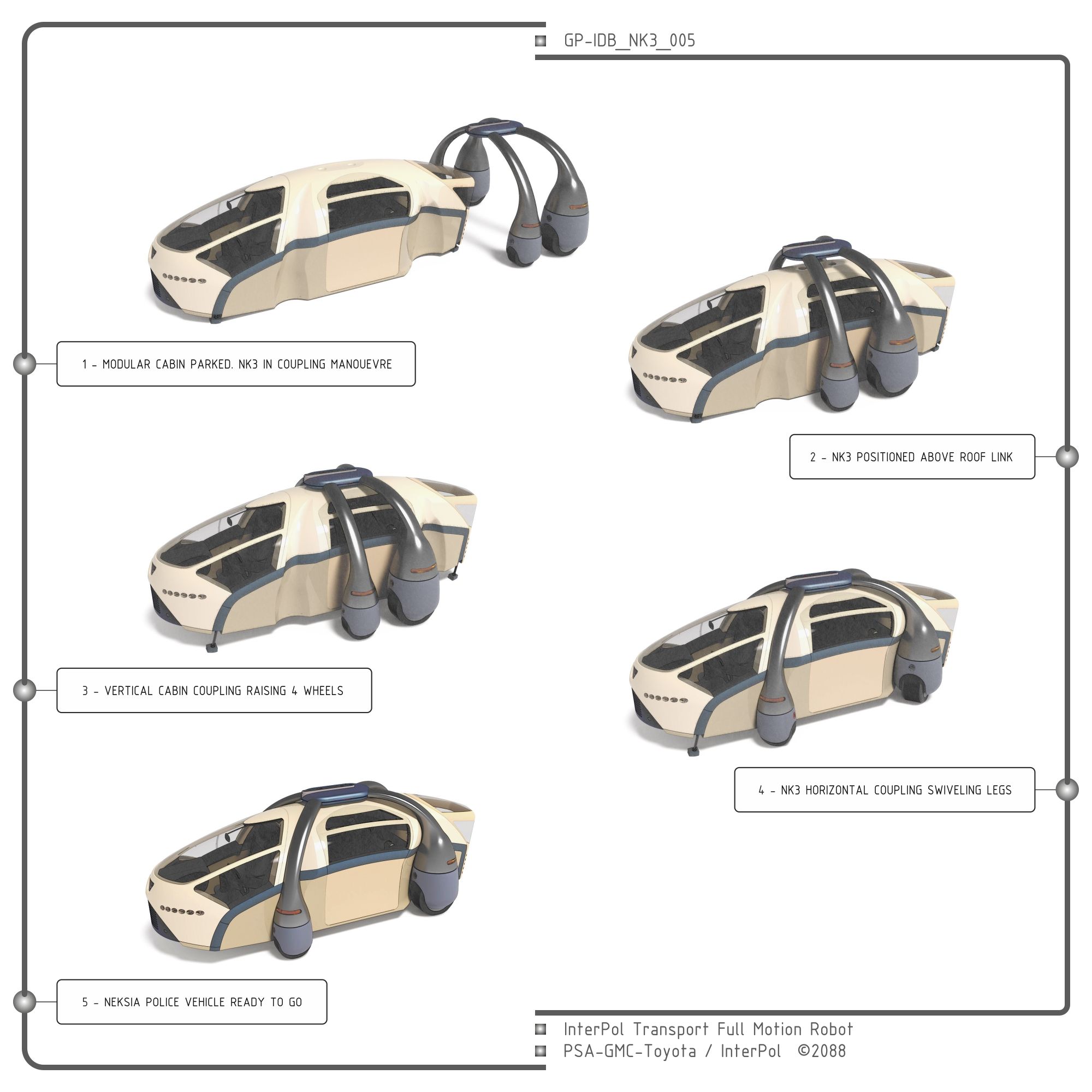
The design of the entire NEKSIA program was done using intelligent creation software and the latest advances in algorithms to adapt the appearance of the new police to the requirements of the New Age: interracial, intercultural, ecological and autonomous. Its likeness to a four-legged animal transmits feelings of confidence and respect alike. Its ultra-light structure of technopolymers is undeformable, and its powerful 4 engines provide the greatest flexibility on any interurban road, on streets and even on pedestrian sidewalks.
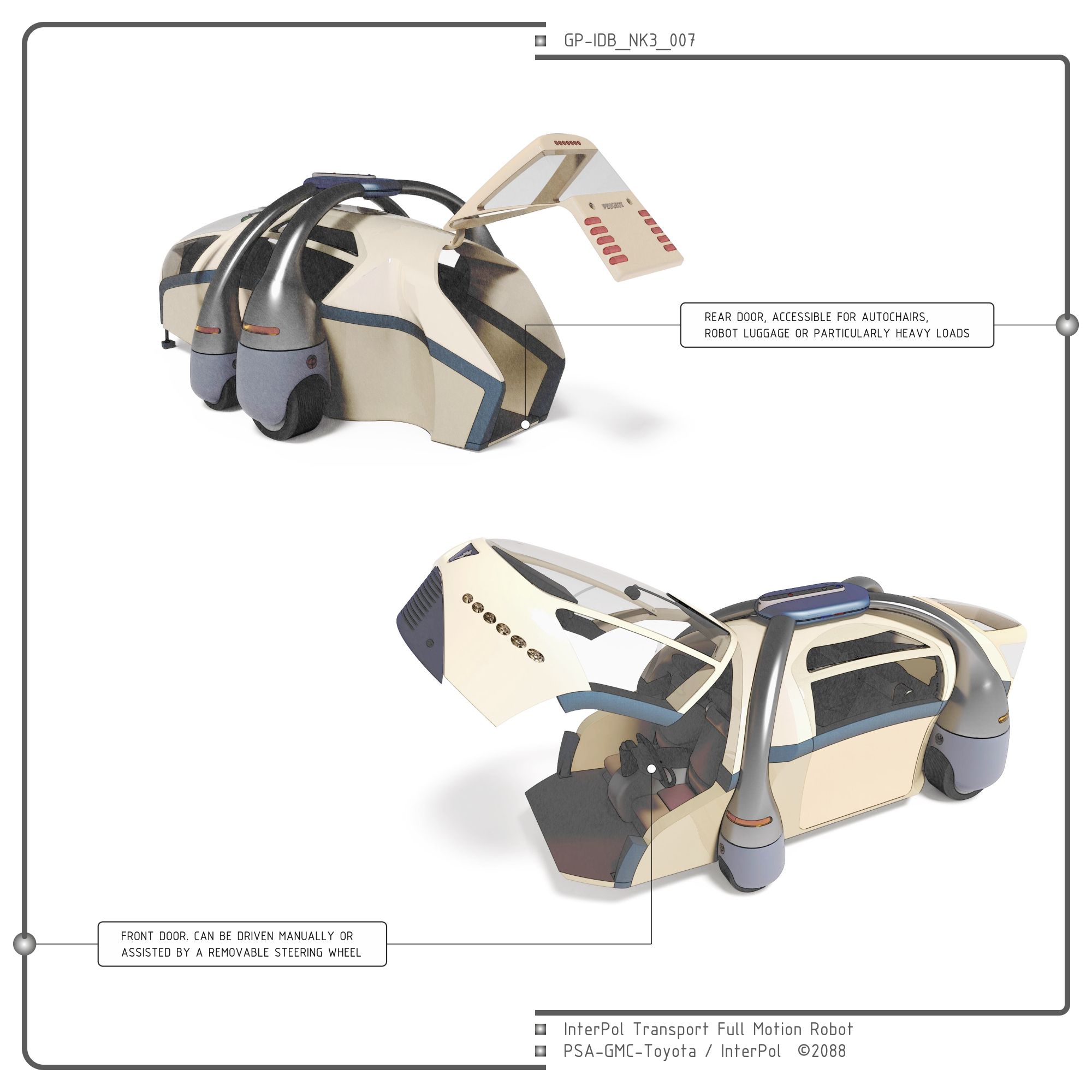
The different models of passenger cabins have their own electric batteries that supply power to the legs of the robot when coupled for InterPol staff travel. By operating the same robot model around the globe, it is the cheapest vehicle to manufacture and the one with the largest number of units. There are NEKSIA factories on all 5 continents.
Characteristics
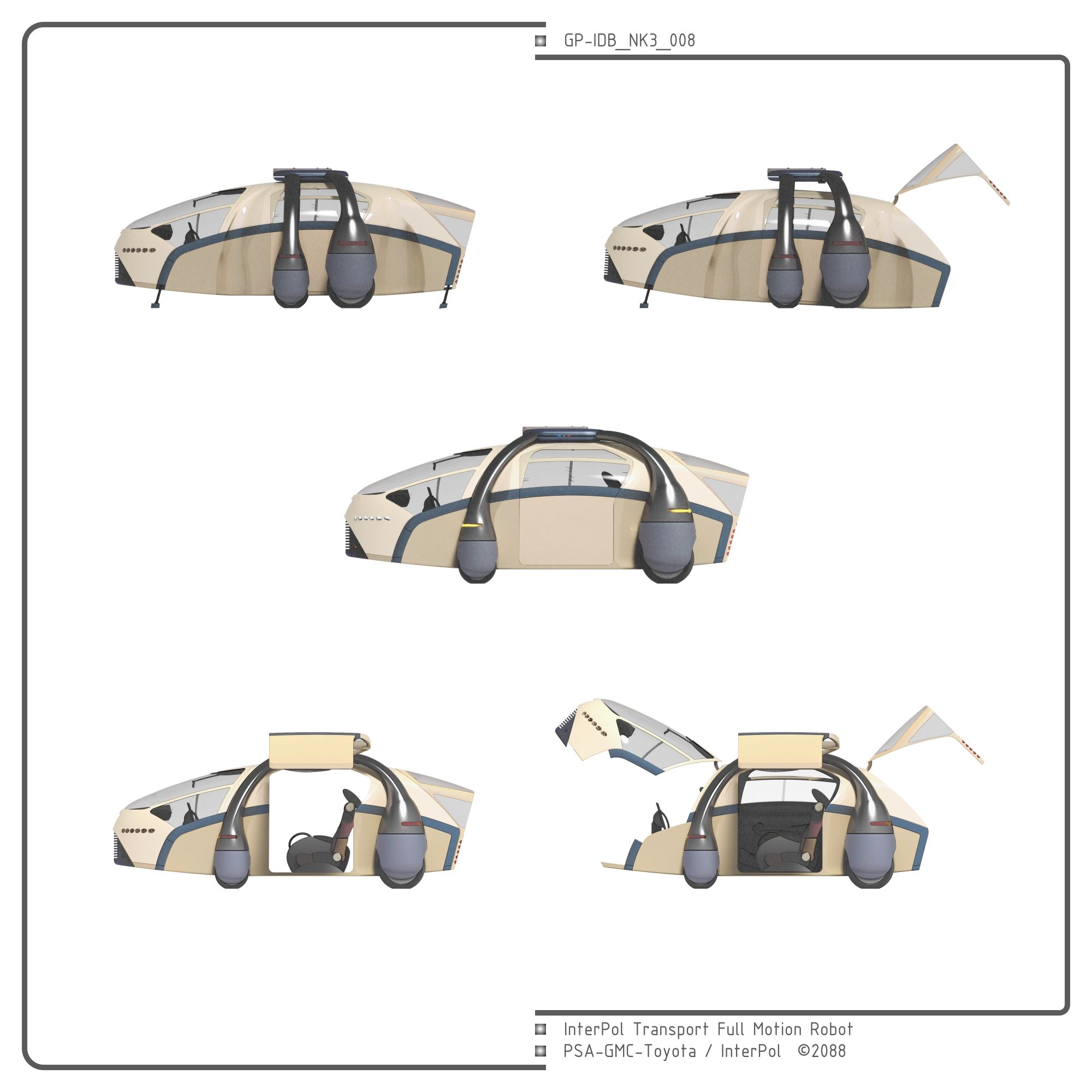
CAPACITY : 4 passengers + 1 autonomous seat or baggage
RANGE:
NK3 robot: 70km at 360kmh
With cabin: 1,600km at 200kmh
POWER SOURCE: Storage Batteries / SocioSystemic Electric Grid
ECOENERGETIC RATIO: 0.891
DIMENSIONS:
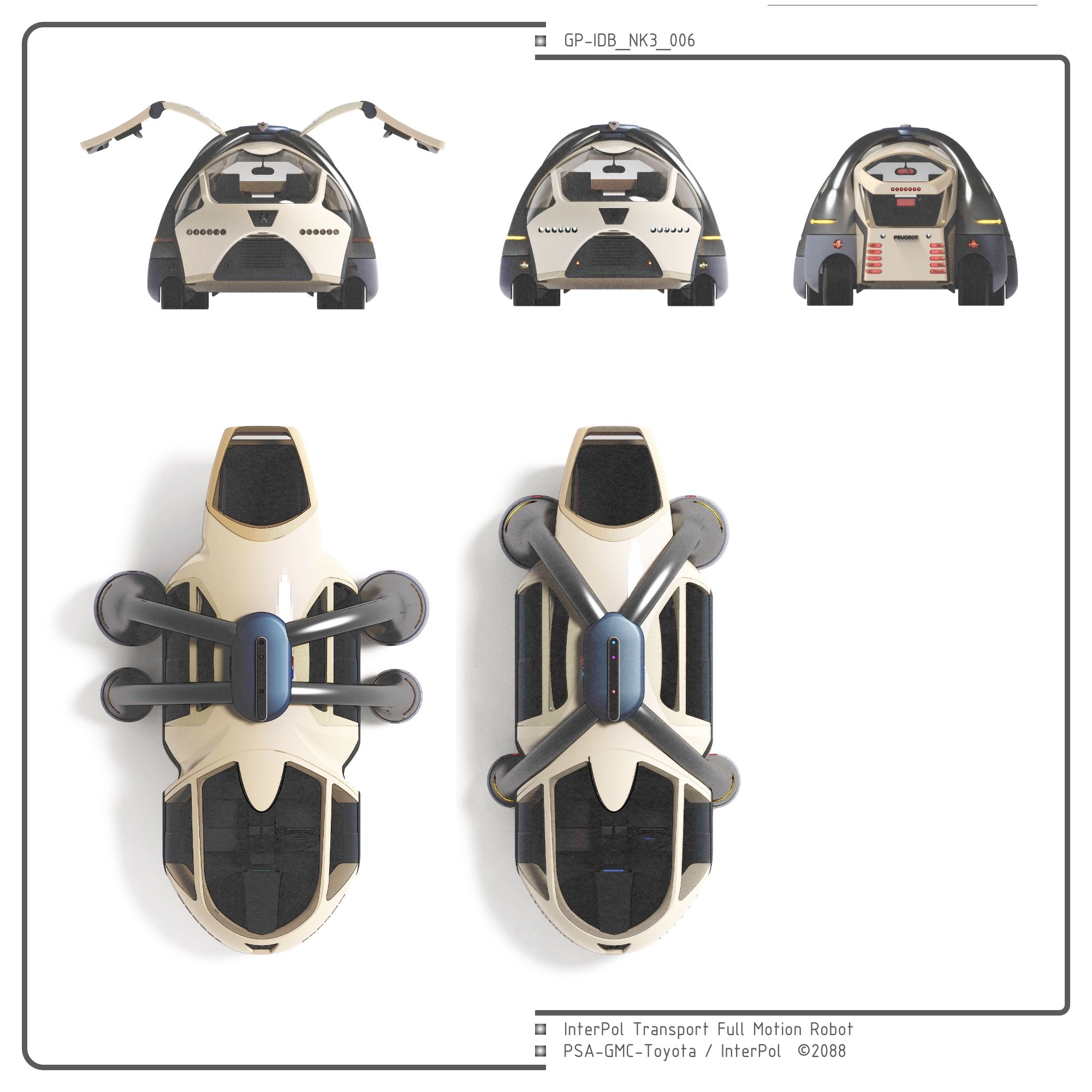
NK3 robot: 2,548 x 2,065 x 1,675mm
Cabin: 4,310 x 1,610 x 1,515mm