Global Digital Money
Property
Copyright: United Nations Bank / © 06/05/2048
History
Due to the successive periods of economic stagflation in most countries during the 2030s and 2040s, the elite of economists and the leaders of the major financial groups agreed that the foreign exchange market was not conducive to capitalist economic growth. Rather, it was detrimental to it.
During the spring of 2047, the IMF’s radical but credible proposal did not surprise any of the economic agents: a single global currency and the return to a physical standard, be it gold, diamonds, or any other.
The second great crisis of the 21st century in 2033, proved that cyclical bubbles always benefited a minority of financial elites to the detriment of the immense majority of the population. Trade tensions between states, and even within them, continued to increase in a worrying way.
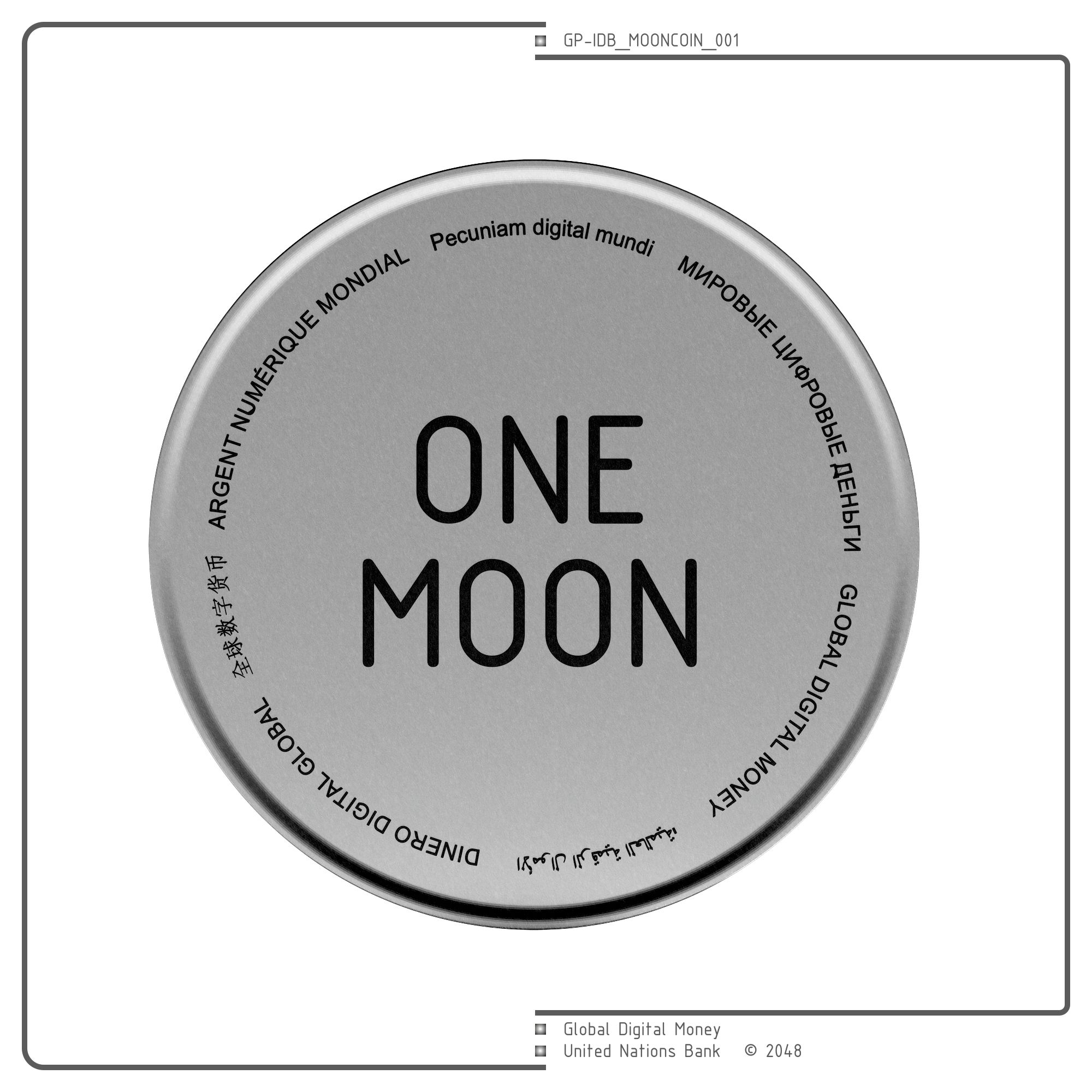
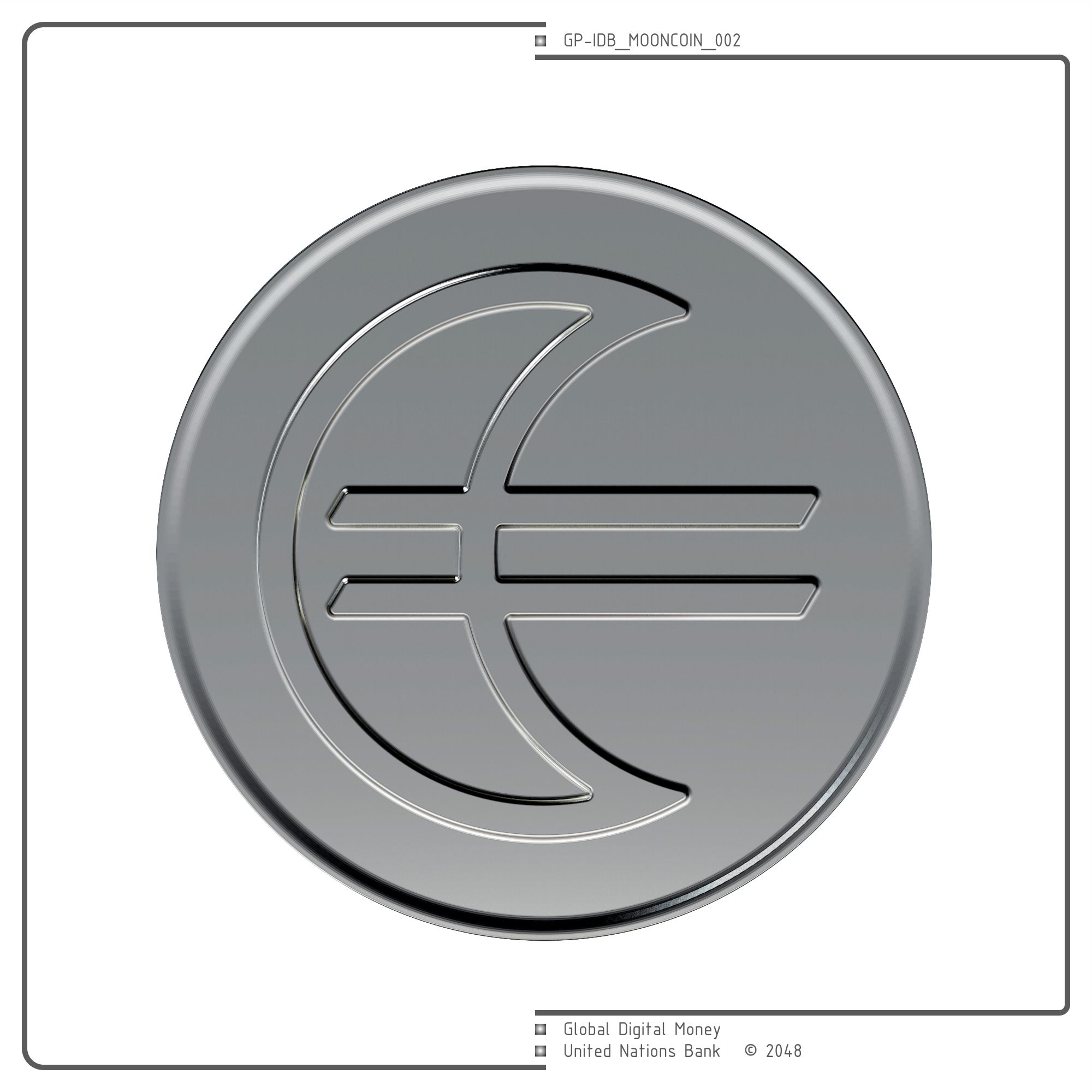
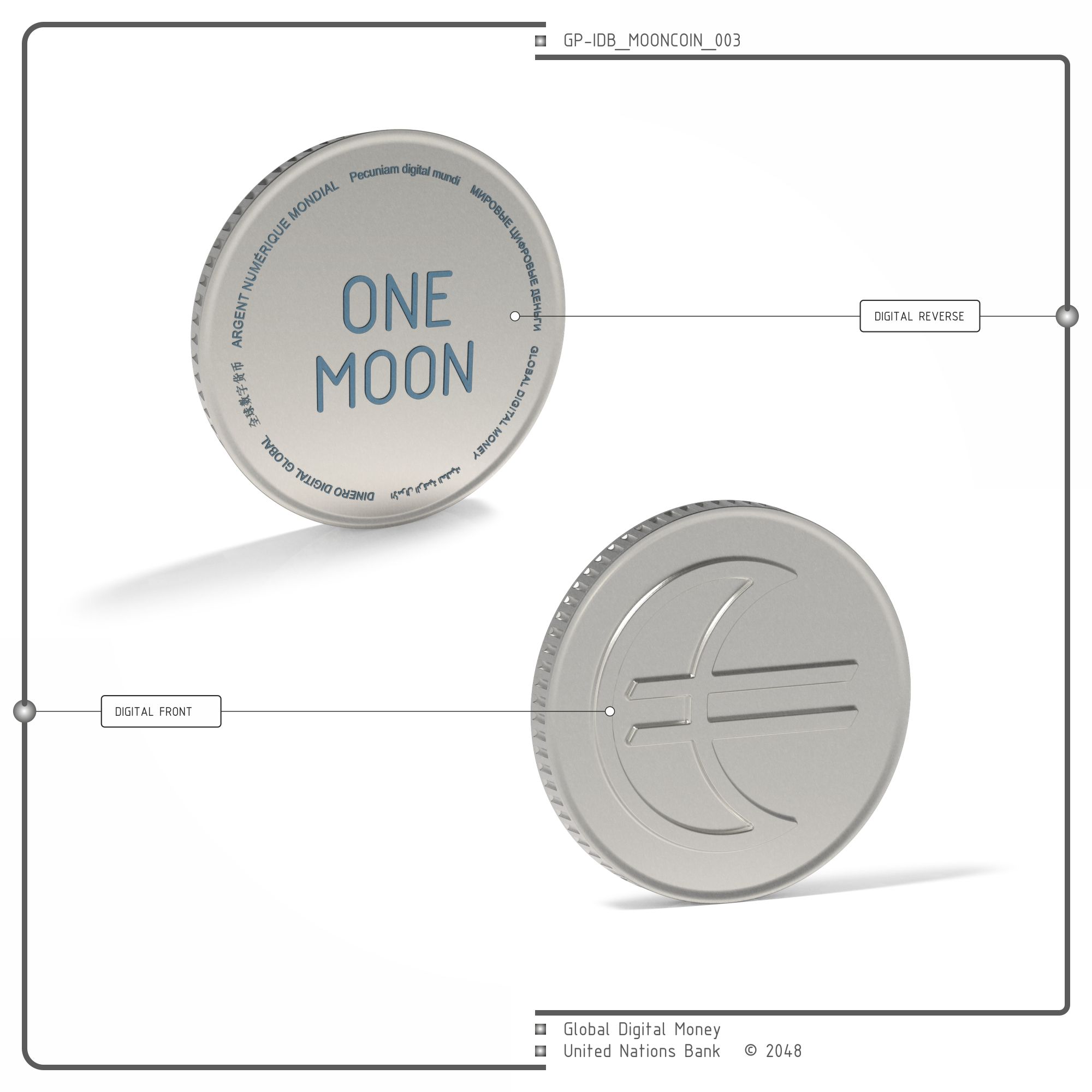
After over a year of international negotiations, the plenary session of the United Nations on 21 March 2048 voted in favour of the first economic and planetary resolution on unifying all currencies of the nation states. The new currency was named “Moon” (colloquially called Mooney in English). The physical support for it would be the lunar anamadium dioxide, fifty times more expensive than gold on Earth.
The market value ratio would always remain as:
1 Moon = 1 mg of anamorphite
It was also agreed at that same plenary session that the new global currency should come into force on 1 January 2049. A transition period of 5 years was established so that each state could progressively withdraw the paper money from circulation and exchange all the cash that people had not deposited in banks.
Historians marked that day as the birth of Postcapitalism.
Characteristics
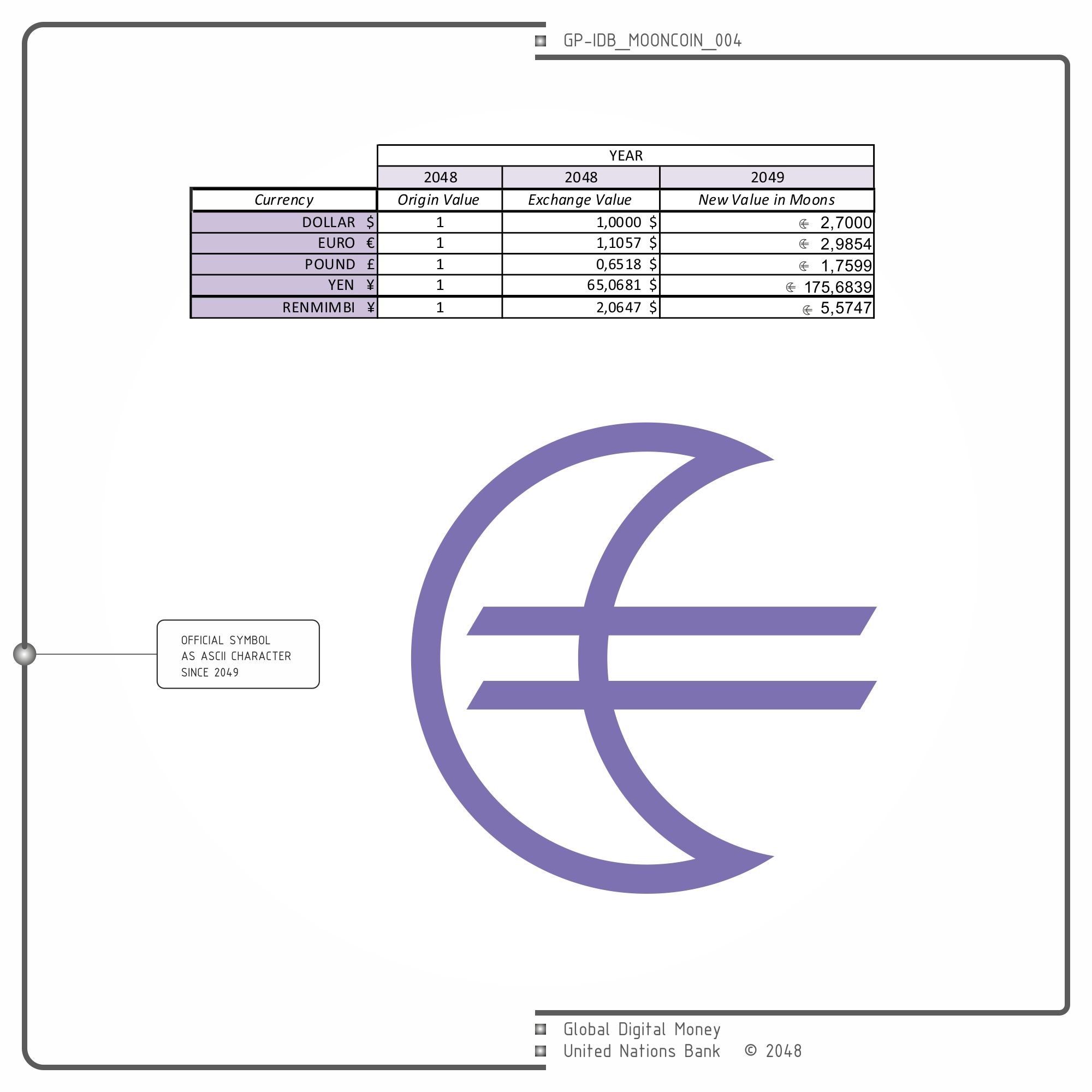
The table below shows the exchange rates of the new single currency Moon at the time of its global implementation:
| YEAR | |||
| 2048 | 2048 | 2049 | |
| Currency | Origin Value | Exchange Value | New Value in Moons |
| DOLLAR $ | 1 | 1,0000 $ | 2,7000 |
| EURO € | 1 | 1,1057 $ | 2,9854 |
| POUND £ | 1 | 0,6518 $ | 1,7599 |
| YEN ¥ | 1 | 65,0681 $ | 175,6839 |
| RENMIMBI ¥ | 1 | 2,0647 $ | 5,5747 |