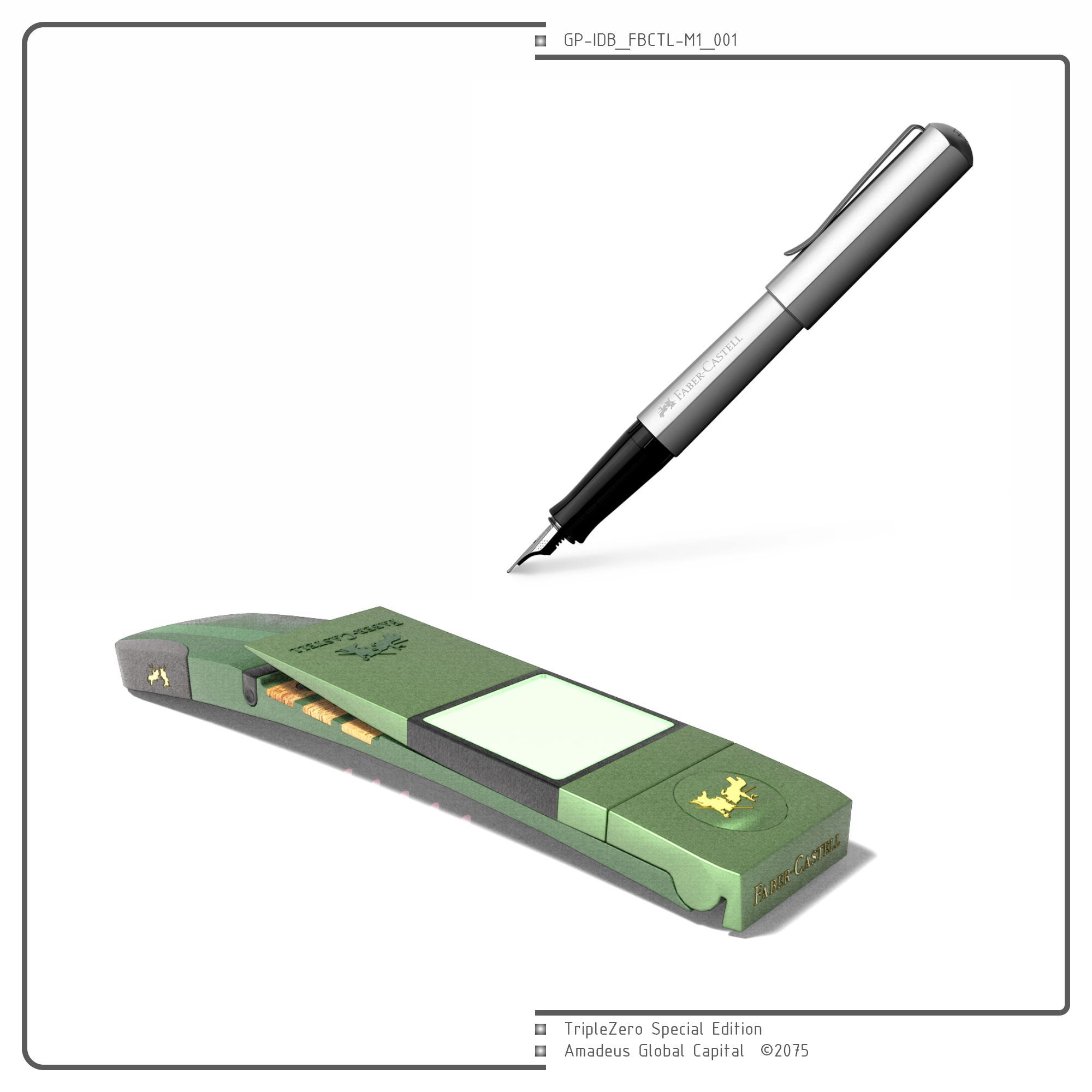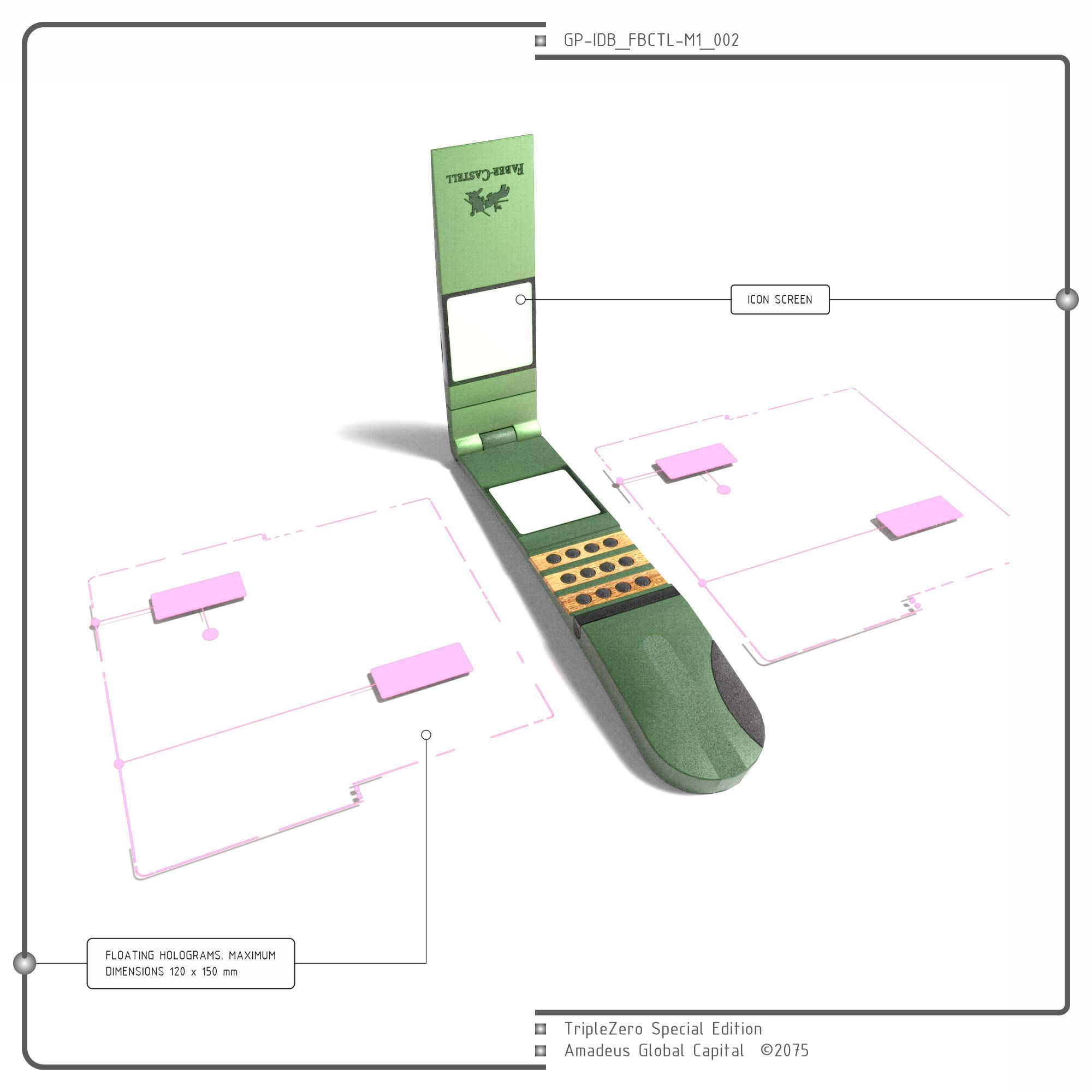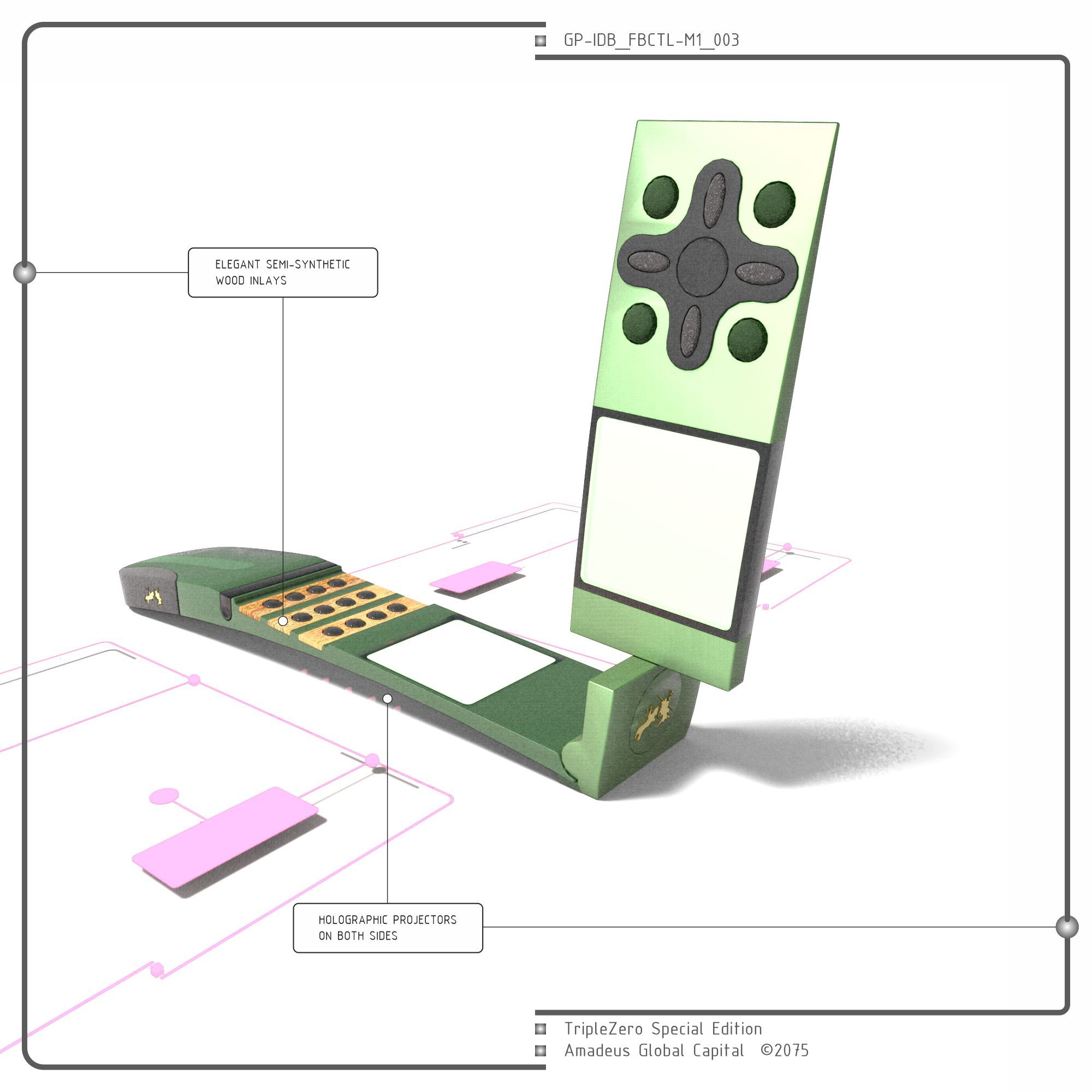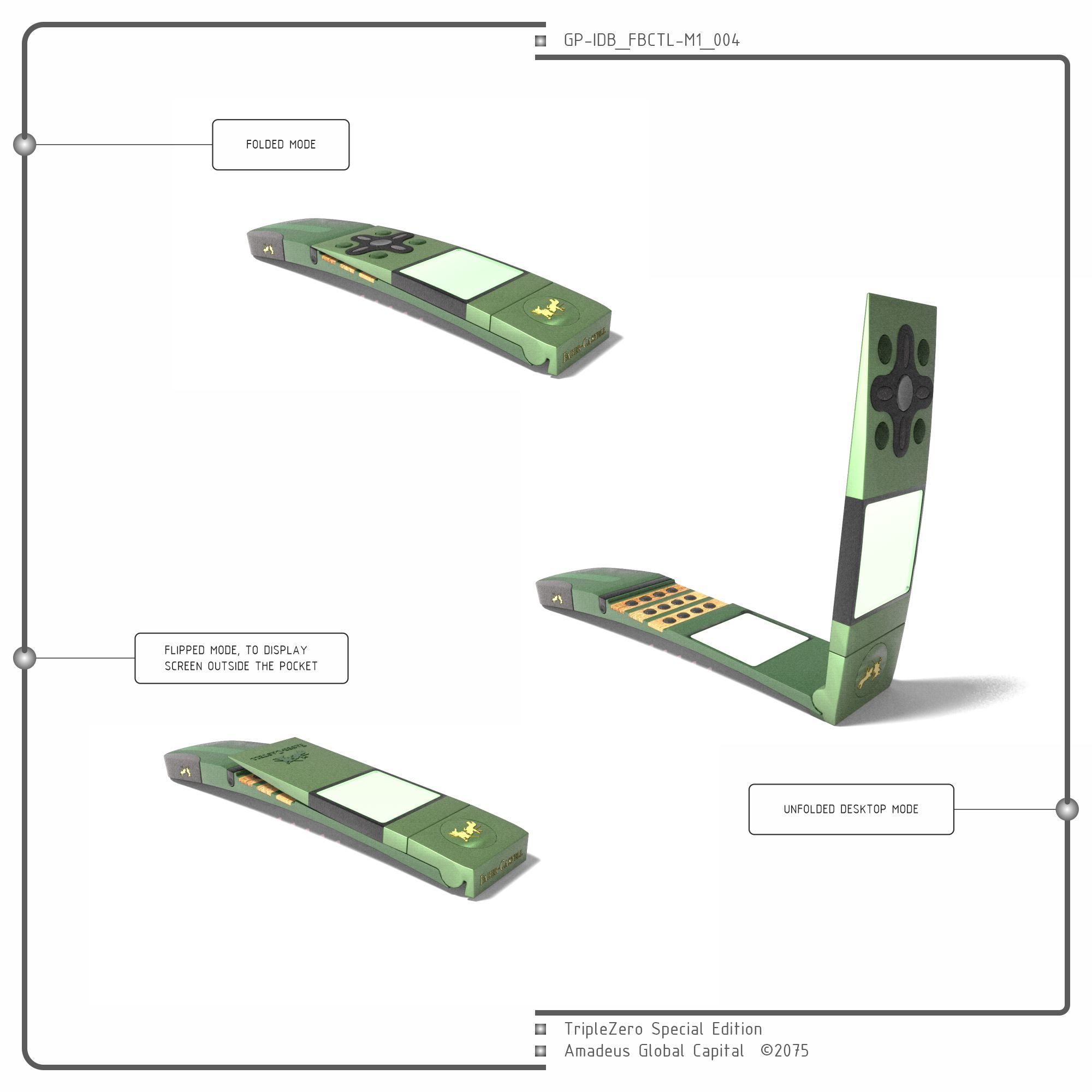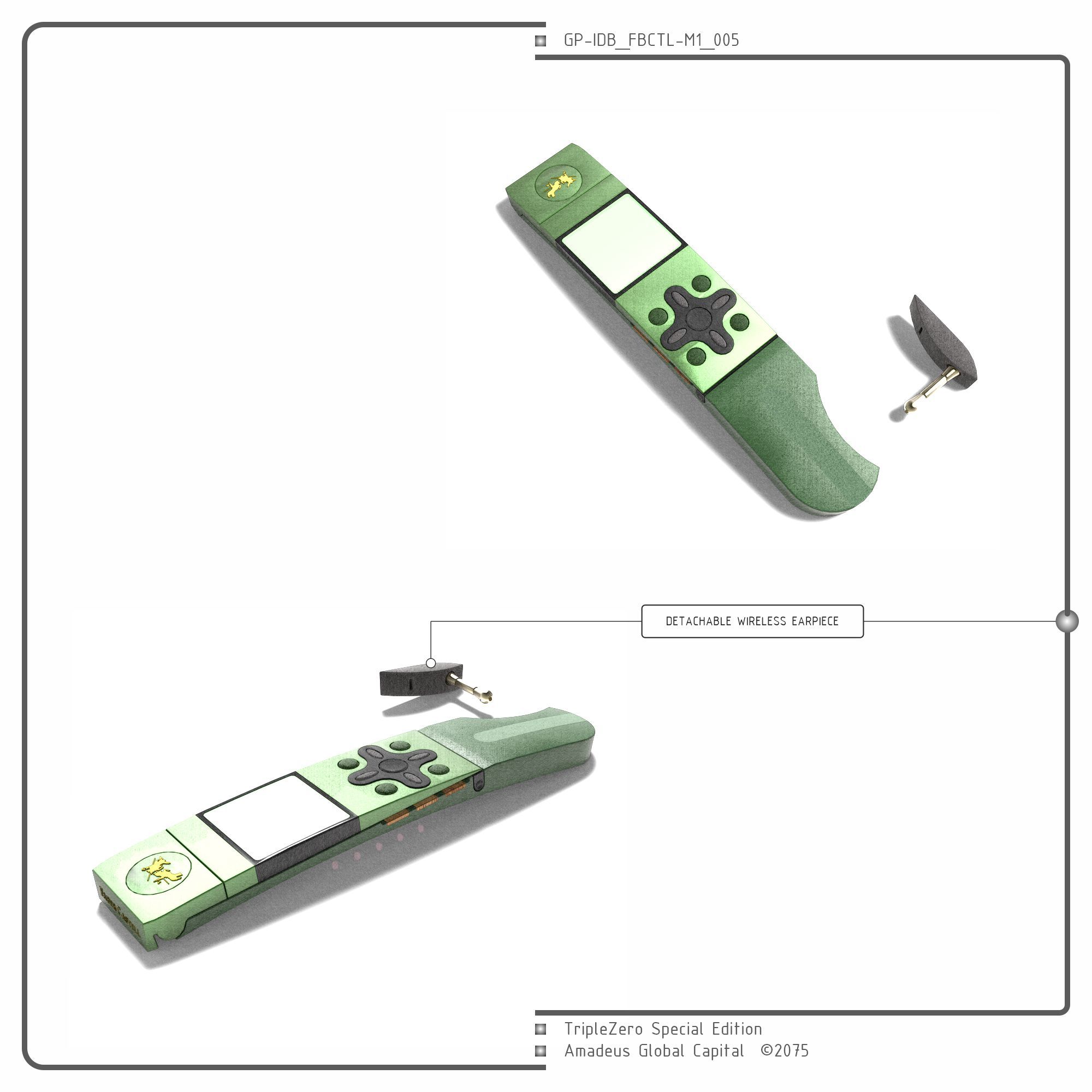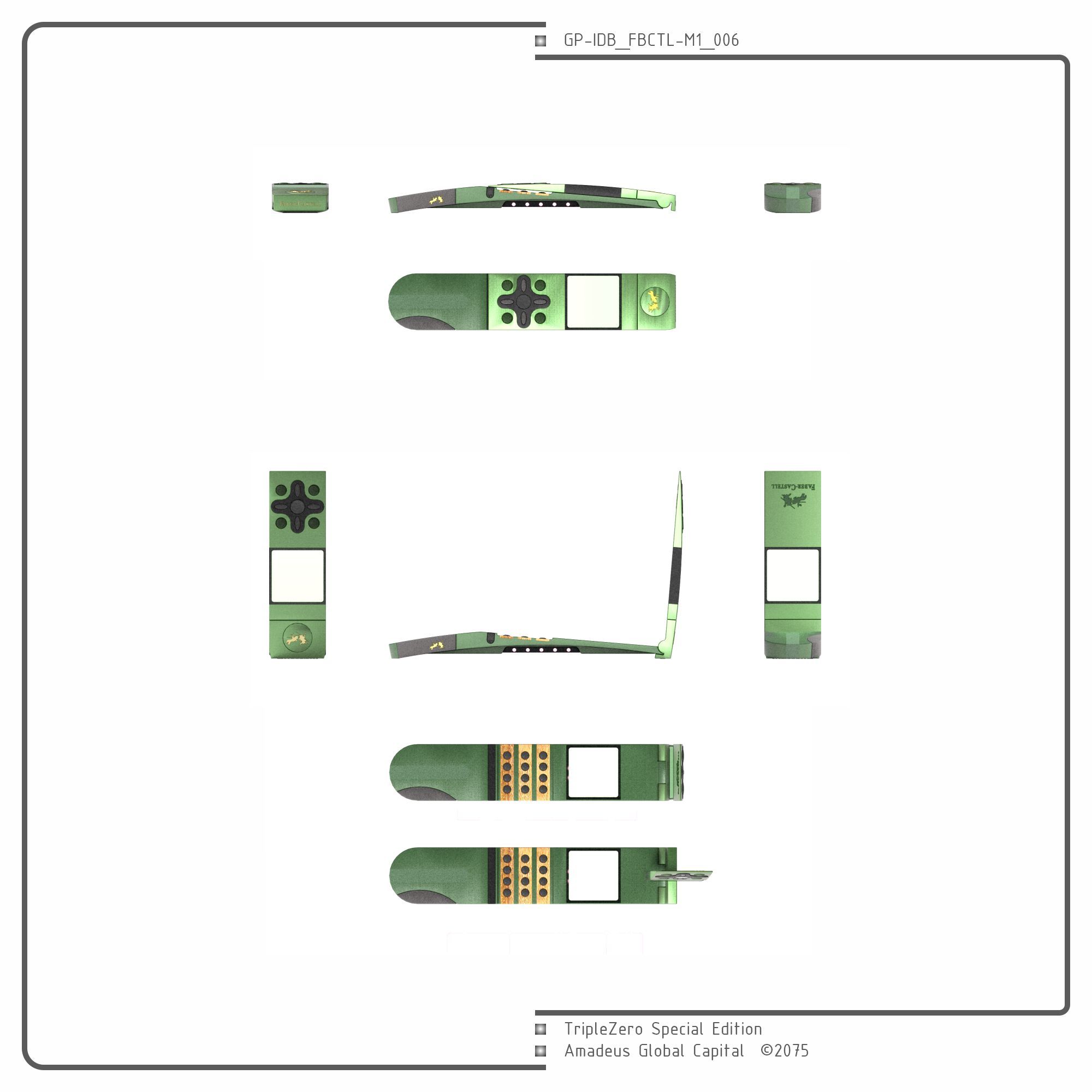
TripleZero Special Edition
Property
Copyright: Amadeus Global Capital / © 15/06/2075
History
The sophisticated hack-proof encryption systems made possible by metaWave technology prompted the United Nations in 2070 to propose limitations on the use of plant-derived cellulose for the manufacture of semi-synthetic woods and for the personal hygiene industry, under strict recycling protocols. The use of printed and writing paper was prohibited by ecological mandate. The planet’s forestry production was thus largely devoted to photosynthesis.
In the mid 2060s, the Capital-Science consortium Amadeus Global Capital had acquired the rights to all fountain pen brands on the market. This commercial operation, which analysts would later describe as highly risky, enabled the corporation to launch its new metaWave-based holographic terminal technology with a romantic vintage tone. In barely three years, the public shifted from calligraphic to holographic use, displaying slender terminals endowed with the prestige and antiquity inherited from classical pens, some with more than two centuries of history.
Since then, the term stylhographic has been used to refer to any communications terminal. The custom of owning several “branded” terminals, depending on clothing and social environment, also became common practice from the ’70s onward.
Over time, each stylhographic brand positioned itself within different social and professional strata. Today, the brand of a terminal defines its user, both in terms of price and style.
In this case, we present the exclusive Faber Castell – M1, a model commissioned by the Security Council for its Democratic Guard officers.
Characteristics
WEIGHT: 32 g
DIMENSIONS: 25 x 128 x 13 mm
POWER SOURCE: MetaWave Grid
ECO-ENERGY RATIO: 1.000