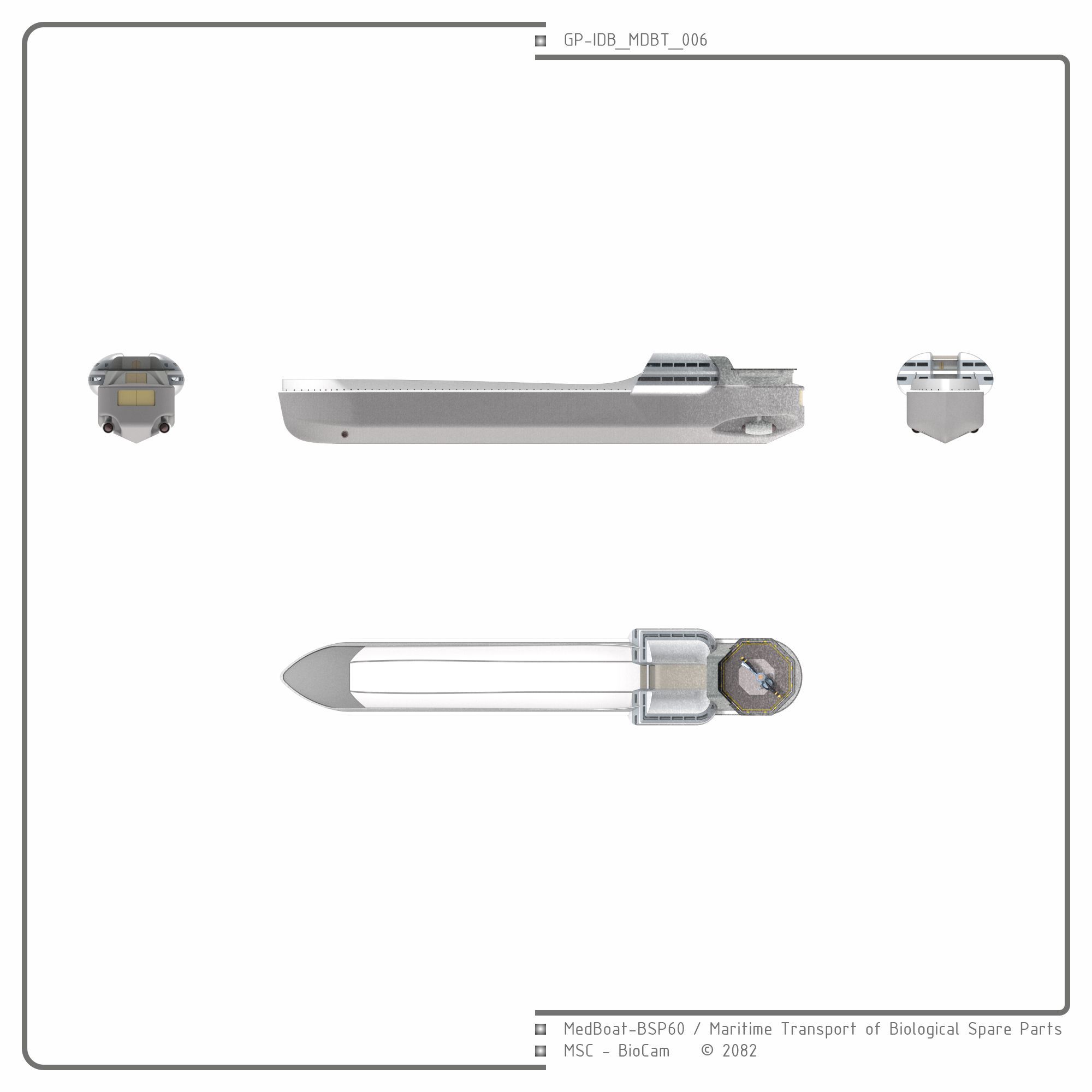
Maritime Transport of Biological Spare Parts
Property
Copyright: MSC – BioCam / © 20/06/2082
History
The possibilities of regeneration, rejuvenation and increased life expectancy of the population, based on Dr. Koppelson’s achievements, caused great expectations on a social level. While the entire population was waiting for access to these new “miraculous” techniques, the market for biocompatible tissue transplants grew exponentially. During the 2070s, it was already possible to have a customised liver or lung manufactured for transplantation. In the 2080s the demand was such that the big ScienceCapital corporations launched what was called prêt-à-porter replacement tissues, segmented by size, blood group, lymphocyte, antigen or antibody types. Huge 3D printing centres produced any body part for “consumption” with transplant acceptance rates of over 90%.
The distribution of this type of product required high levels of energy consumption due to perennial refrigeration and clinical control. Regardless of the use of certain types of land or air vehicles adapted for this purpose, the most reliable and environmentally friendly solution was transport by nuclear-powered ships. This ancient technology, in military use on aircraft carriers and submarines, was now available for civilian use thanks to the progressive disarmament treaties of the last 20 years, culminating in 2099 with the Valparaiso Accords.
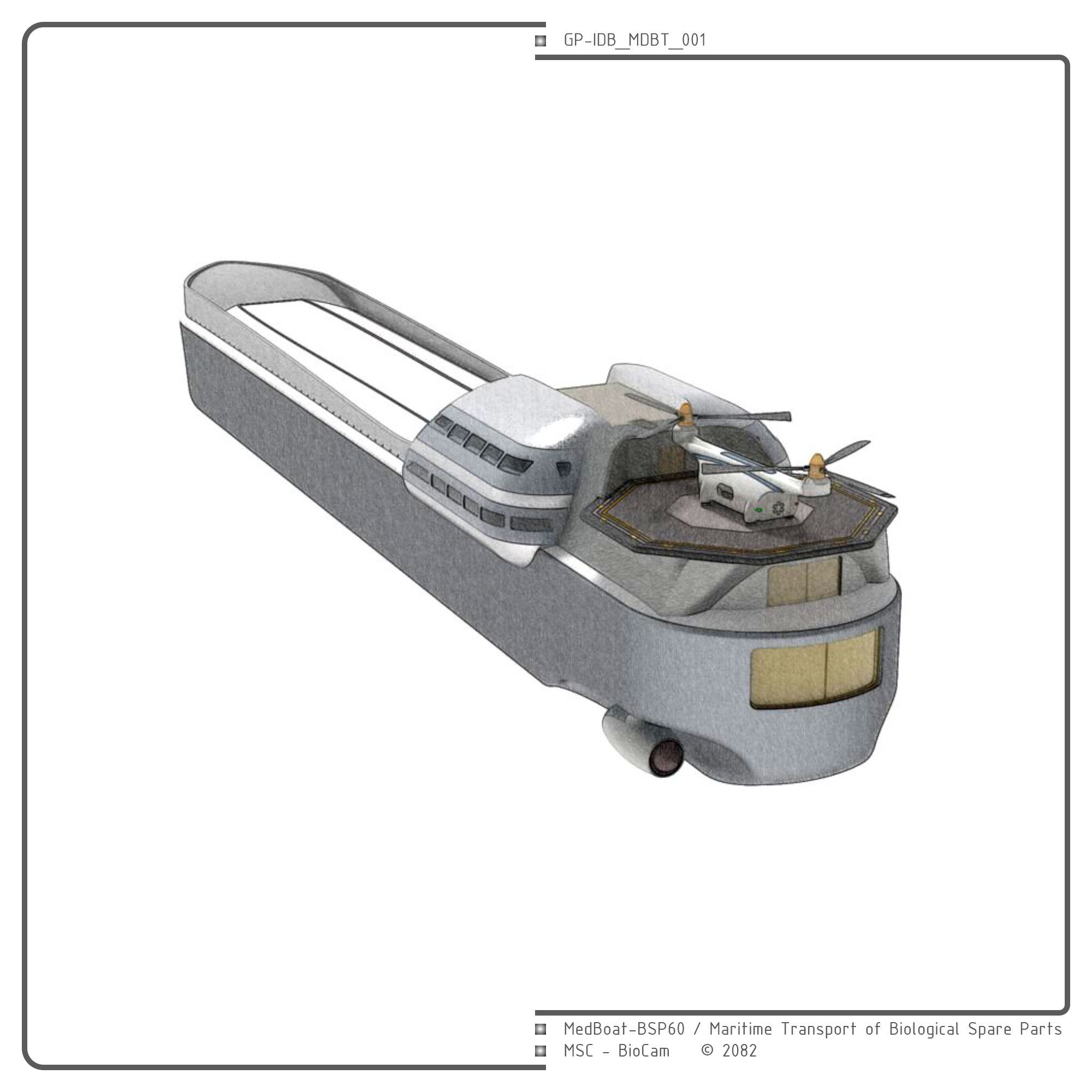
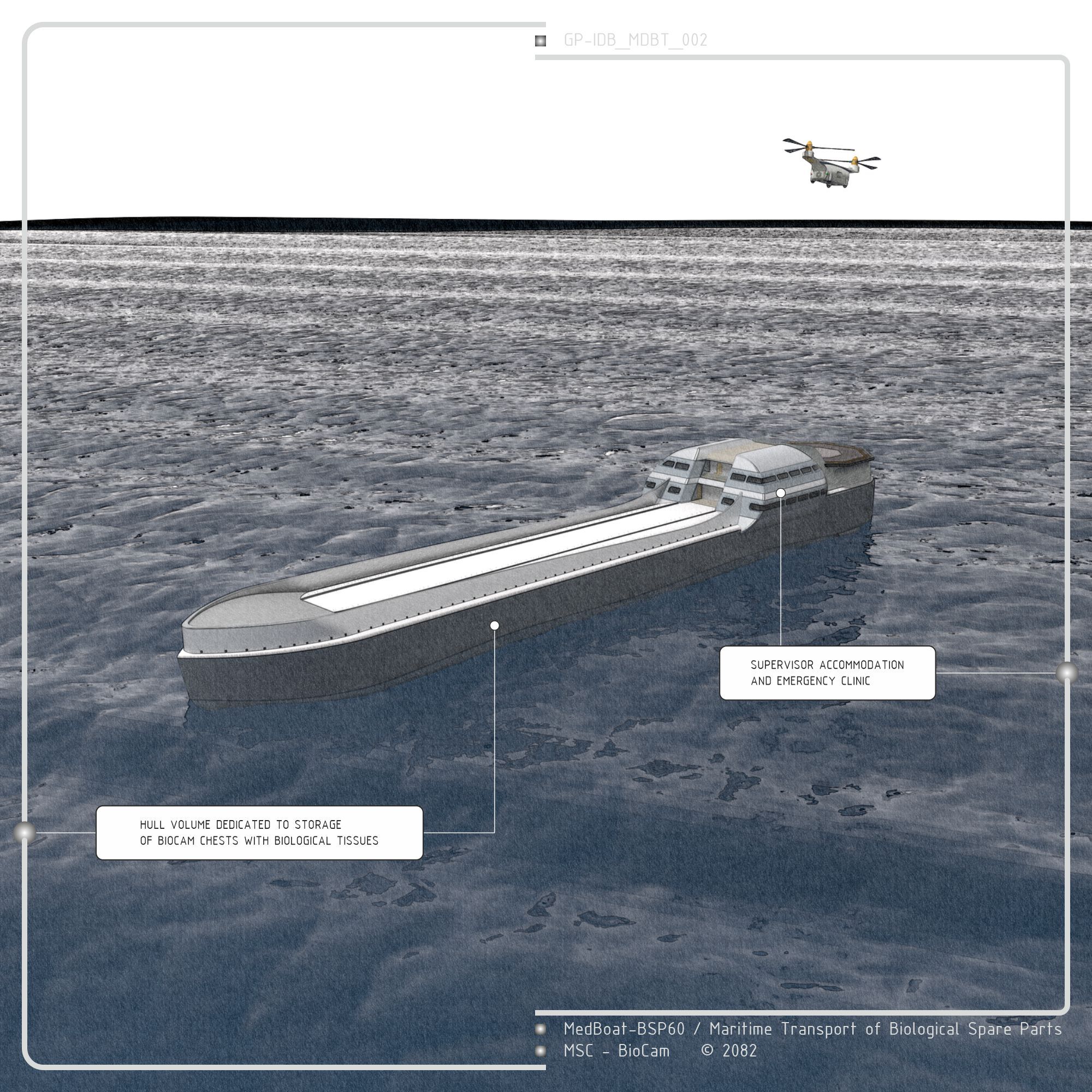
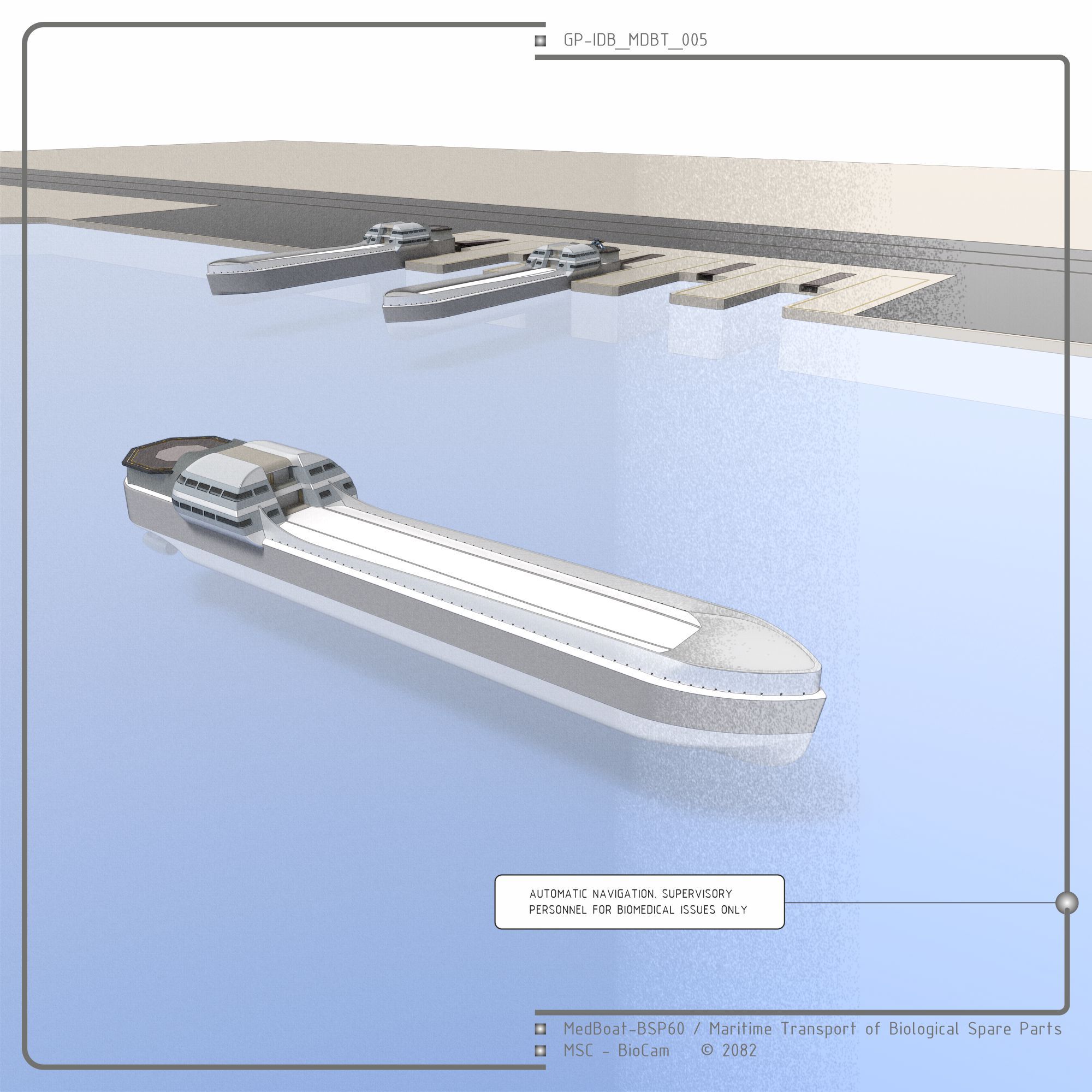
MedBoat Class ships have been operating around the globe since 2085, distributing the delicate and sought-after biocompatible products between major ports on every continent. Since the 2090s, the port terminals have been extended specifically for this type of transport, with ramps connecting the stern of the ships to the circulation of land vehicles for the rapid supply to hospitals in the area.
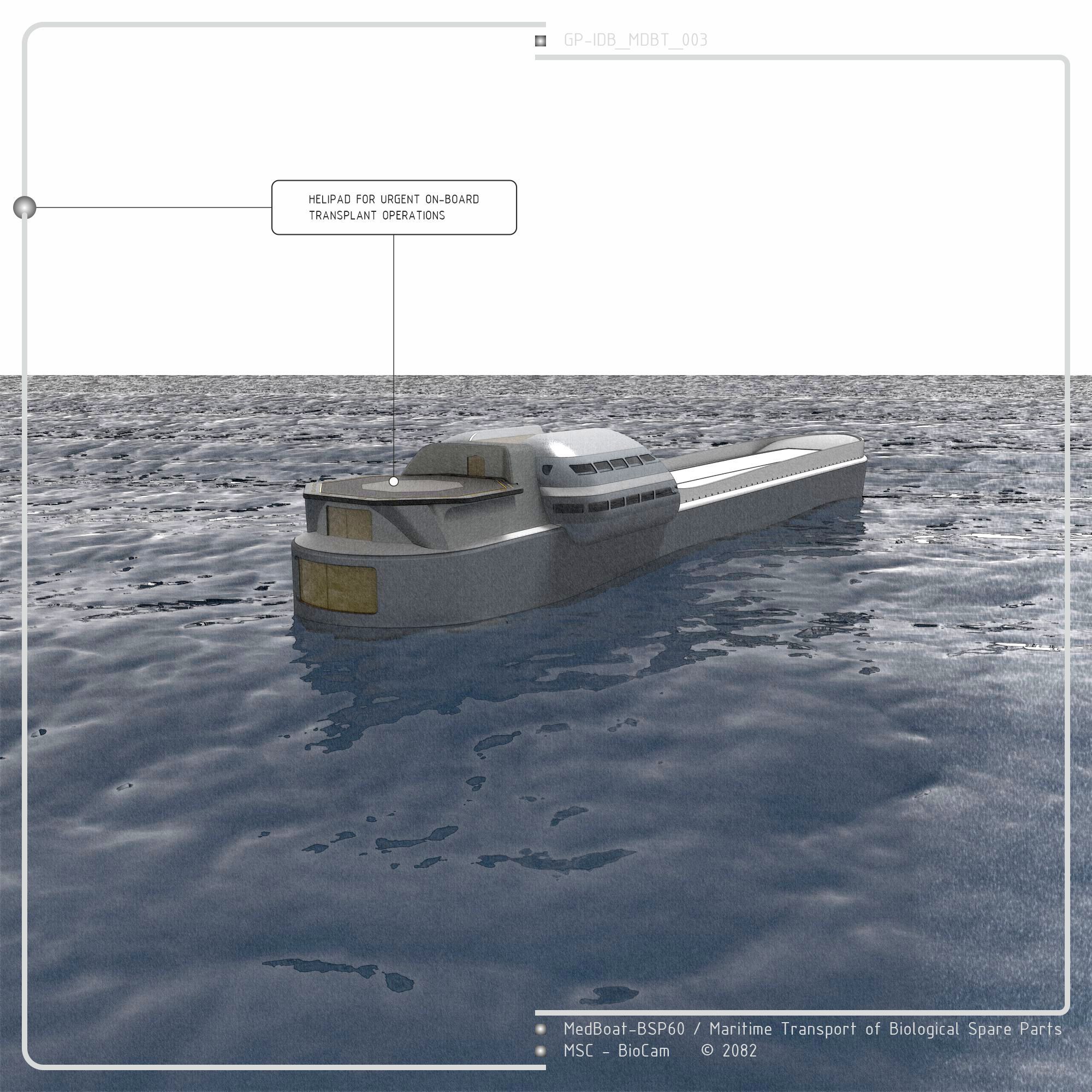
For emergencies, these ships feature a heliport and a robotic clinic, for interventions in port or even at sea. The crew of a MedBoat consists of just three surgeons and two assistants. The navigation management of this type of vessel is fully robotised.
Characteristics
LENGTH: 150 m.
BREAM: Waterline: 21.8 m. / Maximum: 27.3 m.
DRAW: 14.8 m.
DISPLACEMENT: 22.000 Tm.
MAX. SPEED: 32 Knots – 77,7 km/h
CAPACITY: 18.000 m3 refrigerated for BioCam Chests.
AUTONOMY: Indefinite
ENERGY SOURCE: Nuclear Fission / Pressurised Water Reactor T6W
ECO-ENERGY RATIO: 0,920