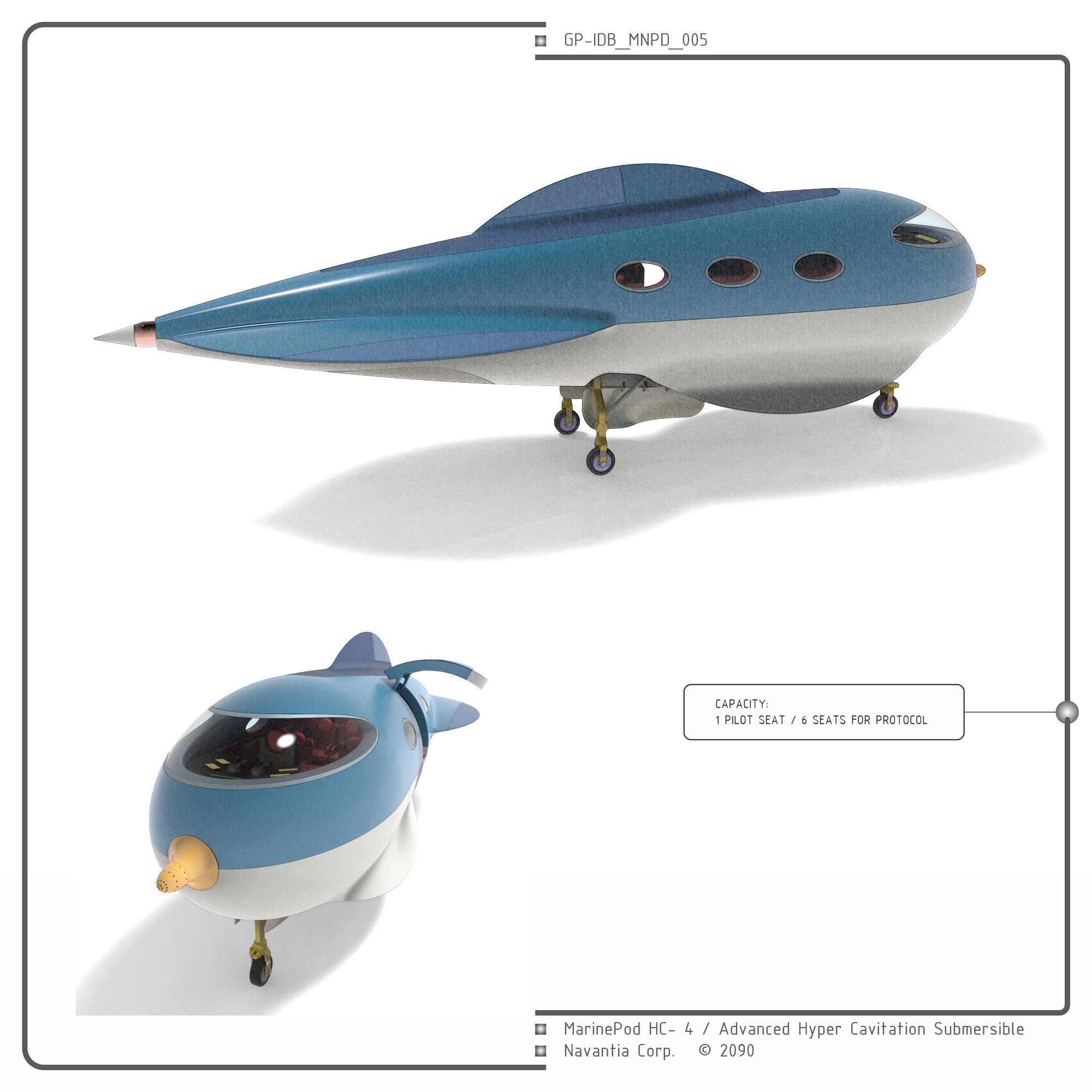
Advanced Hyper Cavitation Submersible
Property
Copyright: Navantia Corp. / © 13/05/2090
History
The evolution of supercavitation technology in the 2030s, applied mainly to armed torpedoes, allowed the first approaches to submarine transport vessels with speeds in excess of 90 knots.
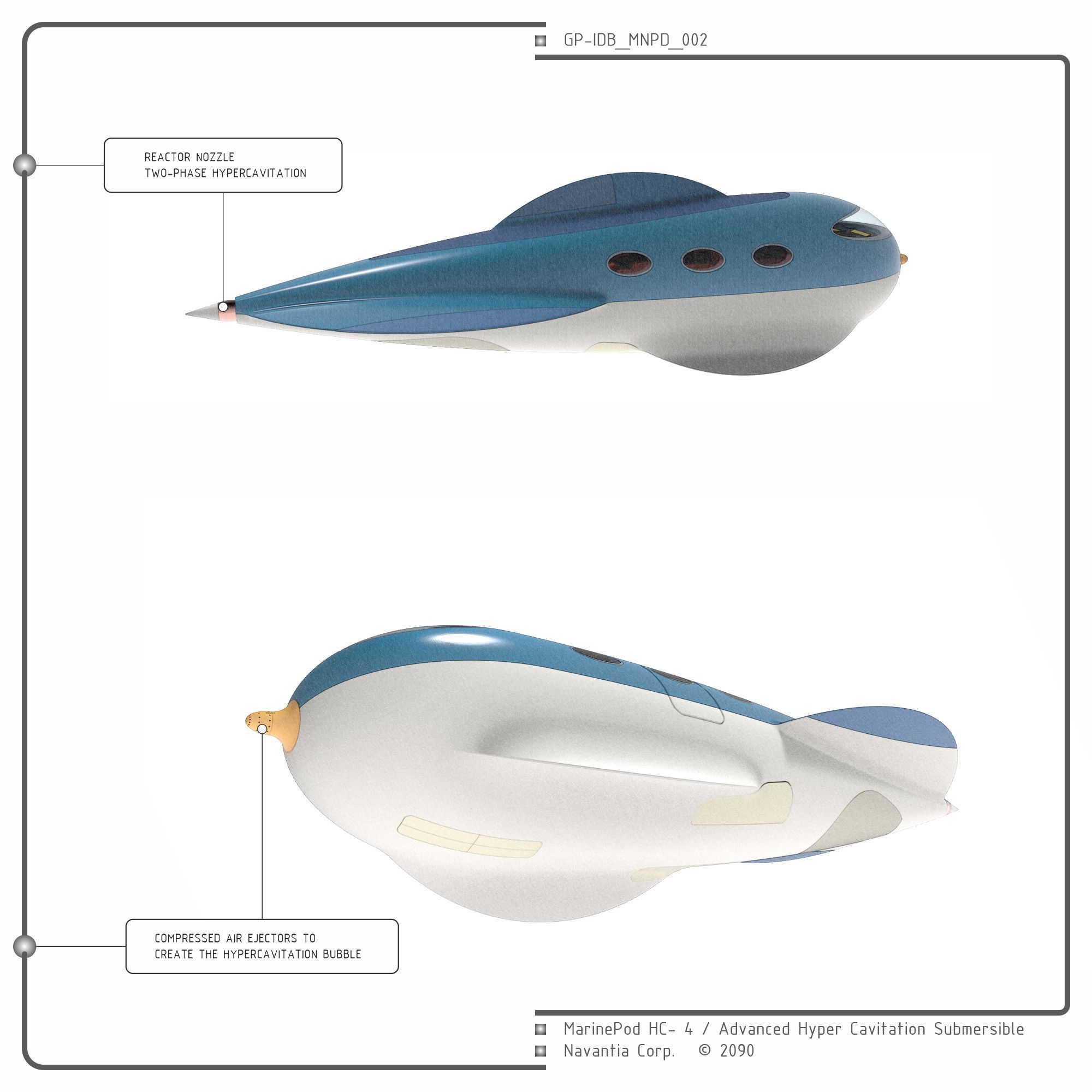
The first viable design dates from 2052, a small submarine vehicle for the transport of special forces of the then still People’s Republic of China. Powered by a miniaturized hydrazine-based hypergolic jet engine, its bow was fitted with a multitude of compressed air ejectors. Similar to those of supercavitating torpedoes, they created an enveloping bubble that separates the fuselage from the water and thus minimizes friction.
A similar German version was used during the last known armed conflict, the Jerusalem Crisis of 2091. As per the famous images of the Haifa landing, over 100 underwater craft managed to place more than 1,200 UN troops on the beach in barely half an hour, without being detected.
This type of vehicle, exclusive for military applications and rarely documented, ended up in museums after the Global Nuclear Disarmament Act of 2099. Today there is an evolution of the military versions for civilian and restricted use.
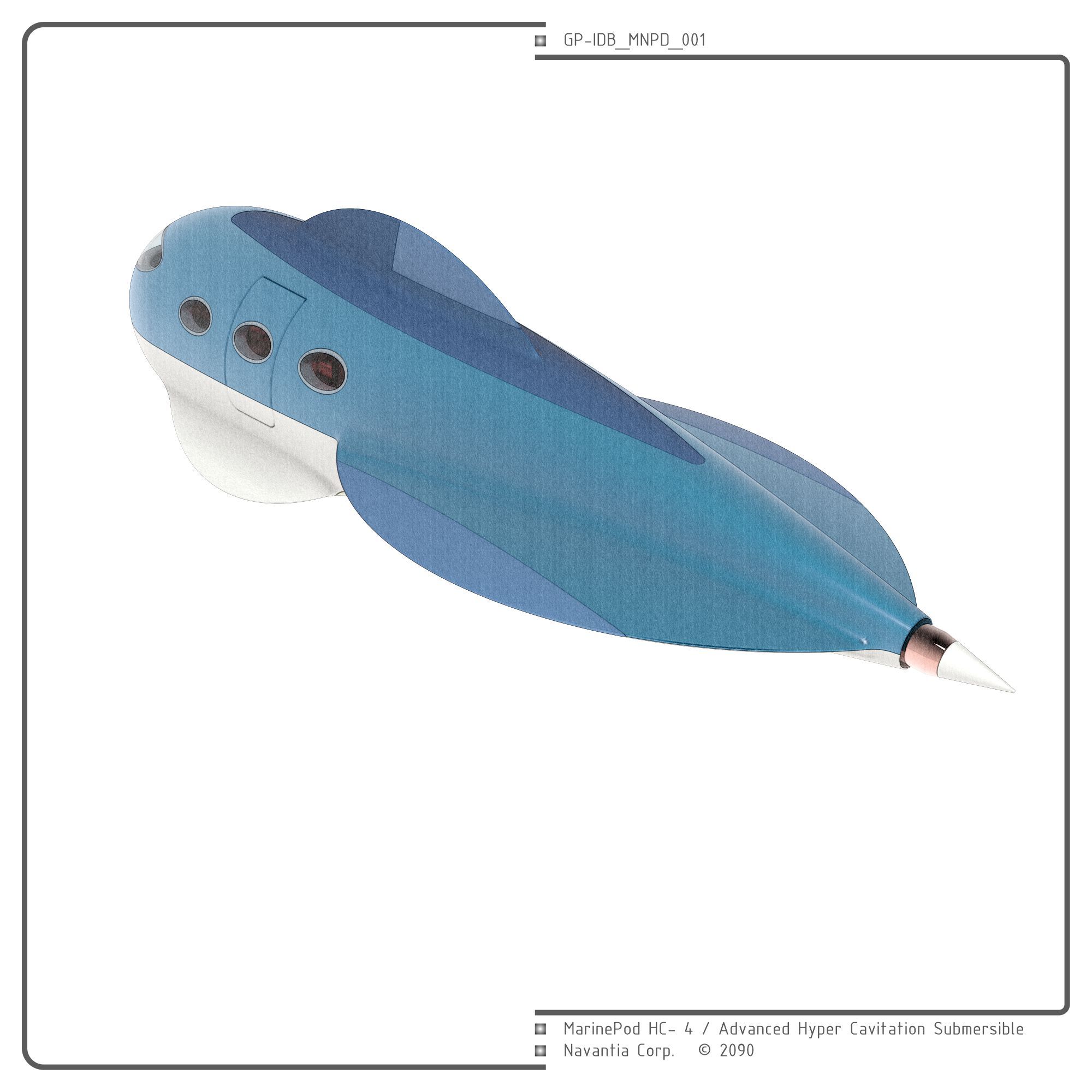
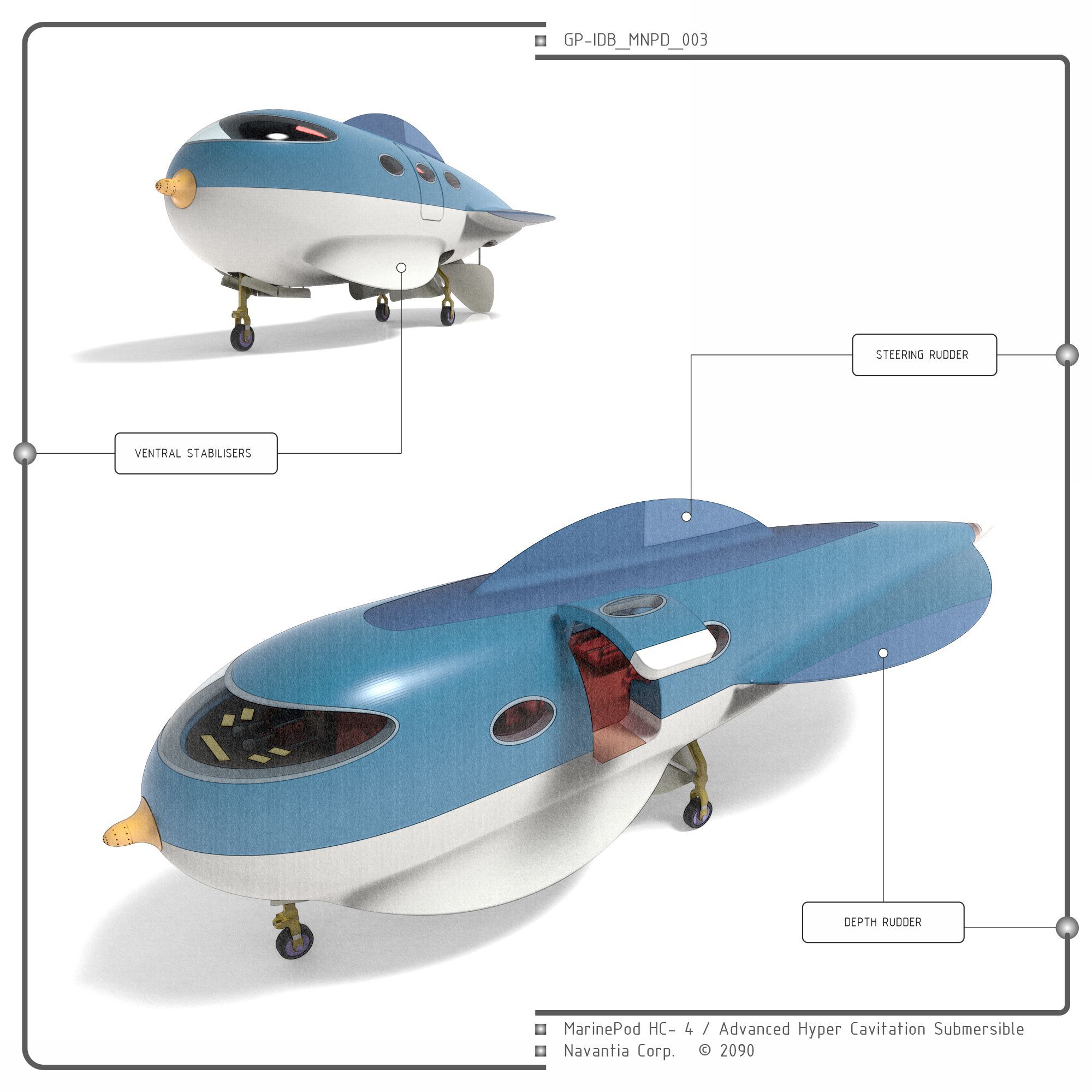
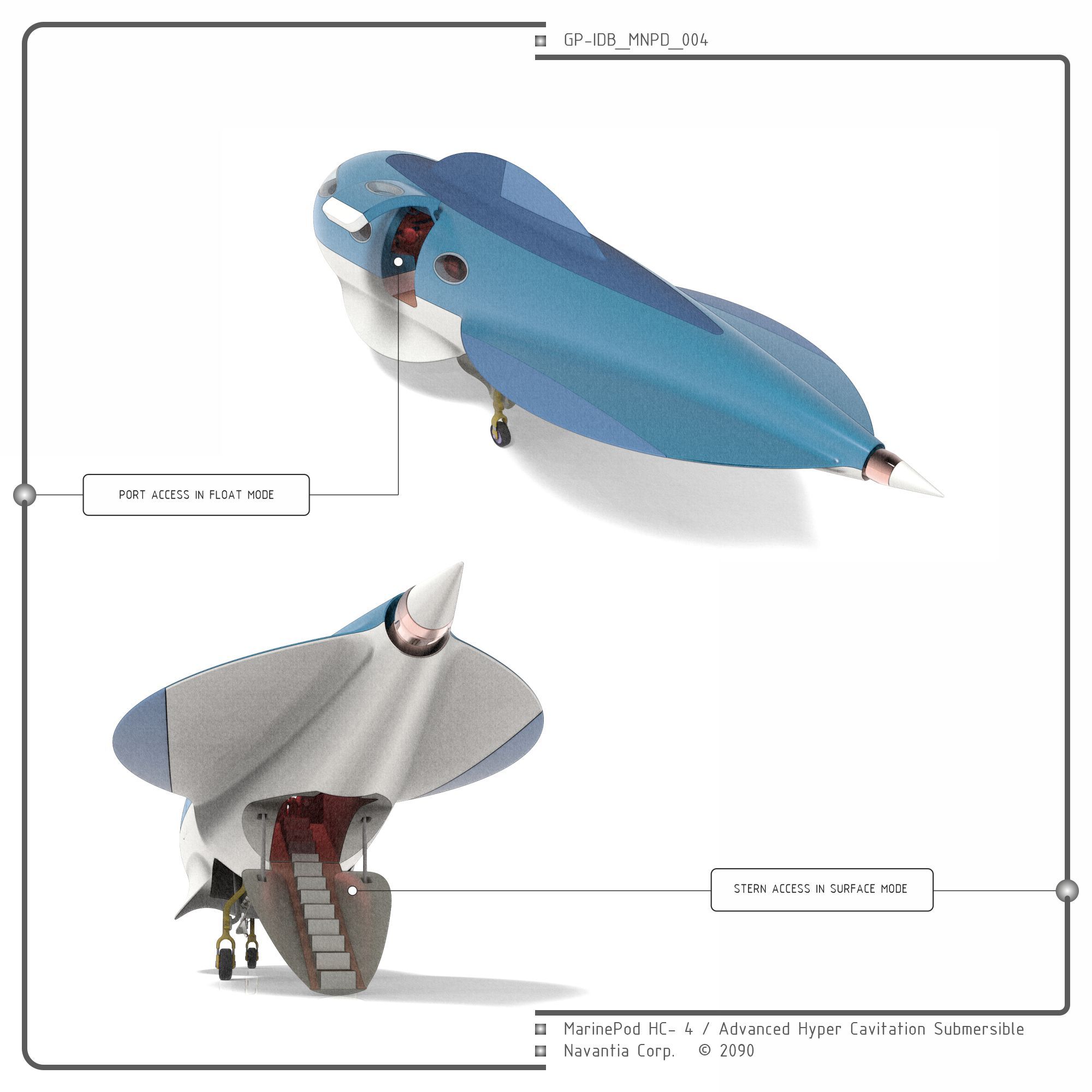
The MarinePod we present is a TripleZero protocol-use underwater vehicle, propelled by a two-phase hypercavitation reactor, fueled by hydrazines in its acceleration phase and seawater in its second phase. It can be seen parked in the immersion ramps of the restricted areas of large ports. Its routes are not listed on the Web because they are for classified voyages of the Security Council.
Characteristics
CAPACITY : 1 Pilot / 6 passengers.
AUTONOMY: 3 hours at 340 knots / 630 km/h.
FUEL: monomethylhydrazine + dinitrogen tetroxide / sea water.
ECO-ENERGY RATIO: 0,794
DIMENSIONS UNDERWATER: 16.745 x 5.130 x 4.275 mm.
DIMENSIONS ON WHEELS: 16.745 x 5.130 x 5.365 mm