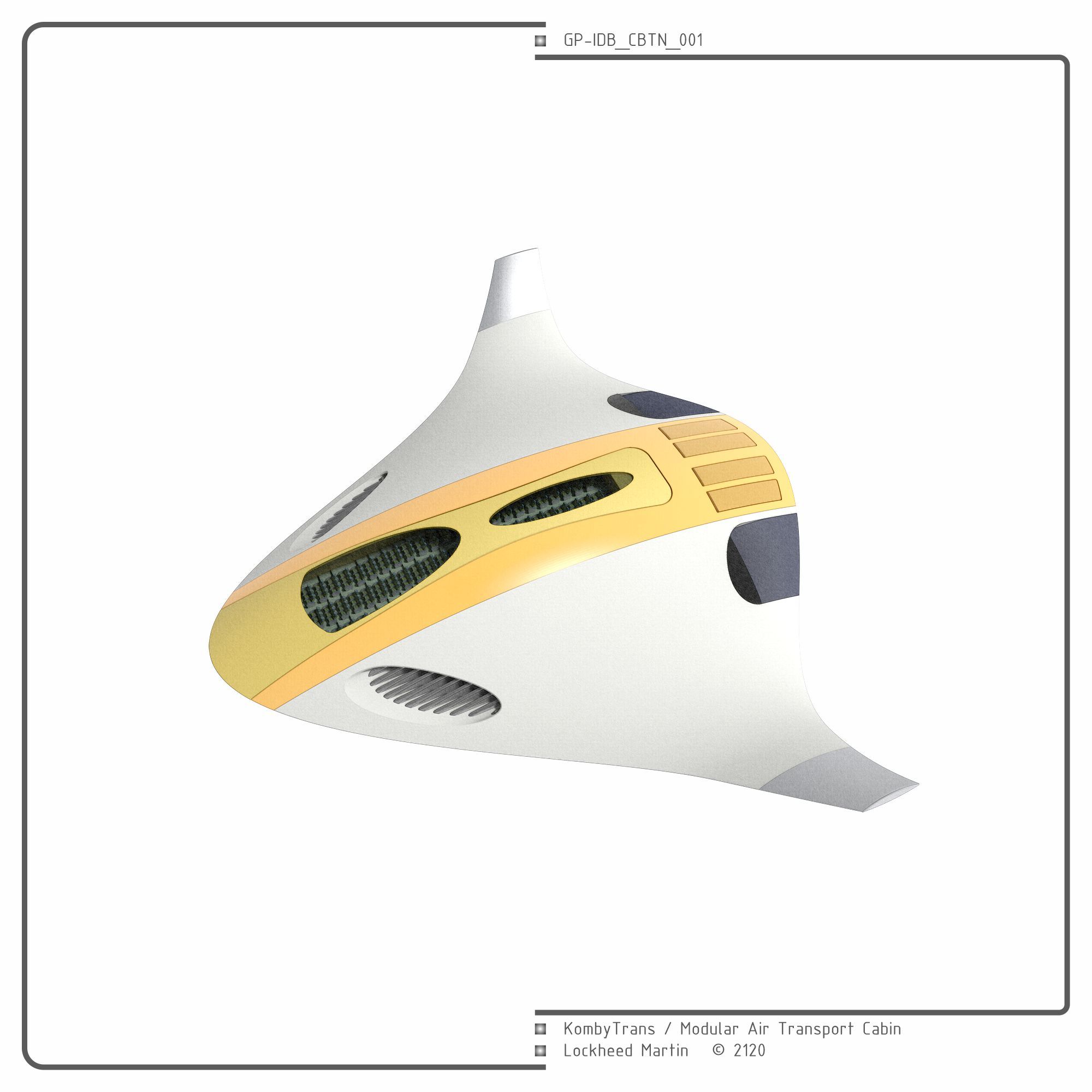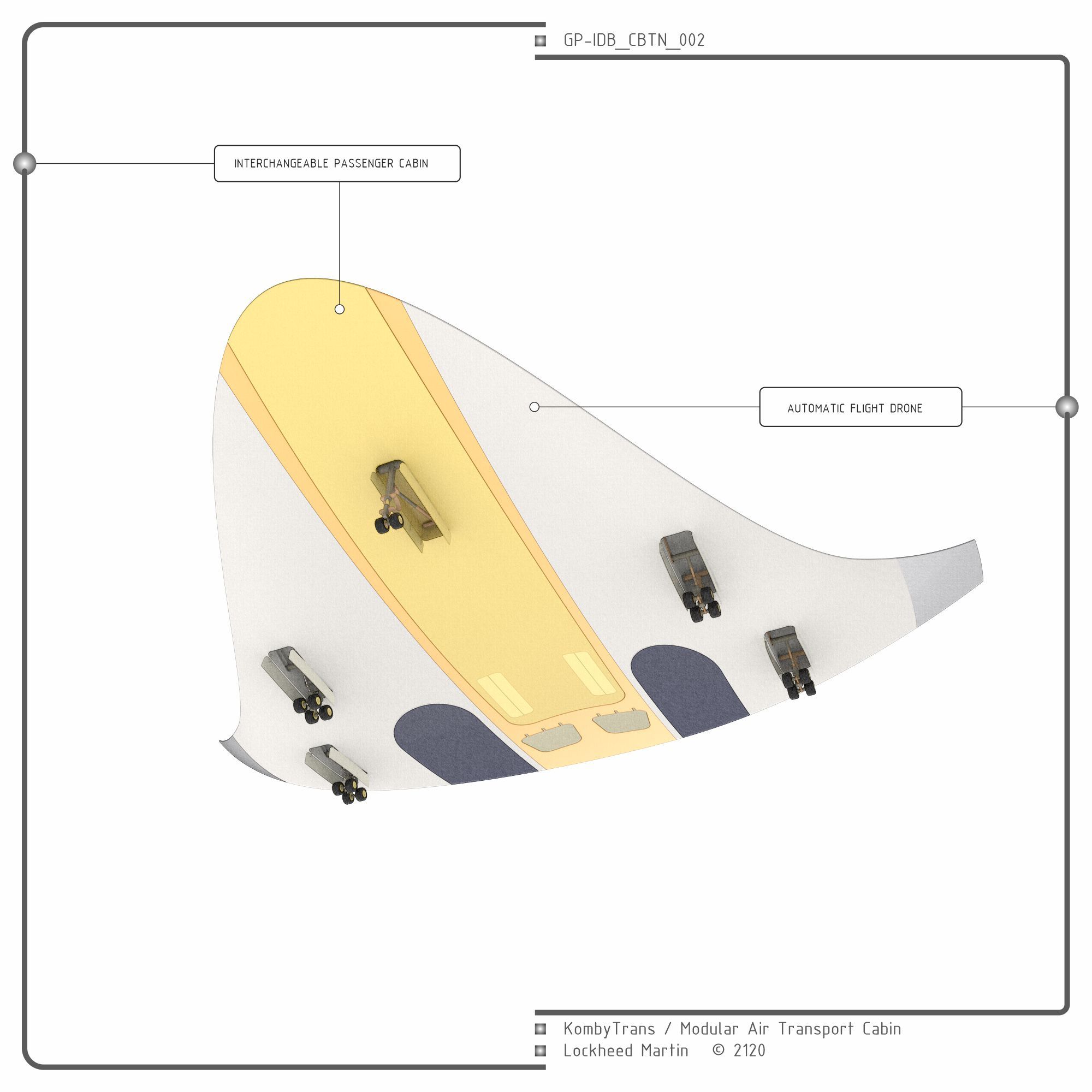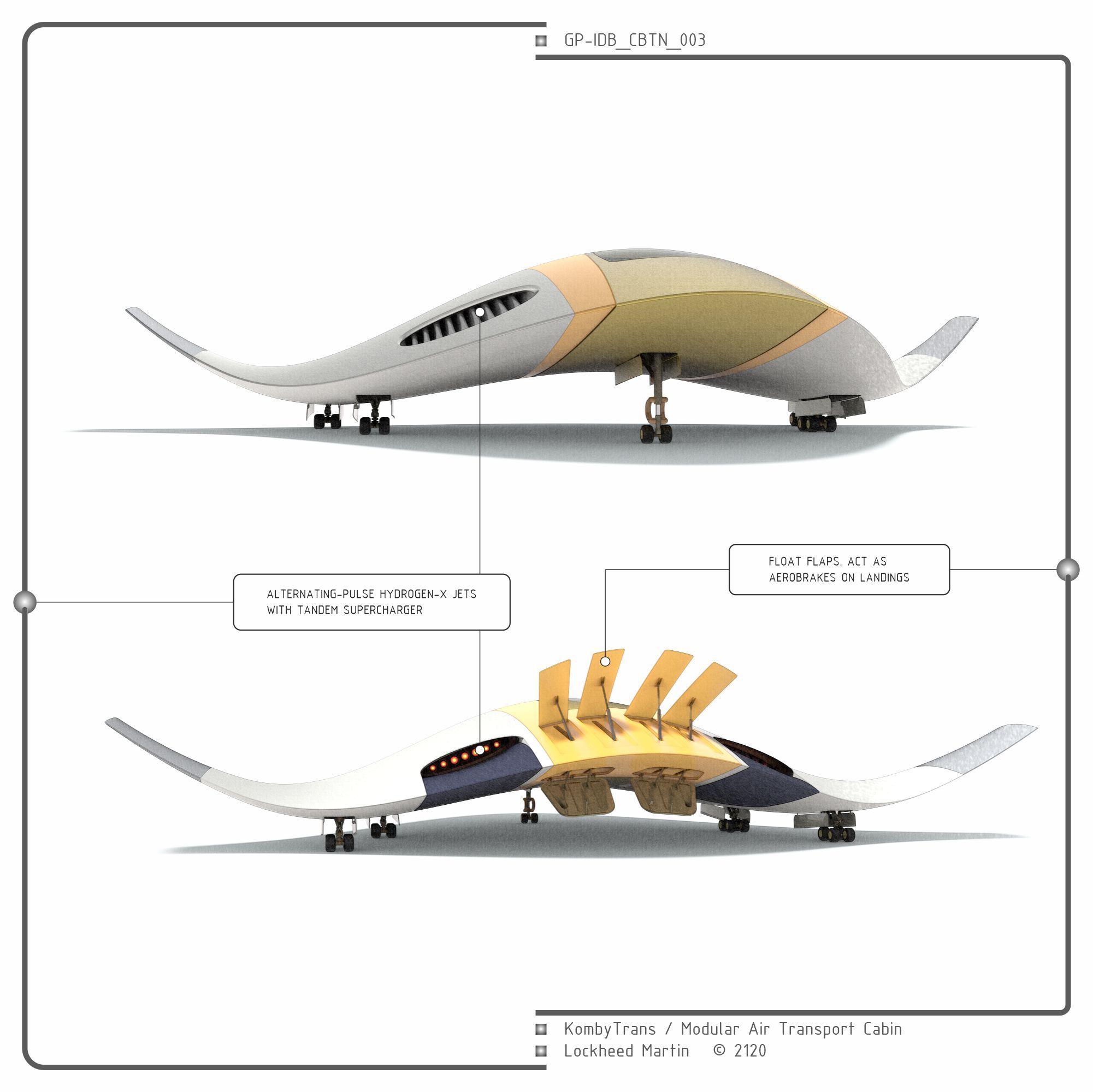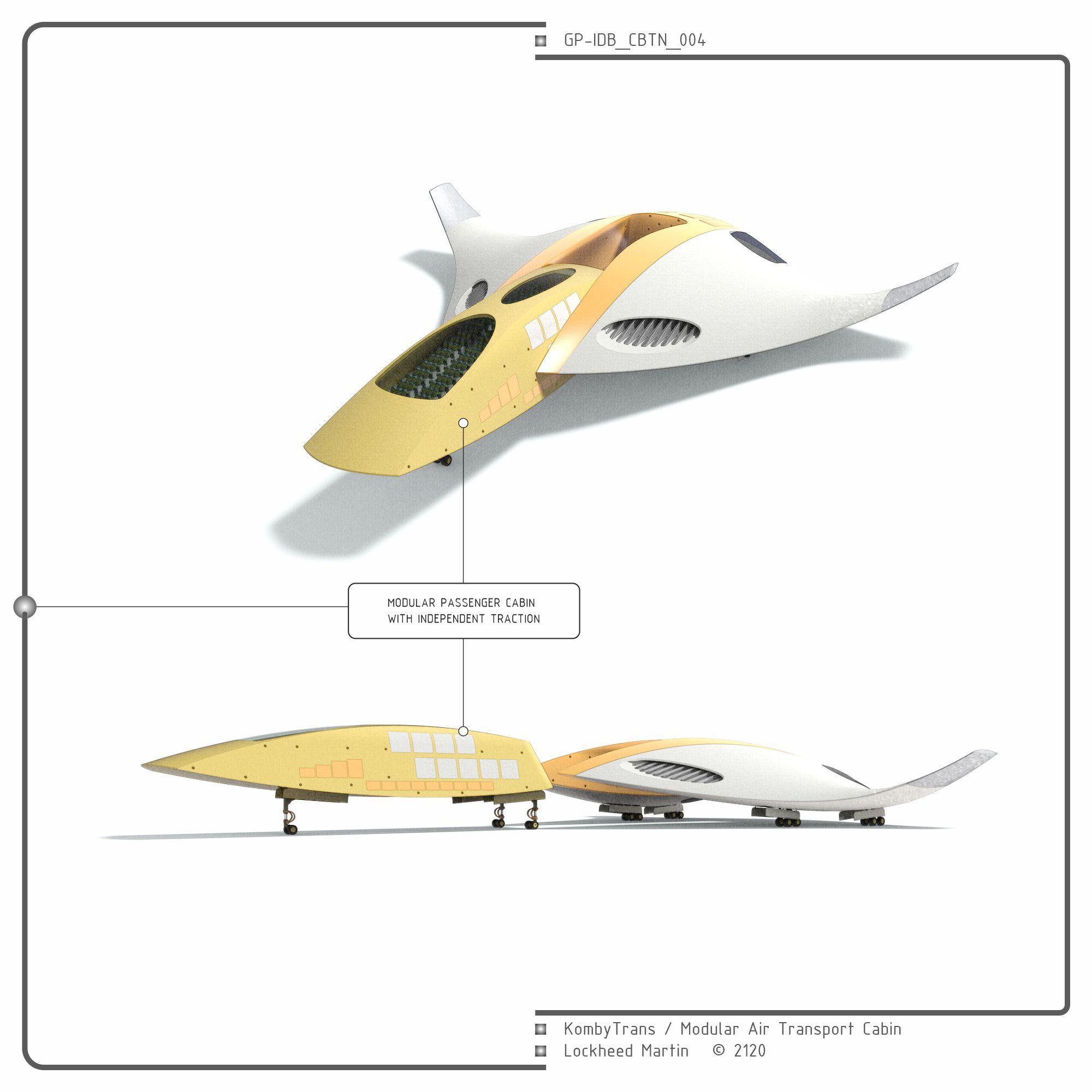
Modular Air Transport Cabin
Property
Copyright: Lockheed Martin / © 01/09/2120
History
This interchangeable cockpit drone platform was just inaugurated this September, following the completion by the United Nations of the brand new SkyKover satellite network. Designed to revolutionize air transport on the planet, the CombyTrans program more than fulfills the paradigm it advertises: “cross a continent or an ocean, at very low cost, in less than 5 hours”.
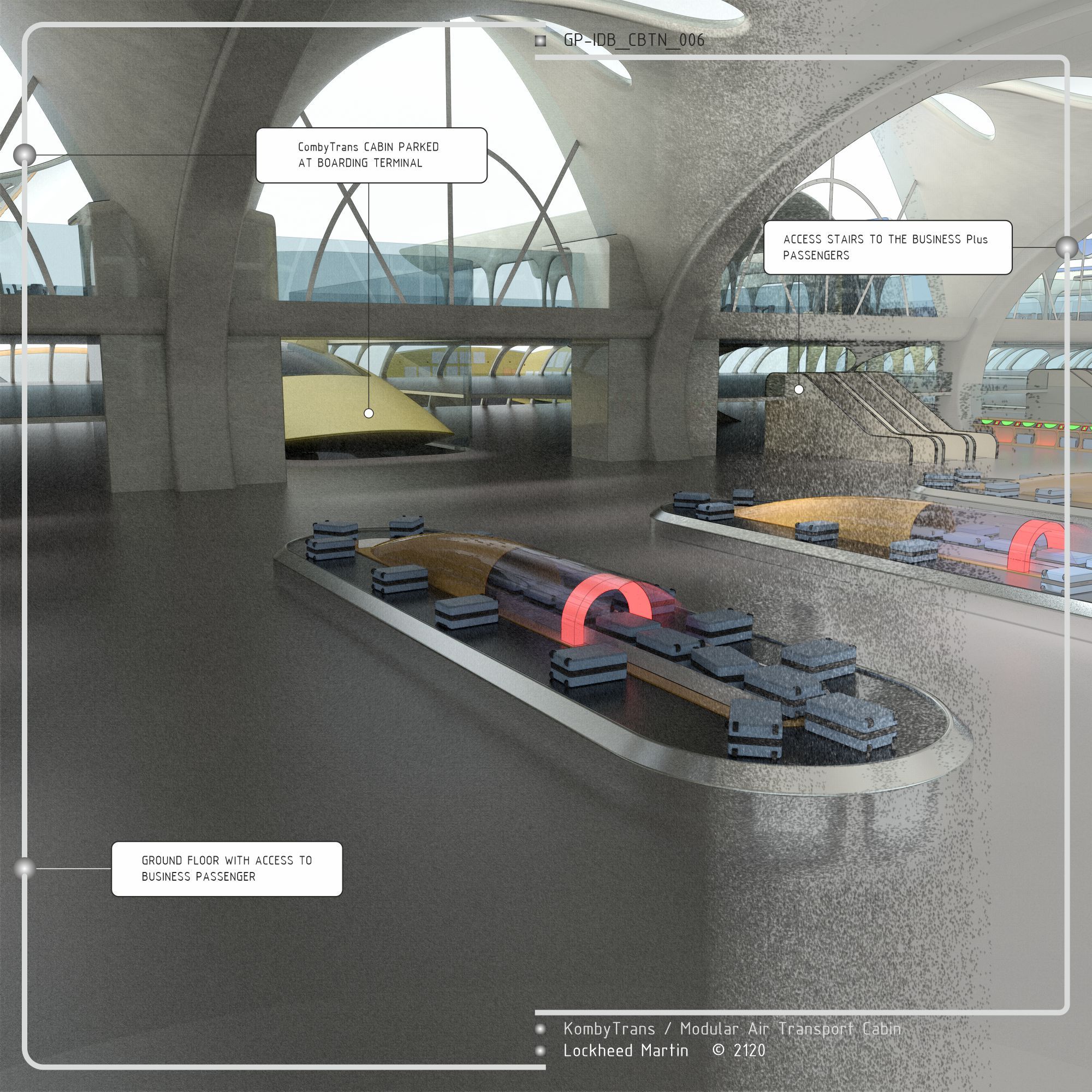
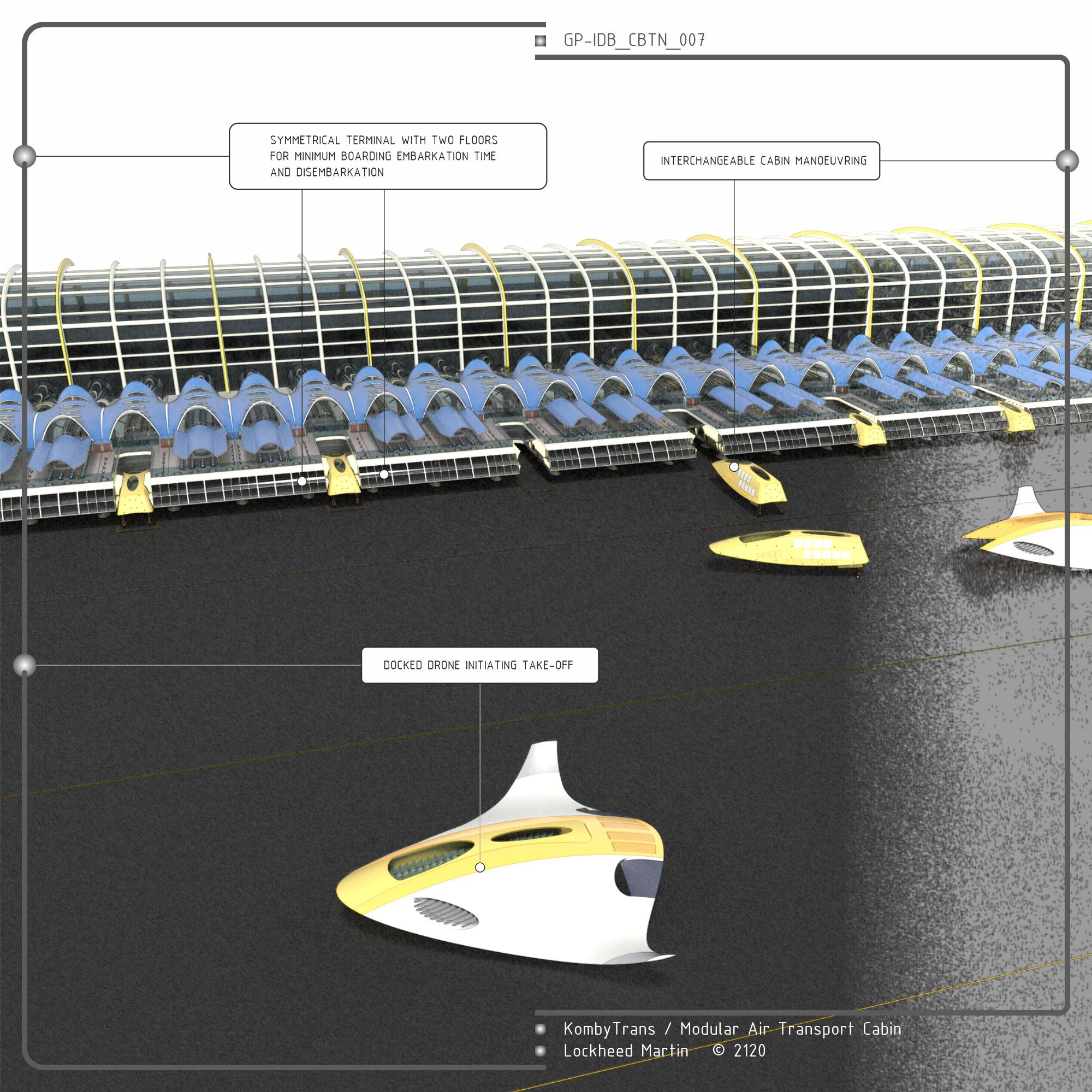
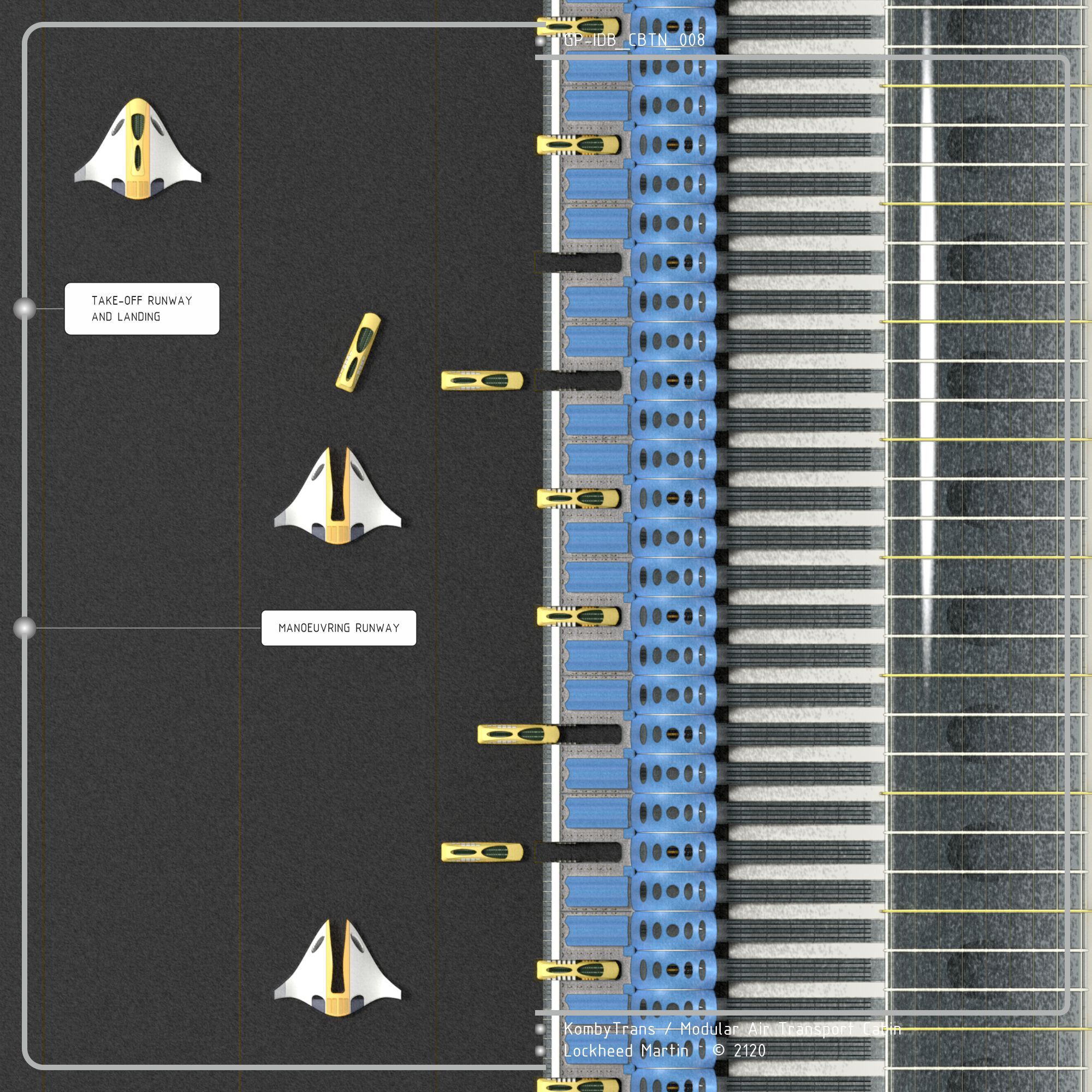
Despite the criticisms received in the media regarding the overcrowded, subway car-like experience of flying, the truth is that for those who have already tried it, it is all praise. Its modular cabin concept, with two floors and wide boarding doors, minimizes entry and exit times. The flight drones never turn off their engines on the runway. They just allow the right amount of time to refuel.
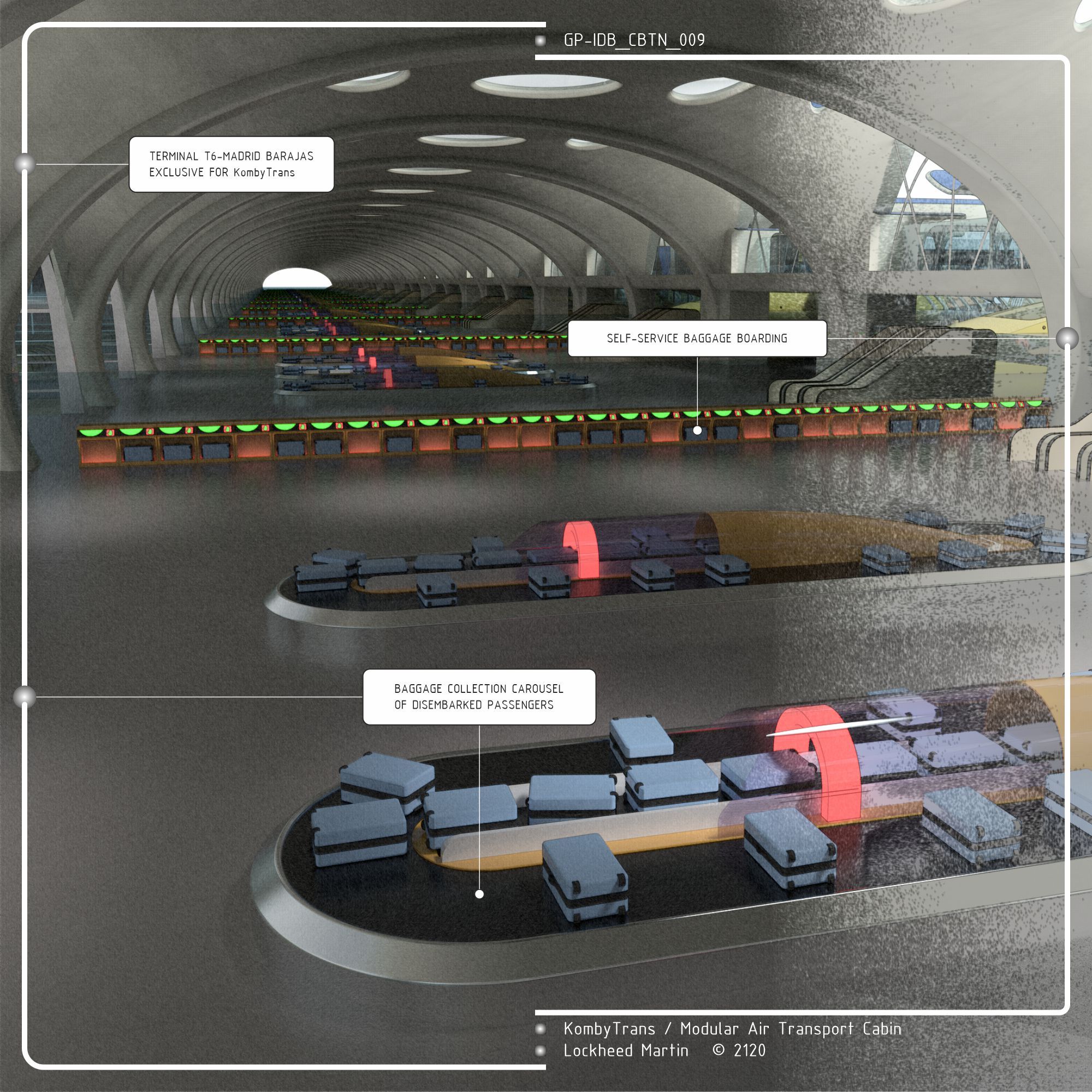
As the program has more drones than cabins, the boarding terminals wait for only 10 minutes between the departure of one cabin for take-off and the entry of the next one for passenger disembarkation. The fully robotized, self-service stations have huge baggage check-in lines so that boarding times never exceed 20 minutes between baggage drop-off and take-off.
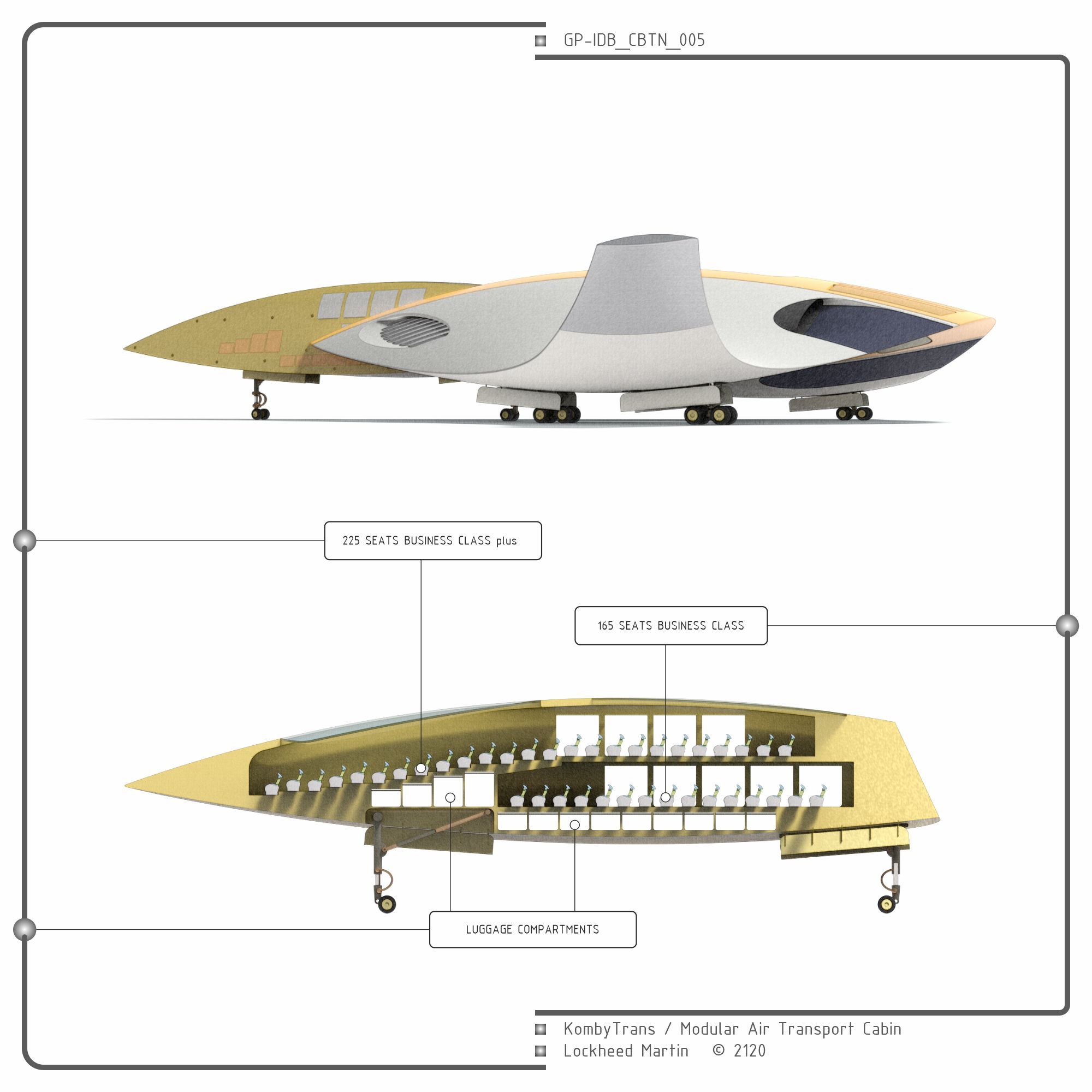
Each cabin has 225 Business Plus class seats on the upper deck, with a large transparent roof to view the sky and stars. The lower deck features 165 Business Class seats without live viewing due to the large access hatches, so the exterior is simulated with video murals.
With a cruising speed of Mach 1.05, flying on KombyTrans ensures that it never takes more than the advertised 5 hours from check-in to pick-up, for example from the new T6 at Madrid-Barajas to JFK in New York.
The KombyTrans program, subsidized by the United Nations, meets the highest ecological and socioSystemic standards, with zero CO2 emissions thanks to new green hydrogen-powered alternating pulse jet technology.
Characteristics
CAPACITY : 165 Business seats / 225 Business plus seats / 5 Assistants
AUTONOMY : 5 hours at 1,300 km/h. (Mach 1.05)
FUEL: Liquid Hydrogen
ECO-ENERGY RATIO: 0.958
DIMENSIONS:
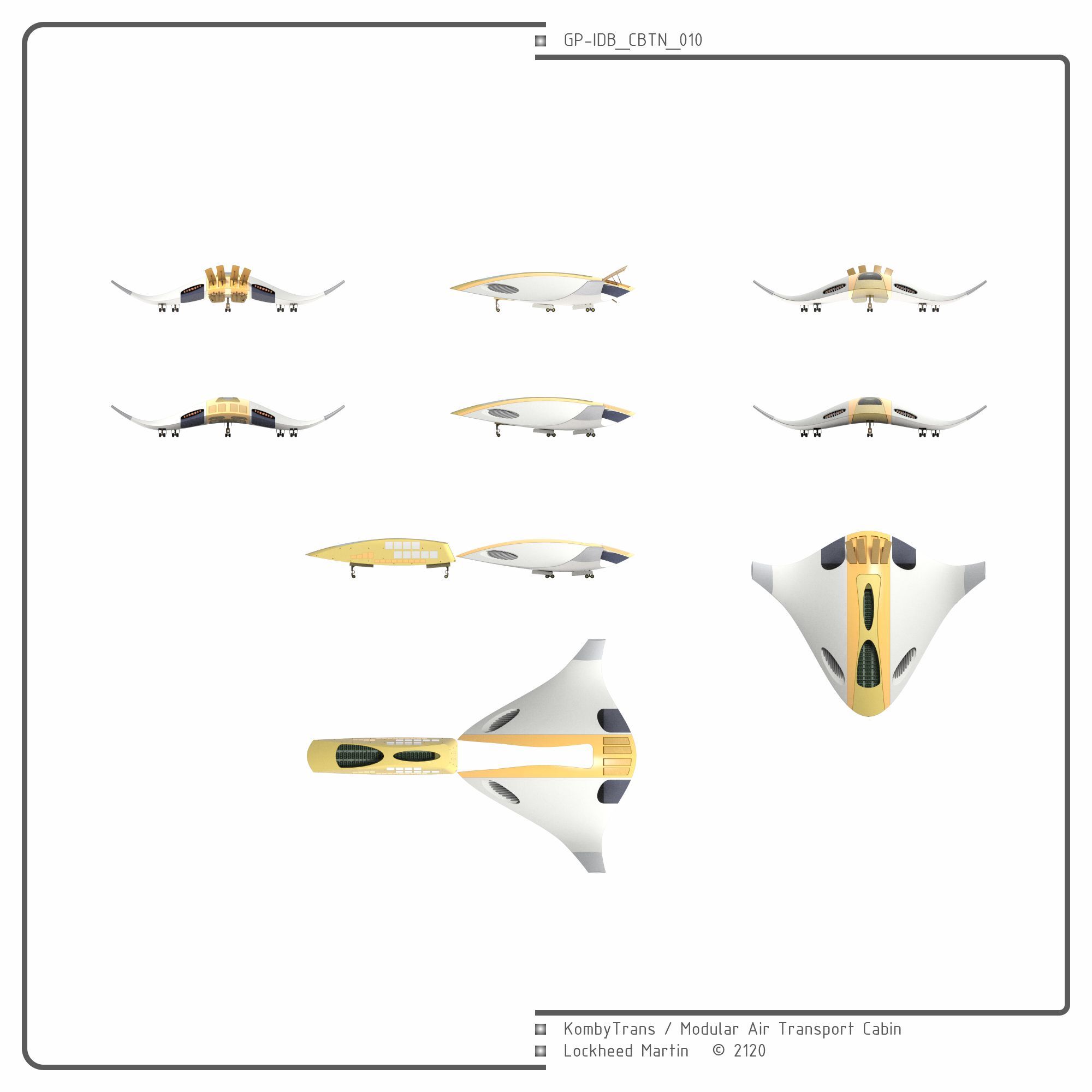
KombyTrans: 51,755 x 65,050 x 11,106 mm (51,755 x 65,050 x 11,106 mm)
Drone: 49.870 x 65.050 x 10.910 mm
Cockpit: 41.900 x 10.290 x 11.106 mm