Fire Fighting Drone
Property
Copyright: Lockheed Martin – Airbus Fire Division AG / © 28/02/2107
History
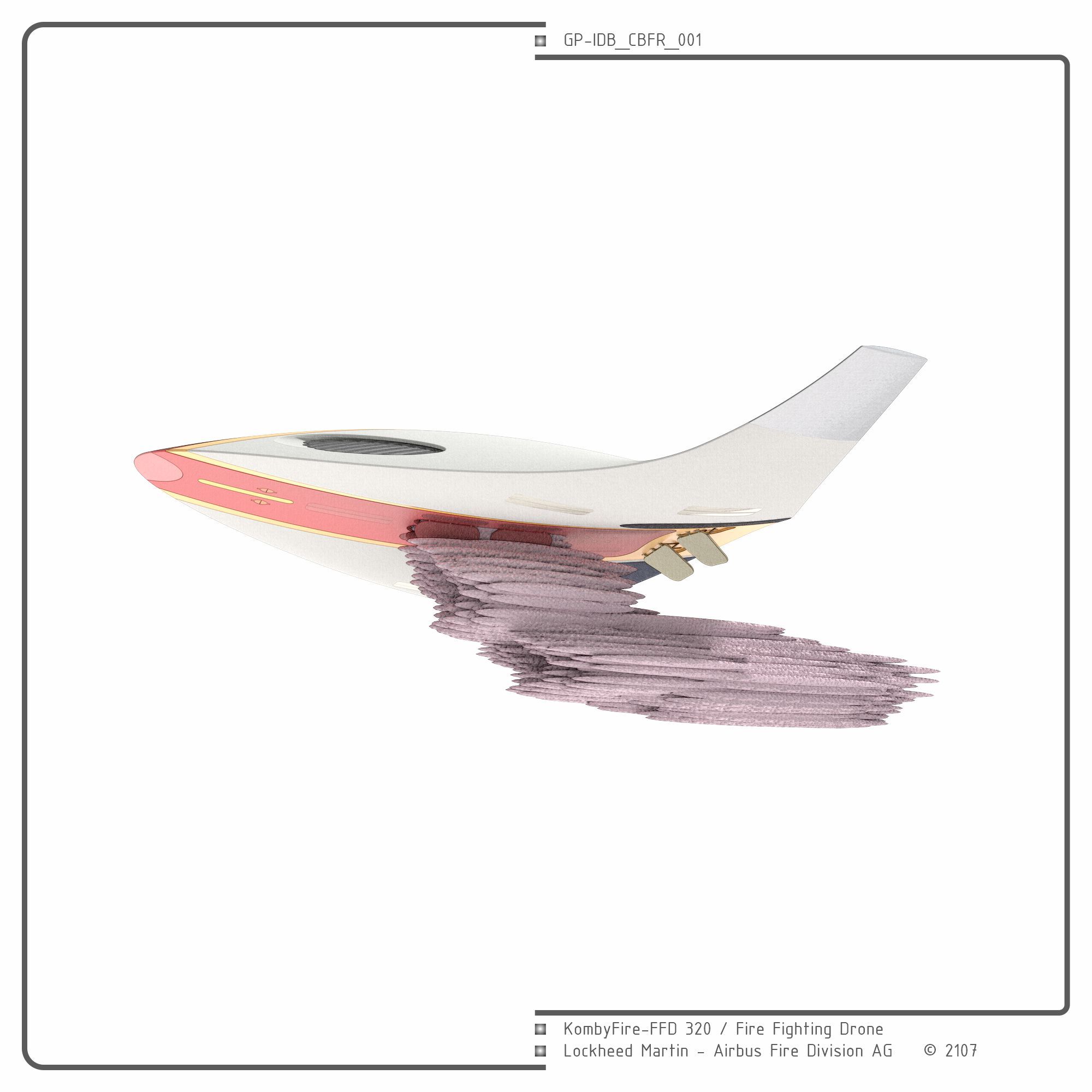
A platform of interchangeable cockpit drones, developed as a response force for any type of fire, whether in forests, industrial buildings or even urban skyscrapers. After decades of forest catastrophes caused by the perennially unpredictable climate change, the United Nations requested at the end of the last century, through a restricted competition, the design of an unmanned aircraft that could assist firefighters with a response time of no more than 30 minutes and a radius of action of 600 km from its base.
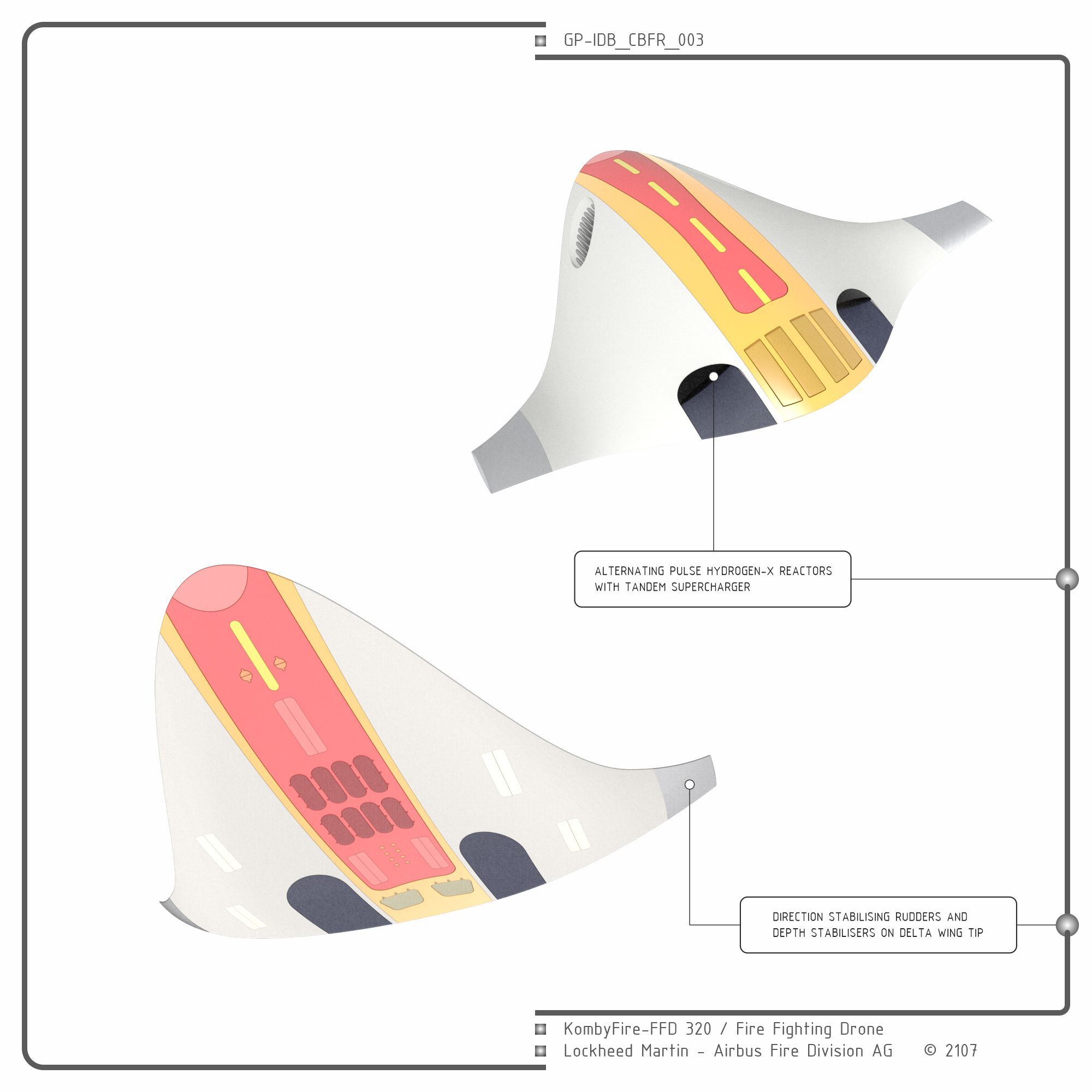
The winning solution was presented by Lockheed Martin and the Airbus Forestry Division. The European company had extensive experience in adapting its military models to transport and unload large quantities of water. The American company held the patent for the new alternating pulse Hidrogen-X stator jet, powered by green hydrogen and with lower consumption.
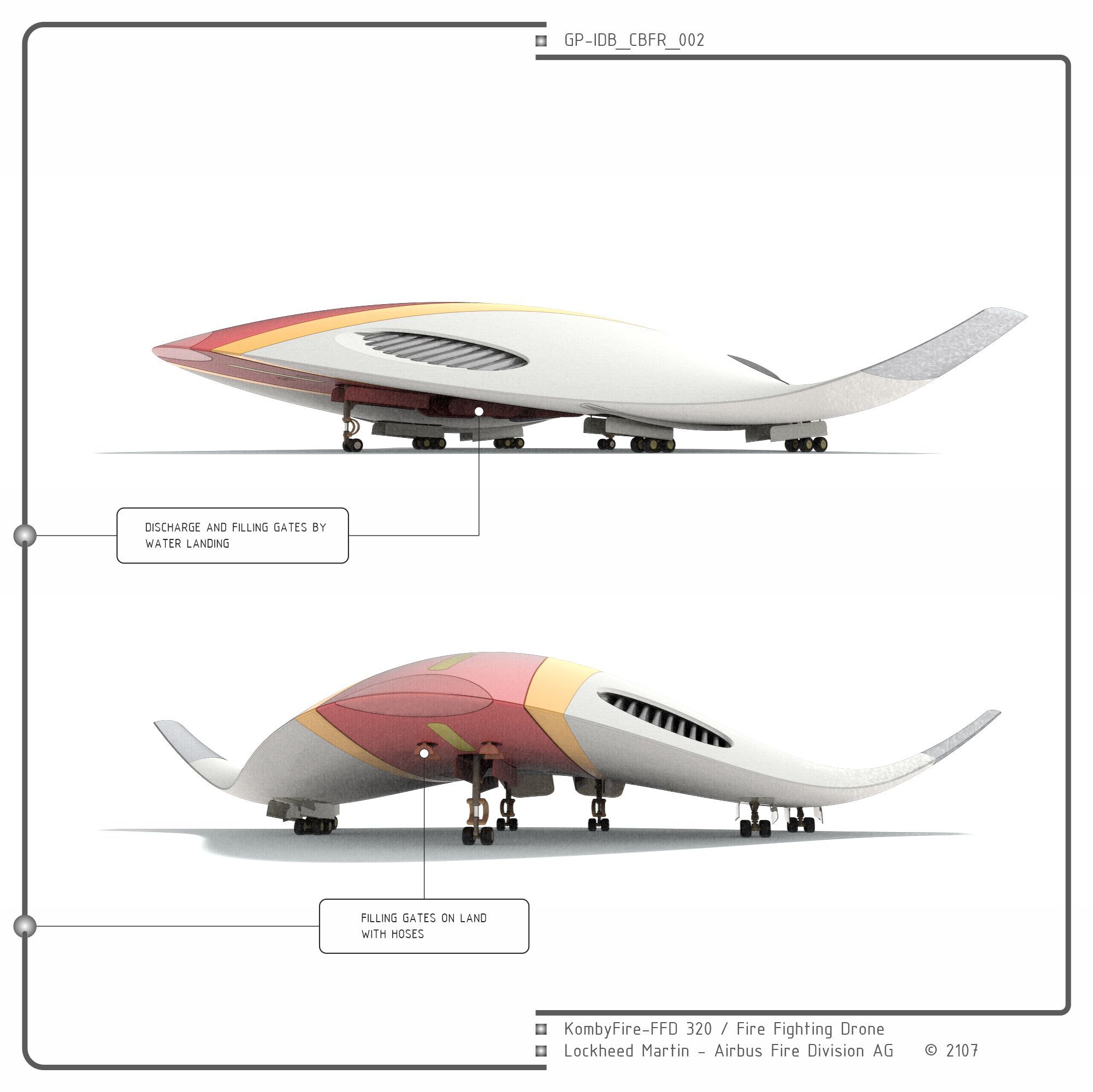
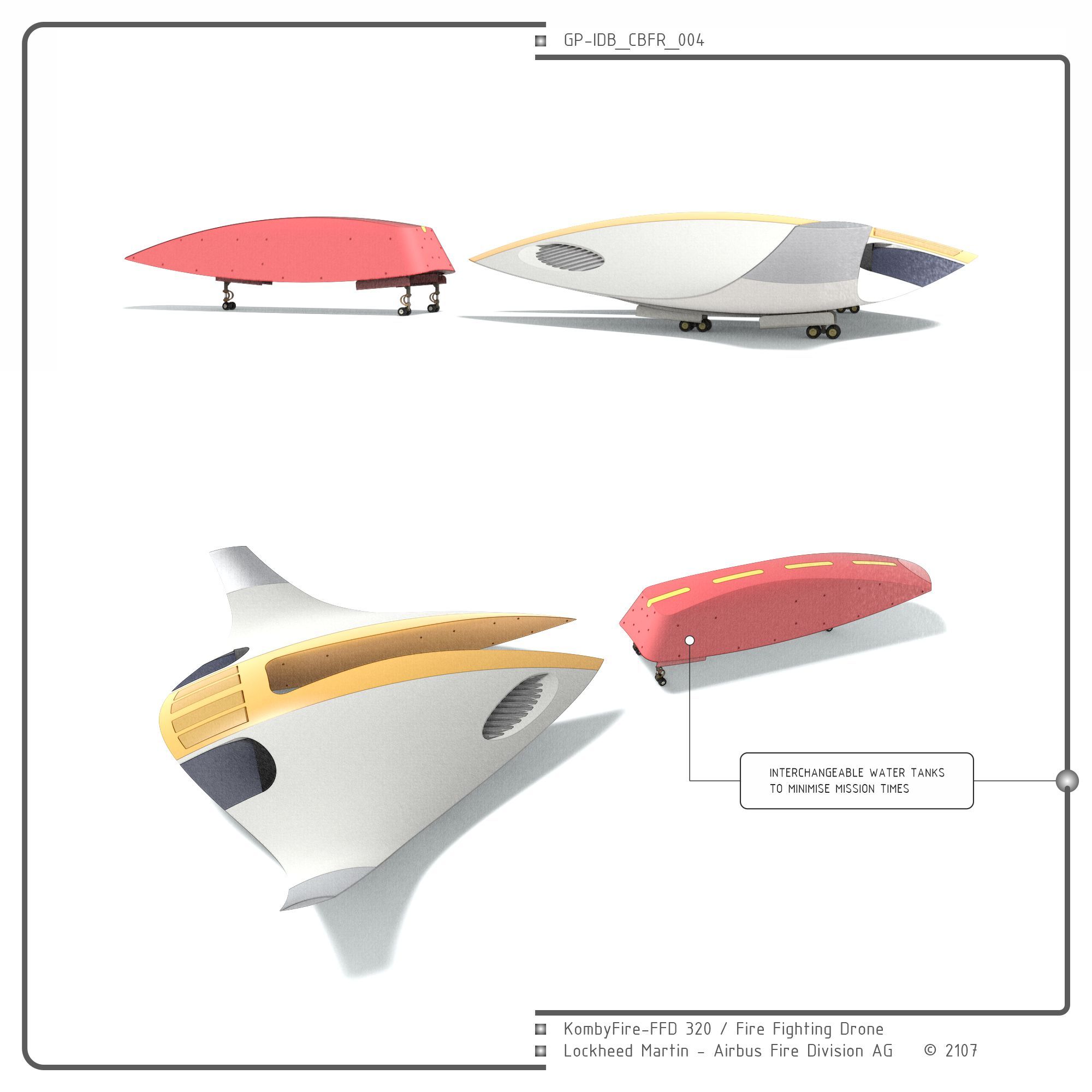
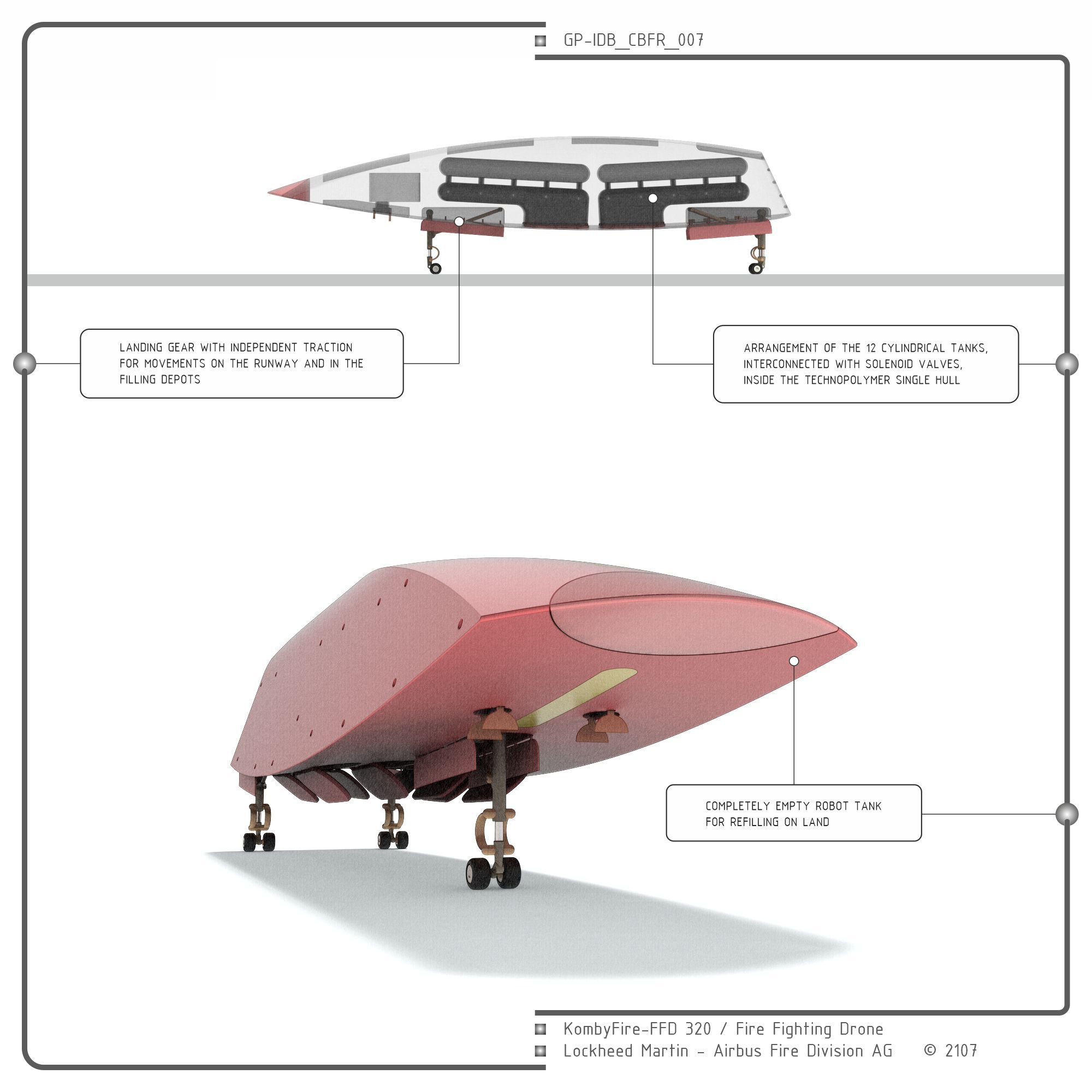
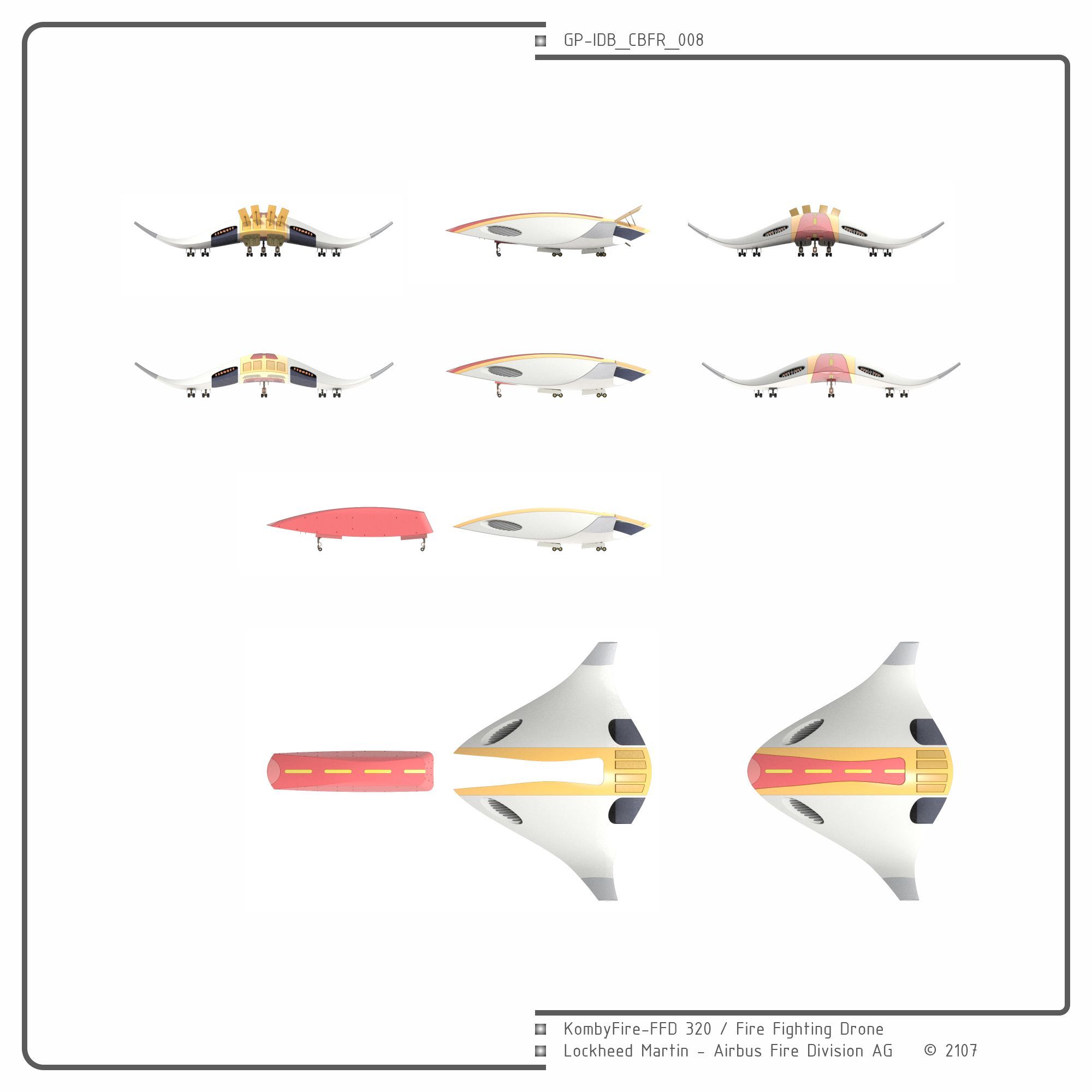
The project consisted of a pure delta wing, powered by 14 small yet long jets embedded into its fuselage. The water tanks were integrated into an interchangeable monobloc capsule. The revolutionary concept allowed the robot airplane to perform a mission, return to its base and perform the next one in just 10 minutes. The time required to exchange the empty cabin for a full one and take off again.
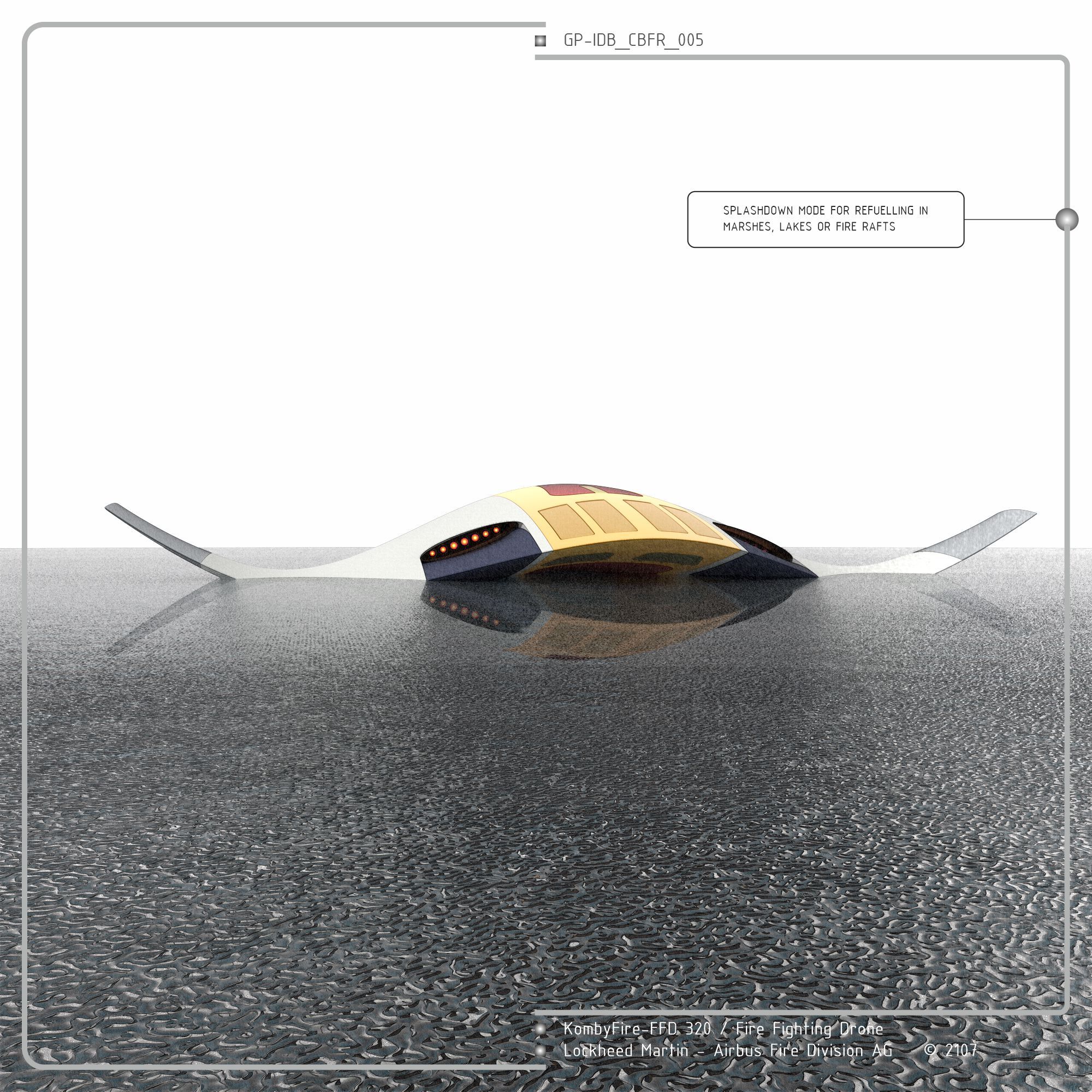
Its cruising speed of 1,300 km/h (1.05 Mach) guaranteed the response time specified in the competition’s requirements. Its modular tank system also solved the issue of supplying water from lakes or reservoirs, given the random restrictions on water consumption in most parts of the world. The project included a map of bases strategically distributed around the globe in areas without water deficit, so as to always have modules loaded with water and different chemical additives depending on the type of fire.
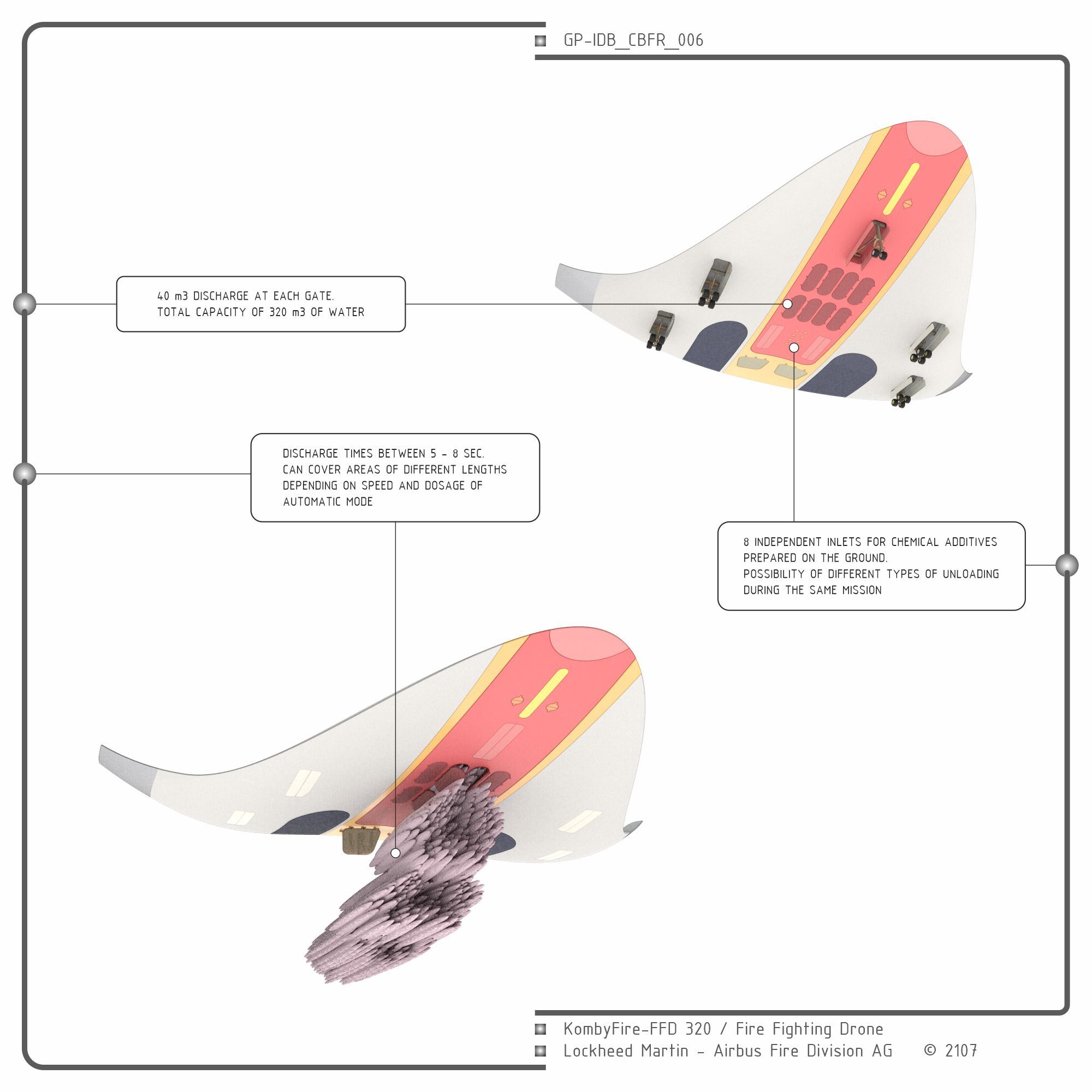
The discharge capacity per mission, much higher than that available at the time, was another of the variables that made it the winning proposal. The CombyFire modules have 8 discharge gates, each discharging 40 m3 of liquid by gravity. The chemical additive tanks are stored independently, allowing the drone to dose the mixture shortly before unloading and to make several passes over its target with different quantities and areas, depending on height and speed.
The CombyFire concept was used for the first time during the California fires in the spring of 2109. Its effectiveness in avoiding millions of dollars in losses, operational precision and speed in response times and coordination between drones was so well received that the United Nations asked Lockheed Martin to develop the same concept for civilian passenger transport. KombyTrans platforms have recently been inaugurated at several airports this year.
Characteristics
CAPACITY : 320 m3 of water / special liquids
AUTONOMY: 5 hours at 1.300 km/h. (Mach 1,05)
FUEL: Liquid hydrogen
ECO-ENERGY RATIO: 0.958
DIMENSIONS:
KombyFire: 51,755 x 65,050 x 11,106 mm (51,755 x 65,050 x 11,106 mm)
Drone: 49.870 x 65.050 x 10.910 mm
Cockpit-Tank: 41.900 x 10.290 x 11.106 mm