Emergency Medical Air Transport
Property
Copyright: GenHomia-MBB Corp. / © 25/07/2108
History
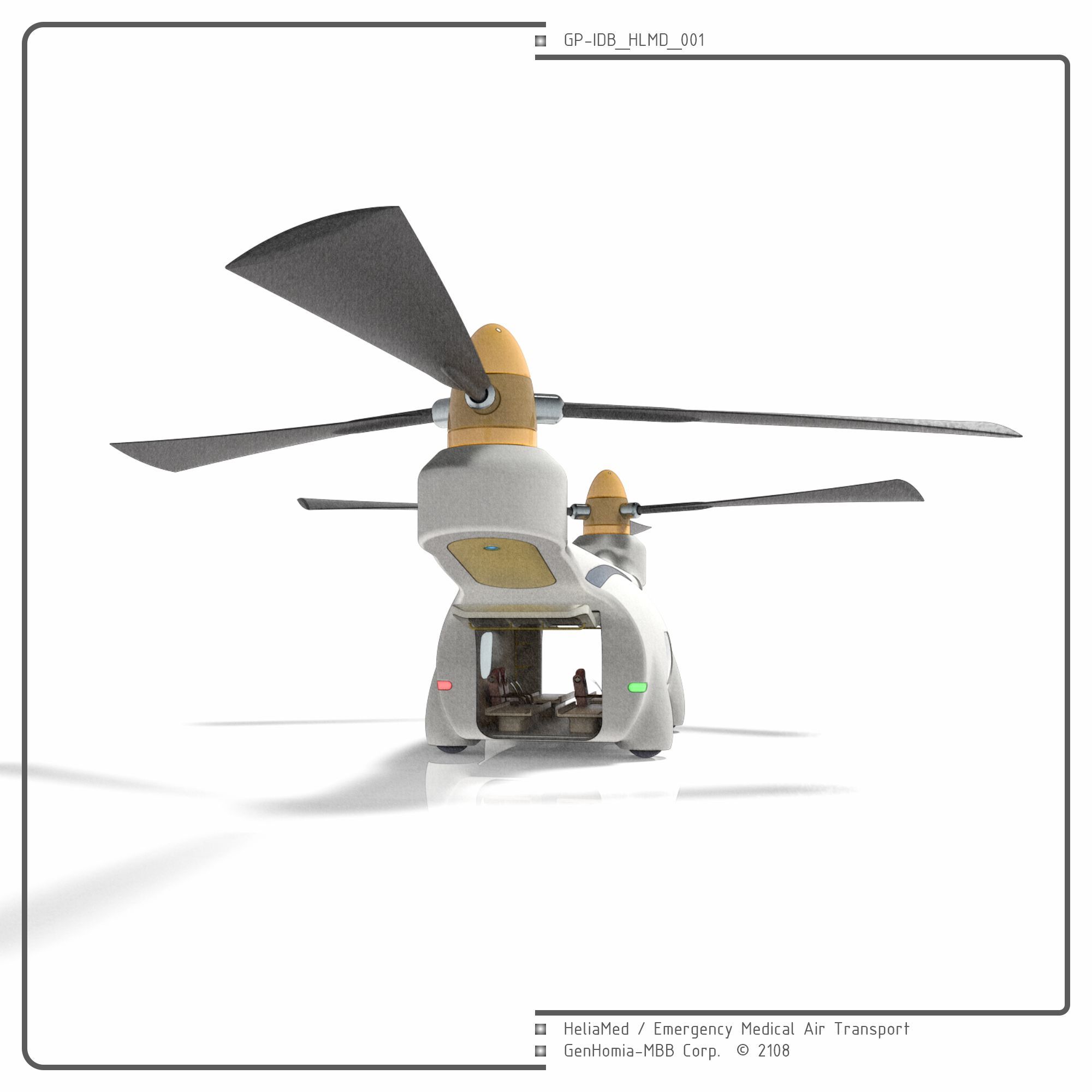
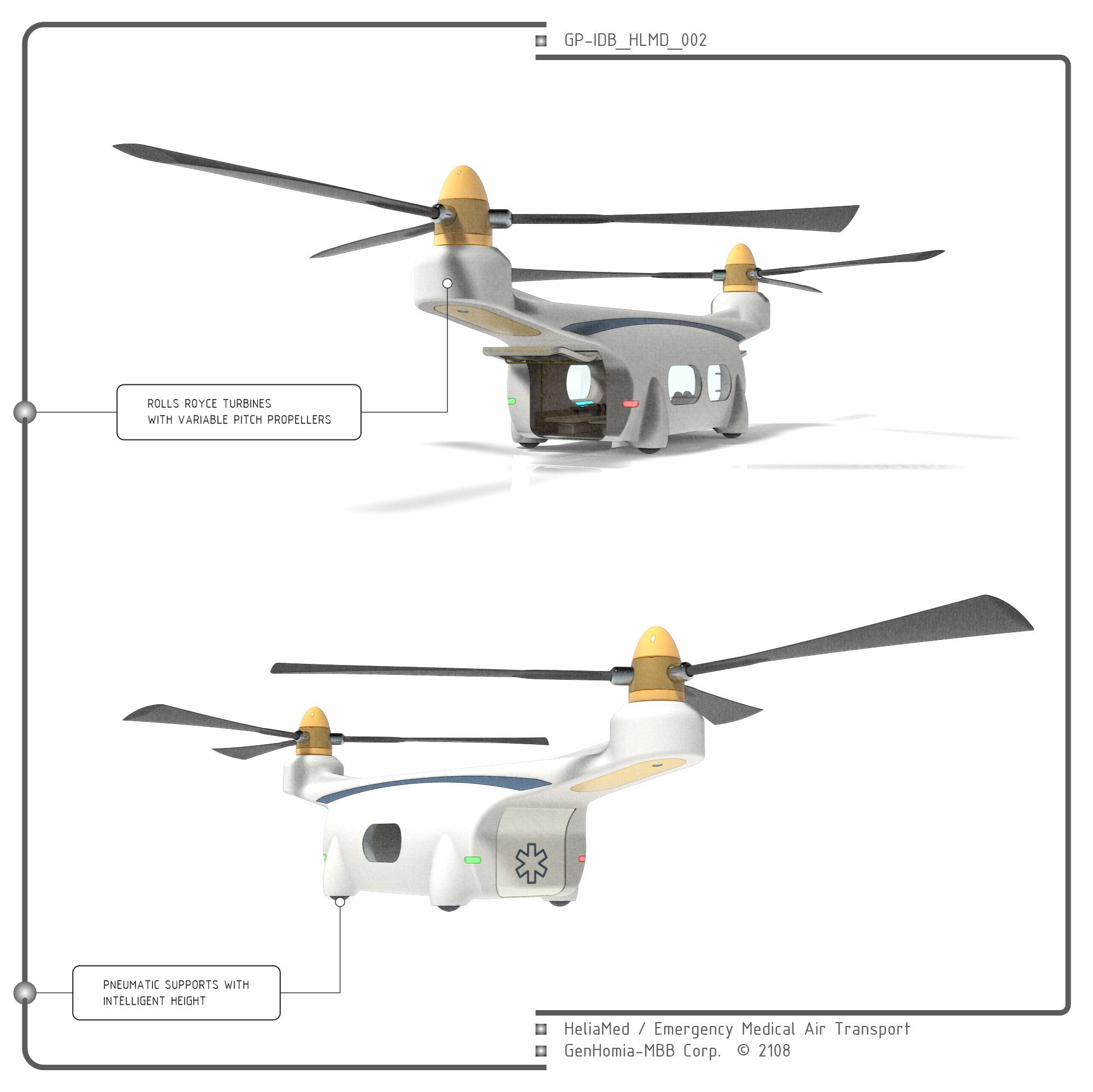
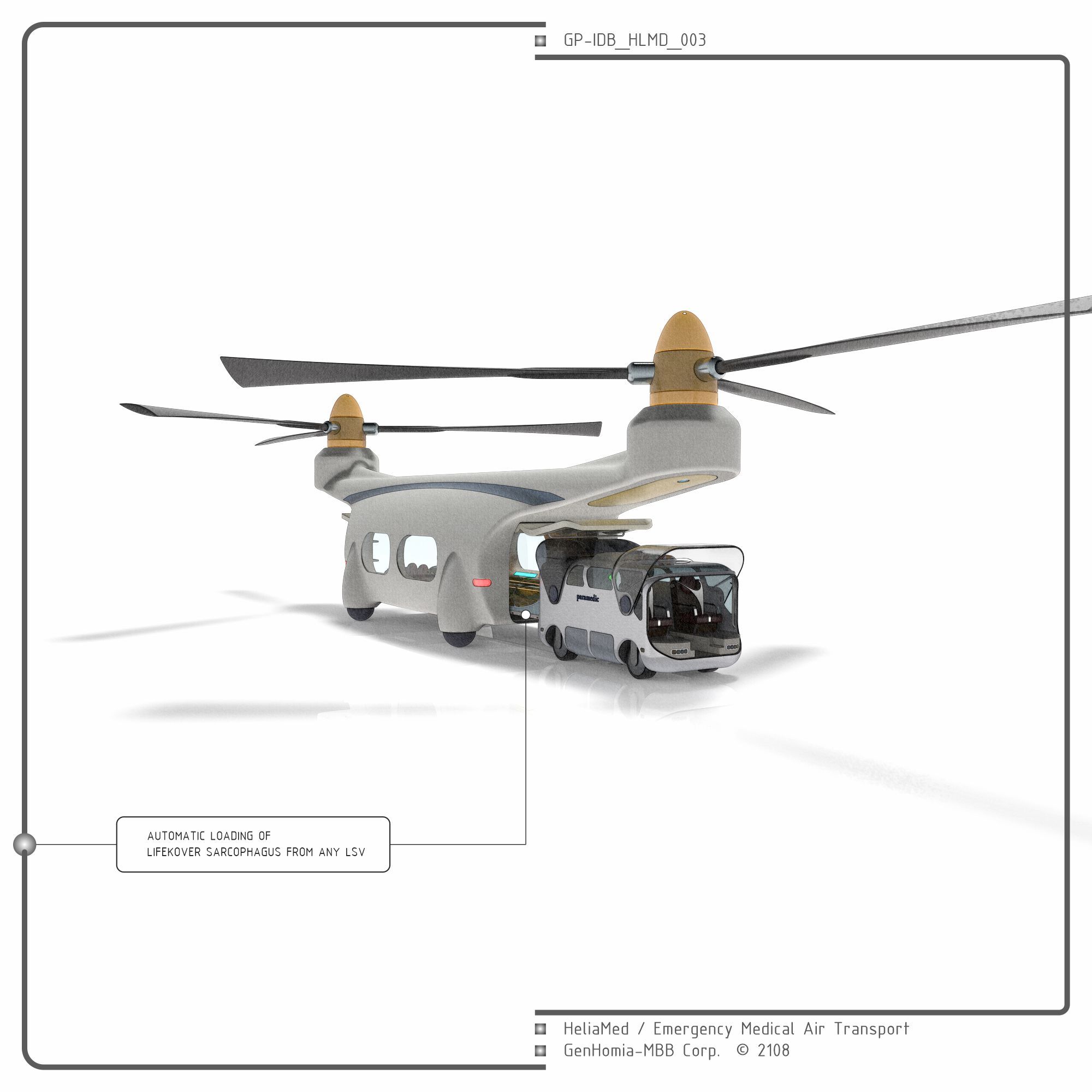
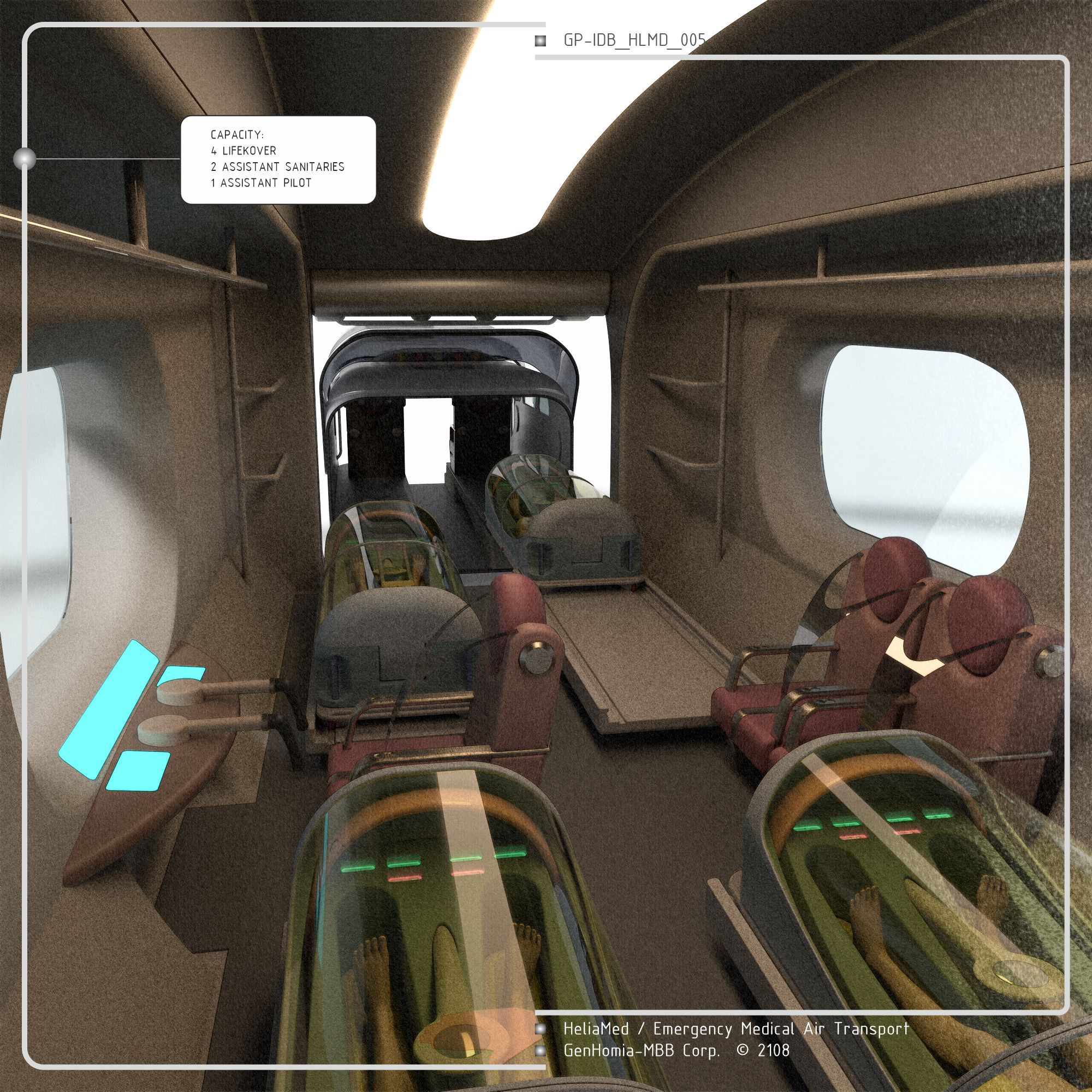
With the widespread implementation of the LifeKover robotic stretcher system in the first decade of this century, emergency air transport was also robotized and simplified. The HeliaMed helicopter model was designed using intelligent applications, exclusively adapted to this new type of sarcophagus.
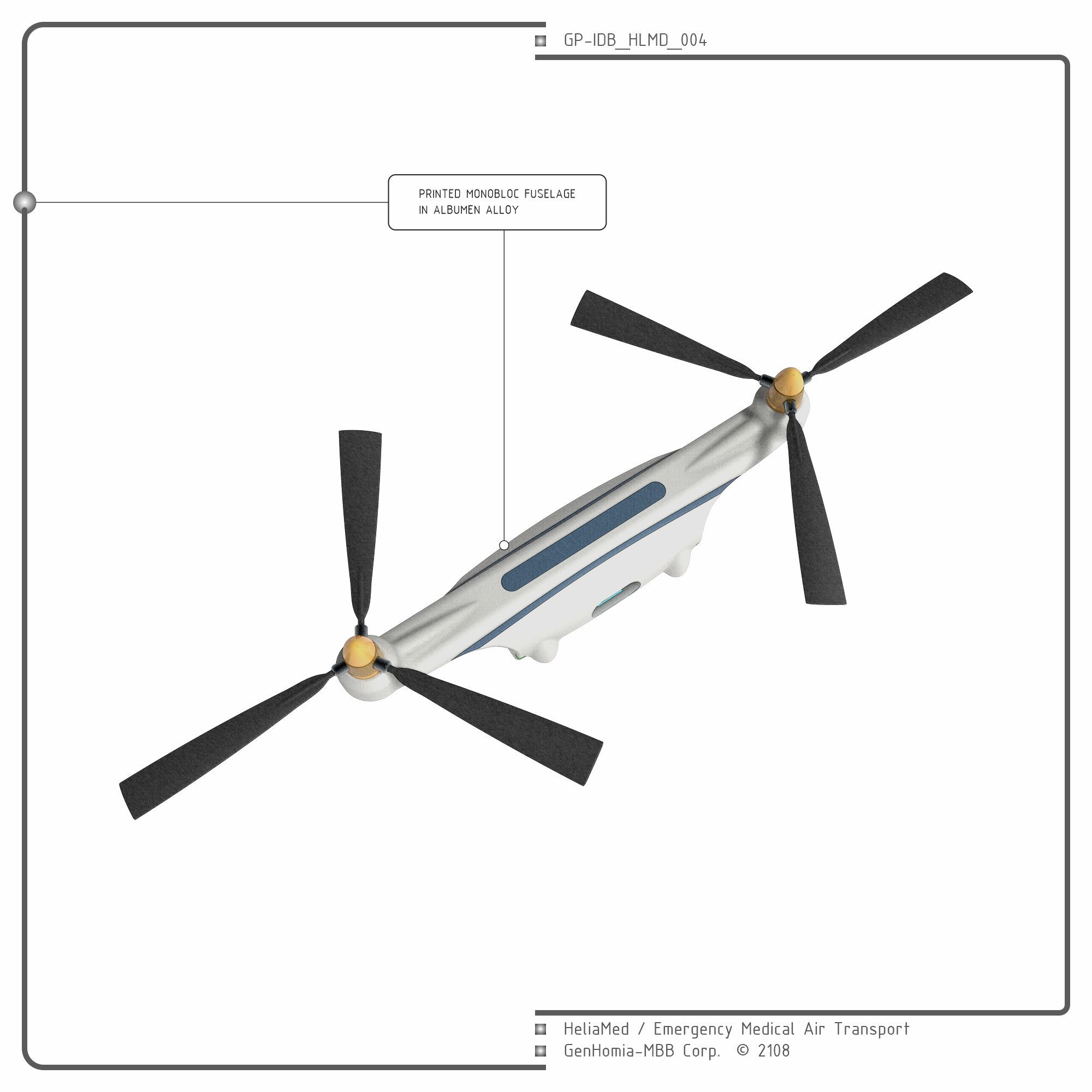
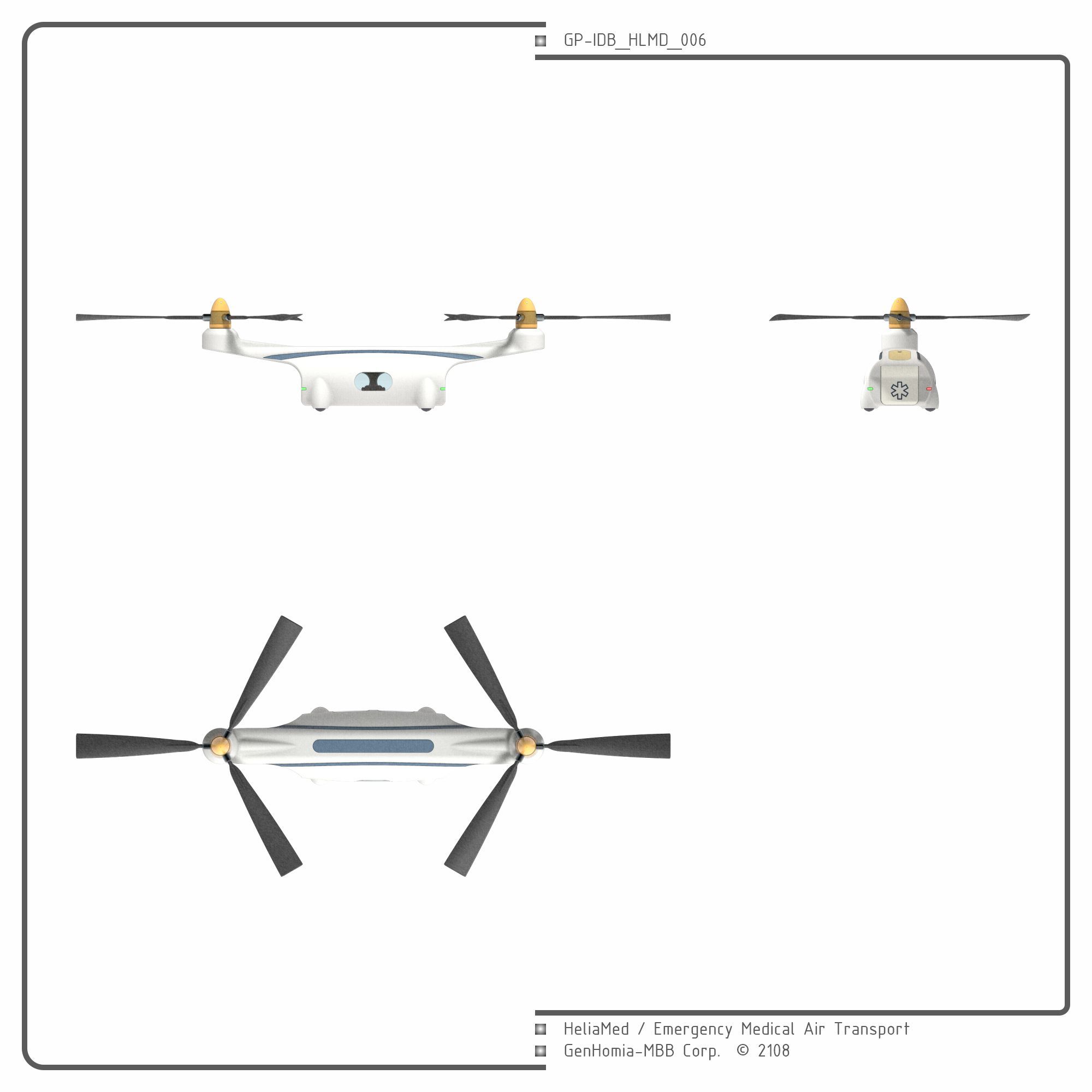
3D printed with the latest albumen polymer alloys, it significantly reduces the weight of its predecessors. For propulsion it uses two Rolls Royce RRM-3 electric rotors powered by hydrogen cells.
Installed on the rooftops or parking lots of hospitals, hotels, stadiums and public buildings with more than 1,500 occupants, it enables priority transfer times within the SkyKover Digital Network that are far superior to the previous standard. Coordinated with the LSV robot vehicles in their daily work, it guarantees the population a very high percentage of assistance, currently 78%.
In 3C (Catastrophic Climate Crisis) geographical areas, HeliaMed units have brought a substantial improvement in response times for rescue missions. Their algorithmic autonomy allows a much higher speed in triage decision making: choice of route, landing zone and sarcophagus entry order. It also optimizes the choice of medical center based on minimum distance, availability of assistance and probability of survival.
United Nations forecasts an increase of HeliaMed units of around 22% for the next decade, due to the increase in the population’s life expectancy.
Characteristics
CAPACITY : 4 LifeKovers of size 2000 mm / 2 Assistants / 1 Pilot.
STRETCHER TRANSFER HEIGHT: 748 mm
AUTONOMY: 6 hours at 380 km/h.
FUEL: Hydrogen Cell SBN
ECO-ENERGY RATIO: 0.897.
DIMENSIONS:
Blade diameter: 16,100 mm
Fuselage: 19.000 x 4.350 x 6.505 mm