BioCam Assisted Personal Transport Device
Property
Copyright: GenHomia Worldwide Corp. / © 10/05/2101
History
The ExoTrans concept may be considered a direct descendant of the anthropomorphic robotic developments of the 2040s. Following the industrial implementation of this type of humanoid in most industries for handling and manipulation tasks, large segments of the unqualified population were relegated to subsidy dependence.
It was not until the mid 2070s, when all industrial handling operations had been adapted to new non-humanoid geometries, that major corporations turned their attention to the senior citizen market. Their sales of industrial humanoids were declining year after year, and this technology represented the ideal solution for the development of orthotic exoskeletons for the large consumer mass of people over 68 years of age. Exoskeletons had previously been applied at the industrial level in highly specific and high-risk activities, and their cost was always very high. It was not until well into the ’90s that the first devices appeared on the market capable of integrating citizens with mobility limitations into any public space and transport system. Their price, however, implied a high level of purchasing power.
Despite the cost, this represented such a revolution in the prosthetics and orthotics market that the United Nations proposed its use at the social level, subsidized by municipal authorities. The increase in population life expectancy in turn implied ever-growing public costs to assist the aging population. By the end of the century, the figures began to balance out.
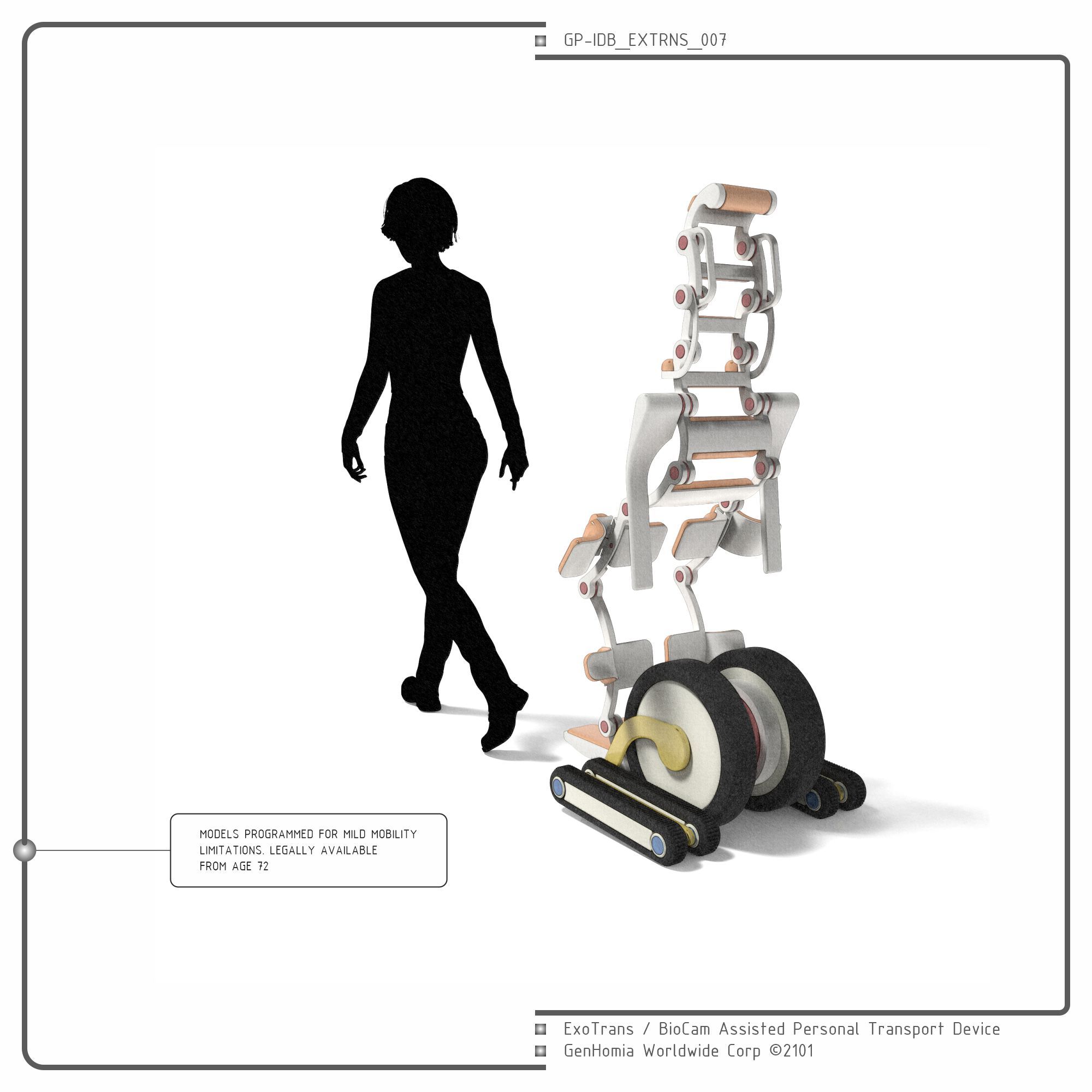
The septuagenarian population suffering from osteoporosis, osteoarthritis, or obesity were the first beneficiaries of the program. Today, people of any age with a leg in a cast may benefit from an ExoTrans, and any citizen with a biochip over the age of 70 may apply for subsidized use. When a legally recognized disability rating of 42% or higher exists, the ExoTrans is provided free of charge.
Characteristics
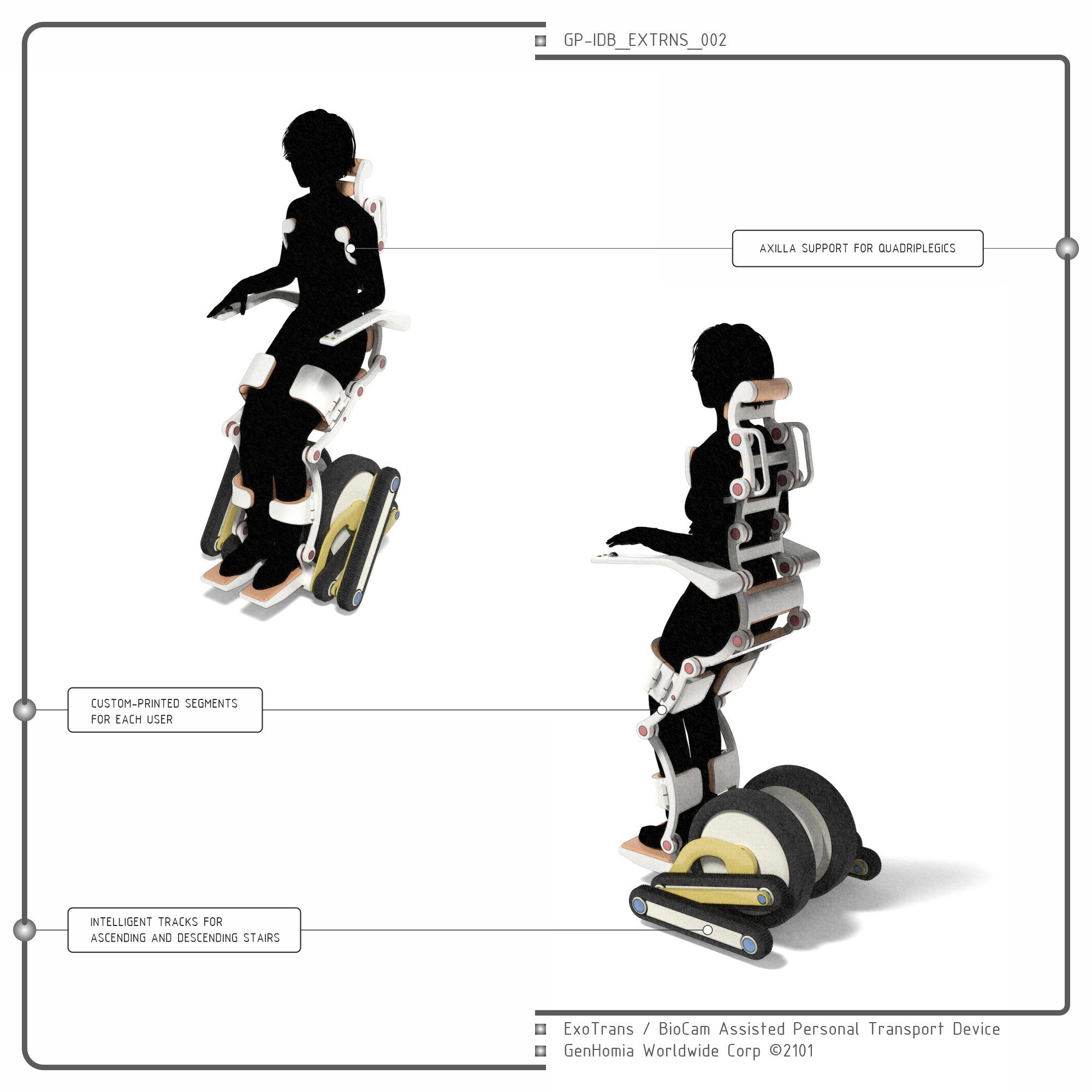
CAPACITY: 1 human body of any size. Custom printing.
AUTONOMY: Indefinite.
MAX SPEED: 9.5 km/h
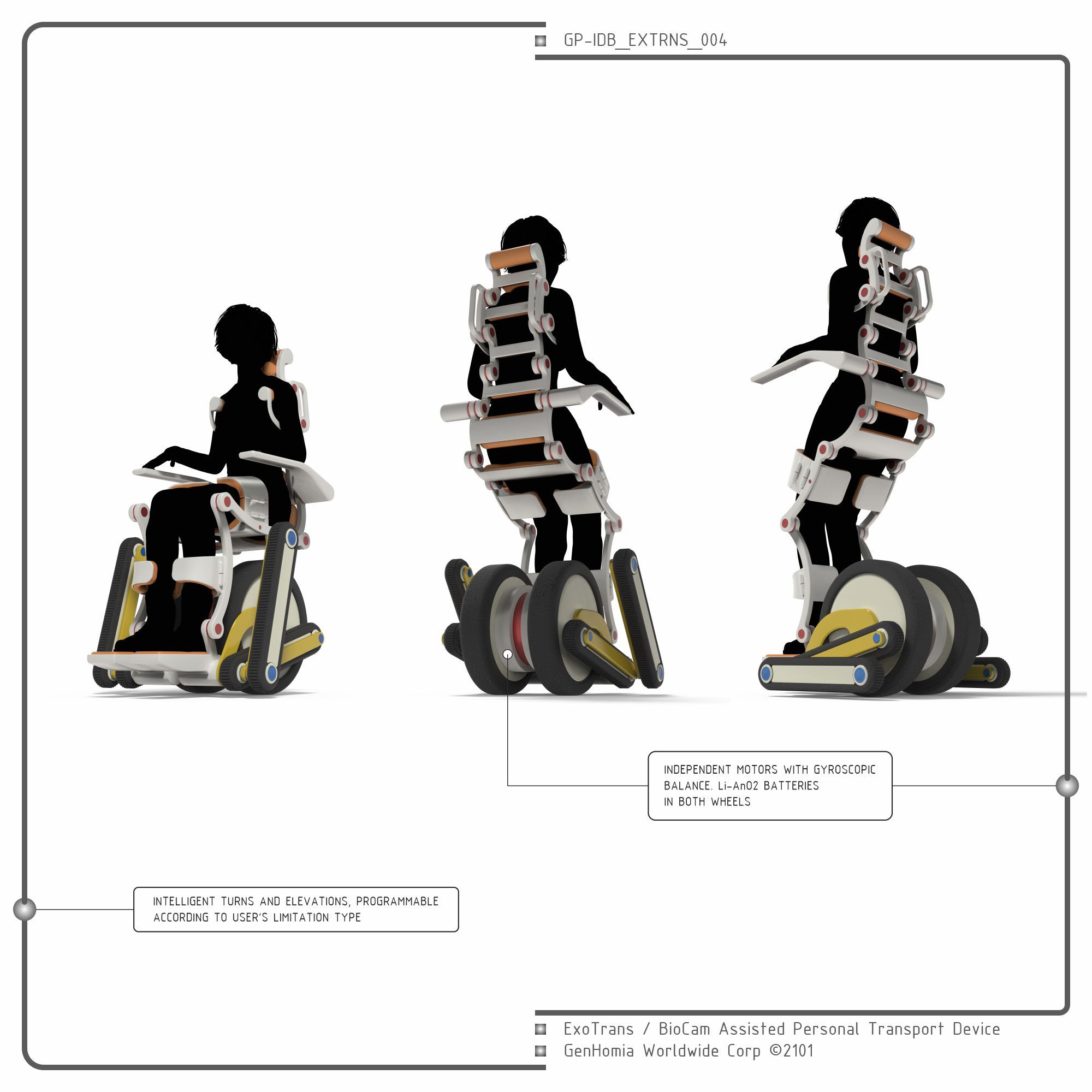
POWER SOURCE: Li-AnO2 Accumulators / SocioSystemic Electrical Grid
ECO-ENERGY RATIO: 0.916
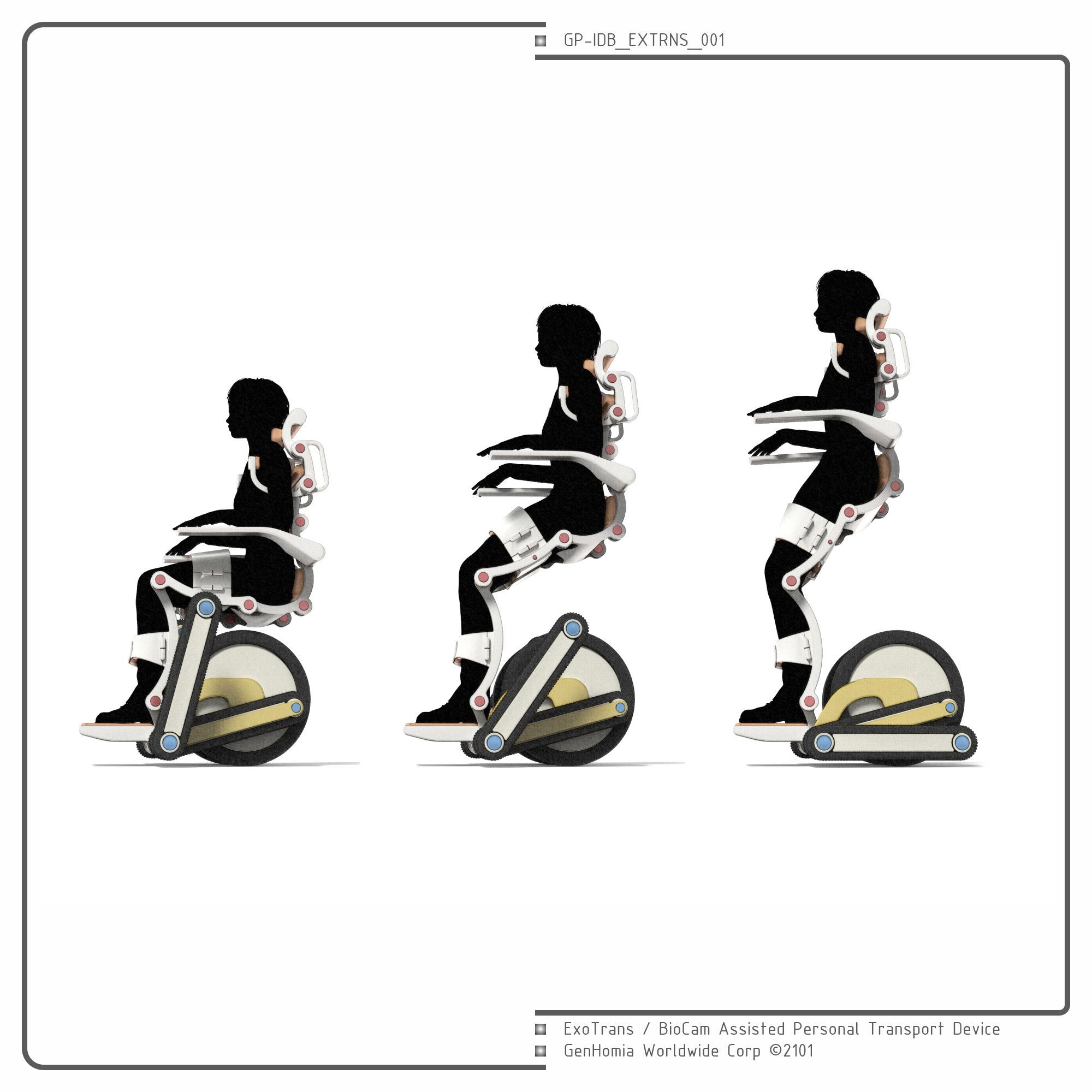
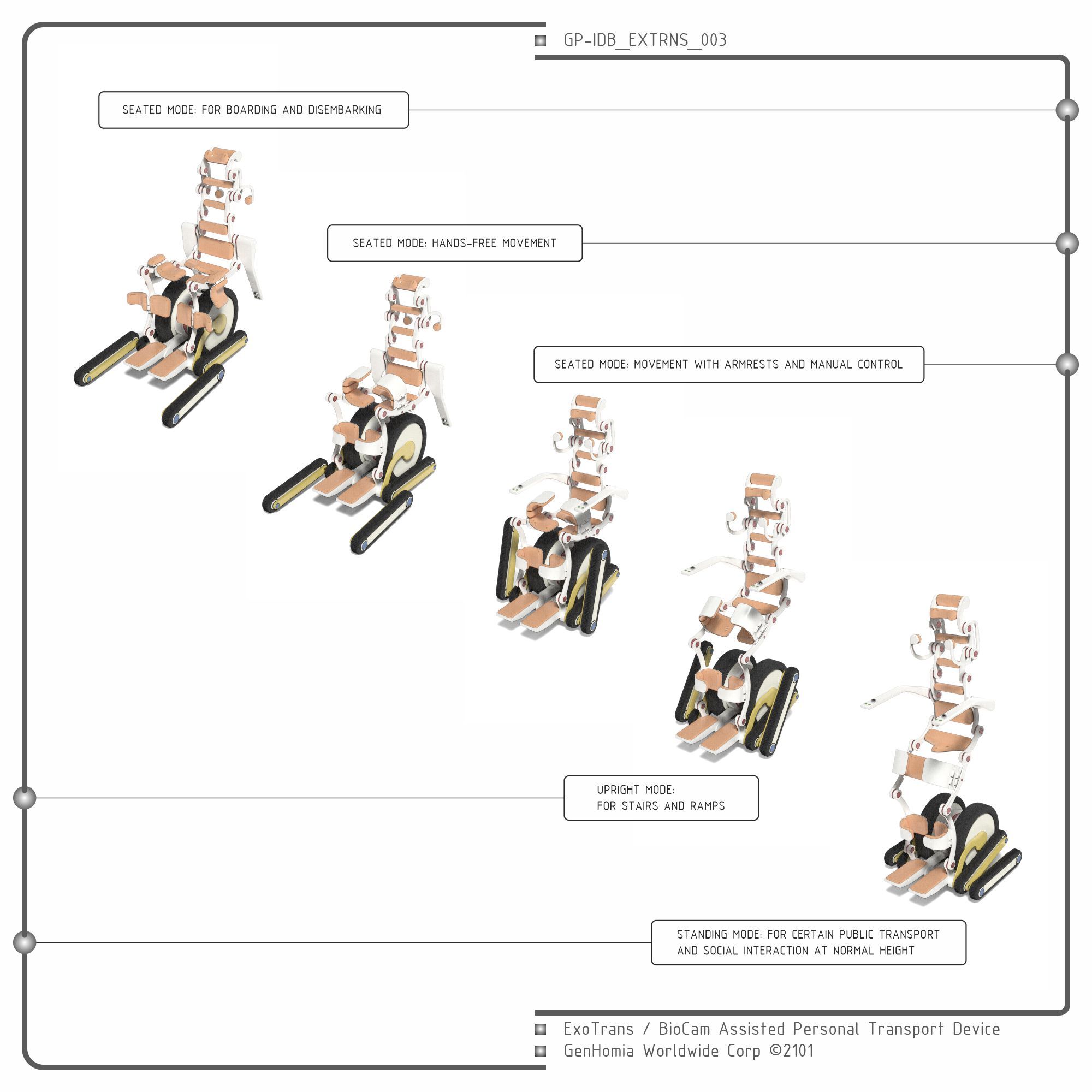
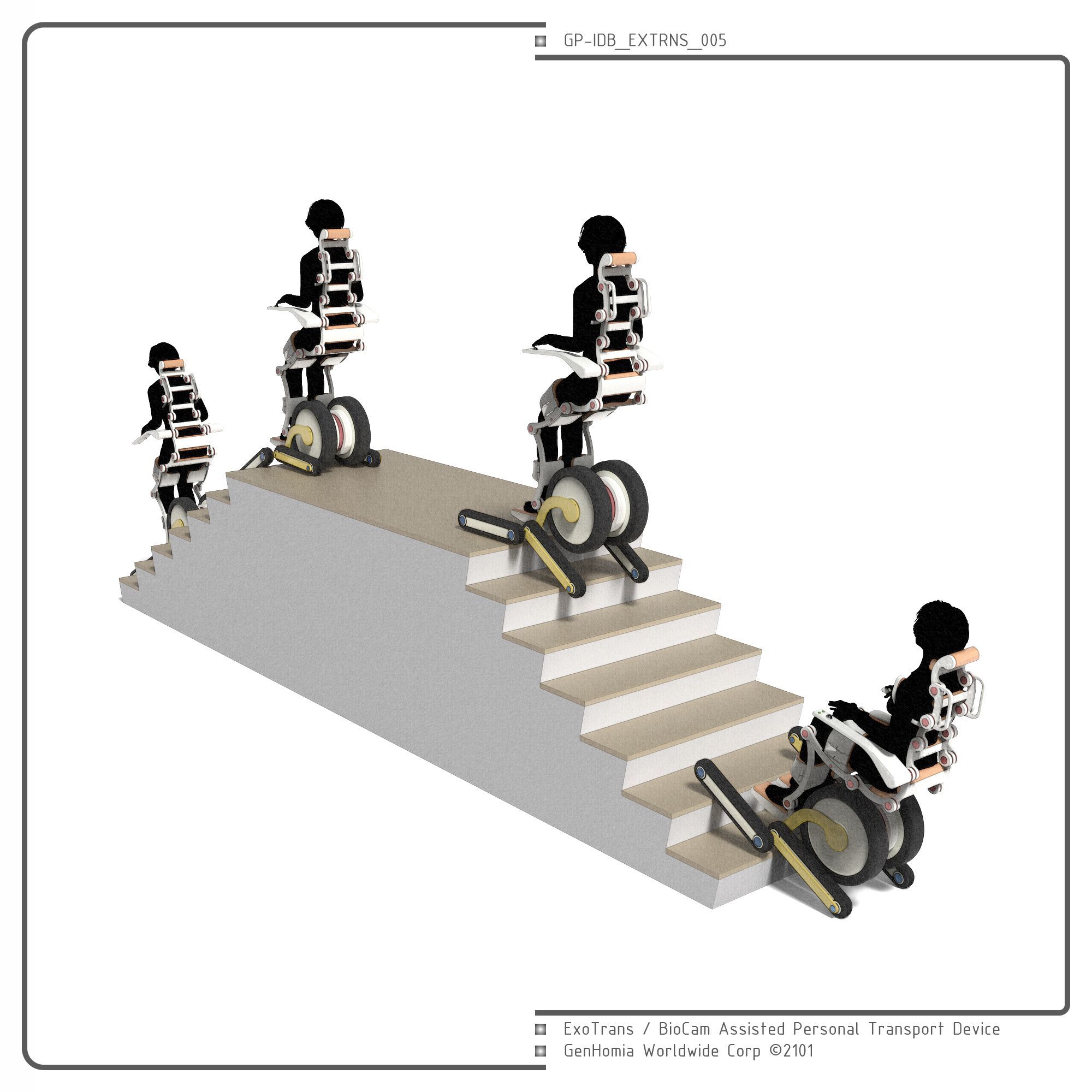
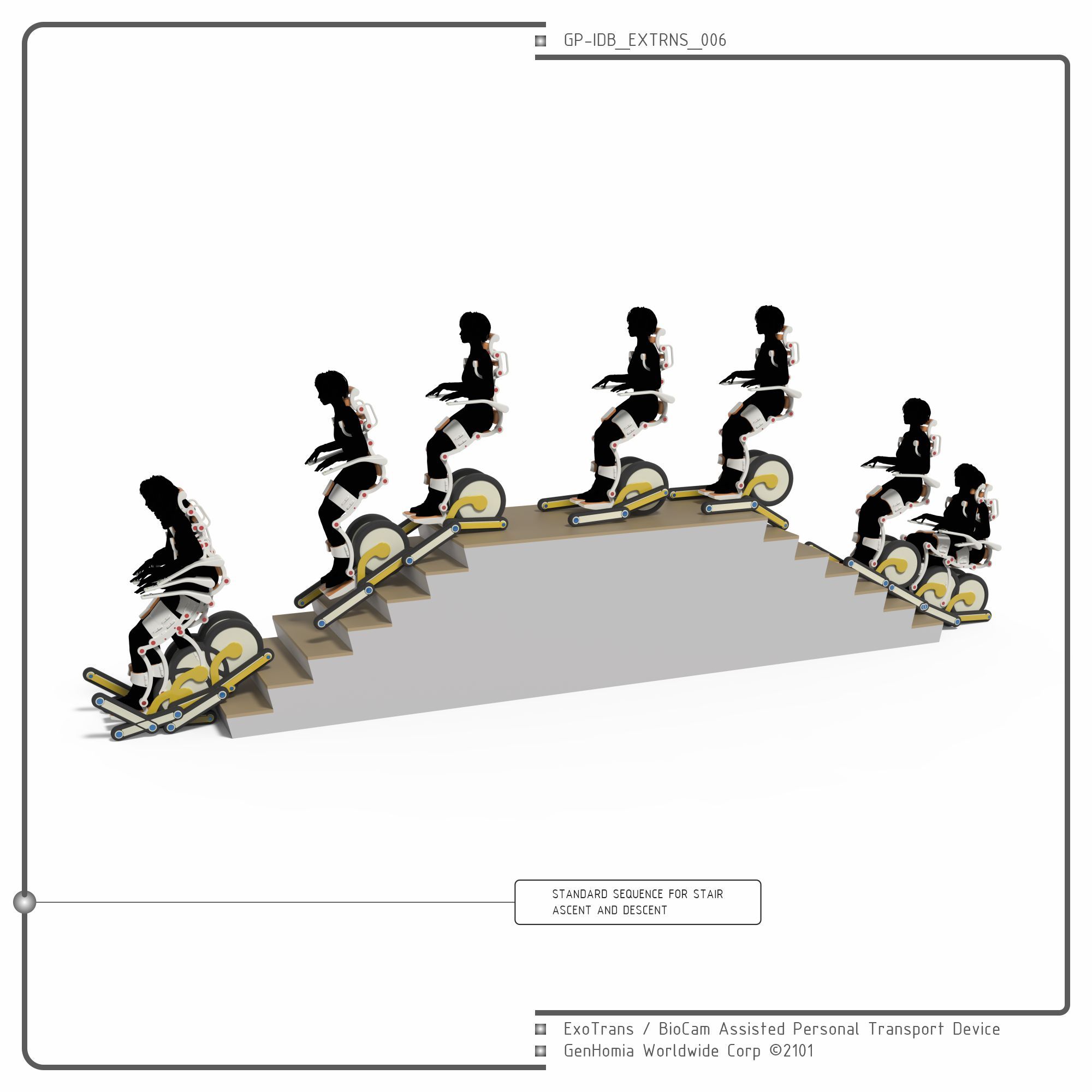
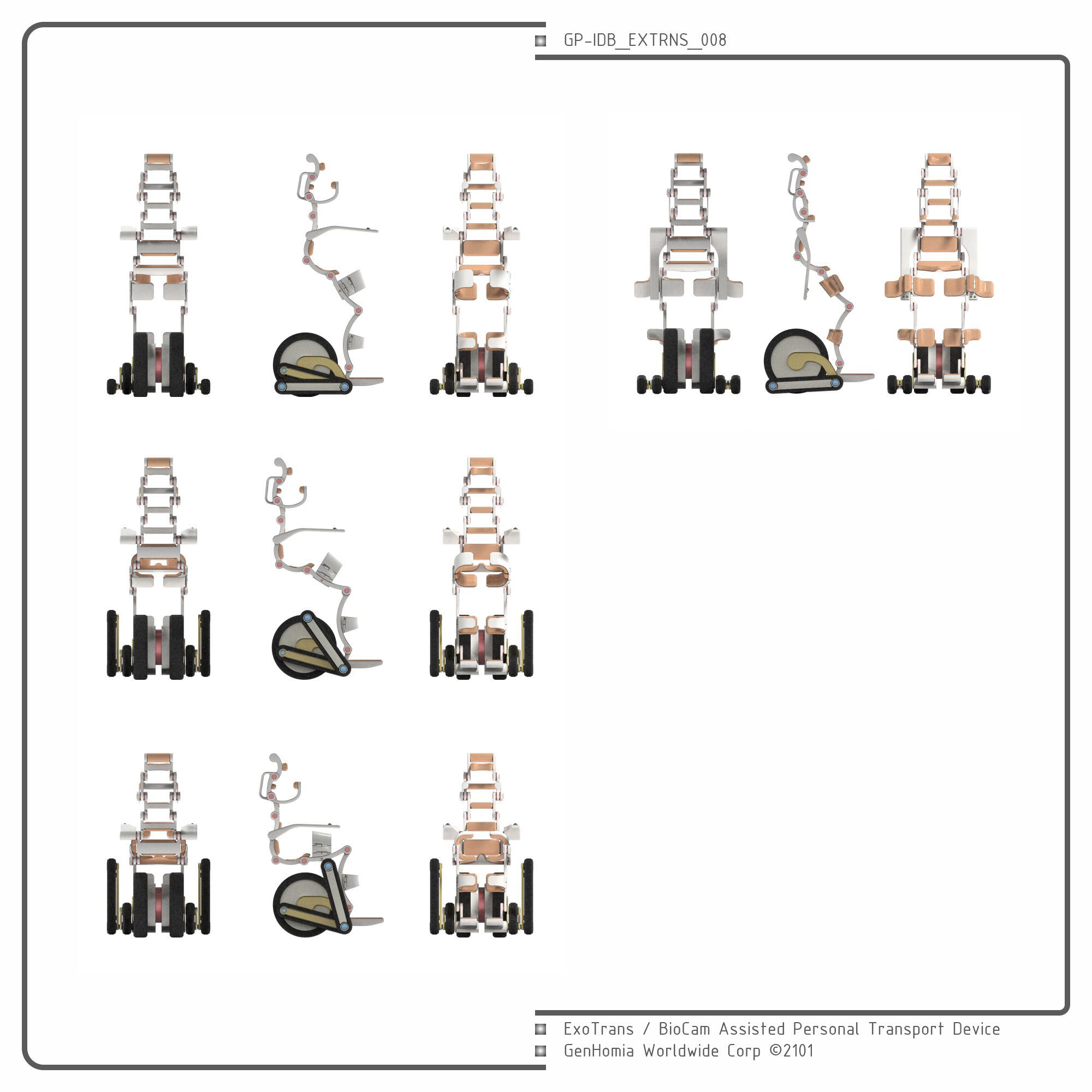
DIMENSIONS SEATED MODE: 1,200 (*) x 1,070 x 700 mm (Track deployed)
DIMENSIONS ELEVATED MODE: 1,650 (*) x 750 x 700 mm (Track folded)
(*): exoskeleton height varies according to user stature.