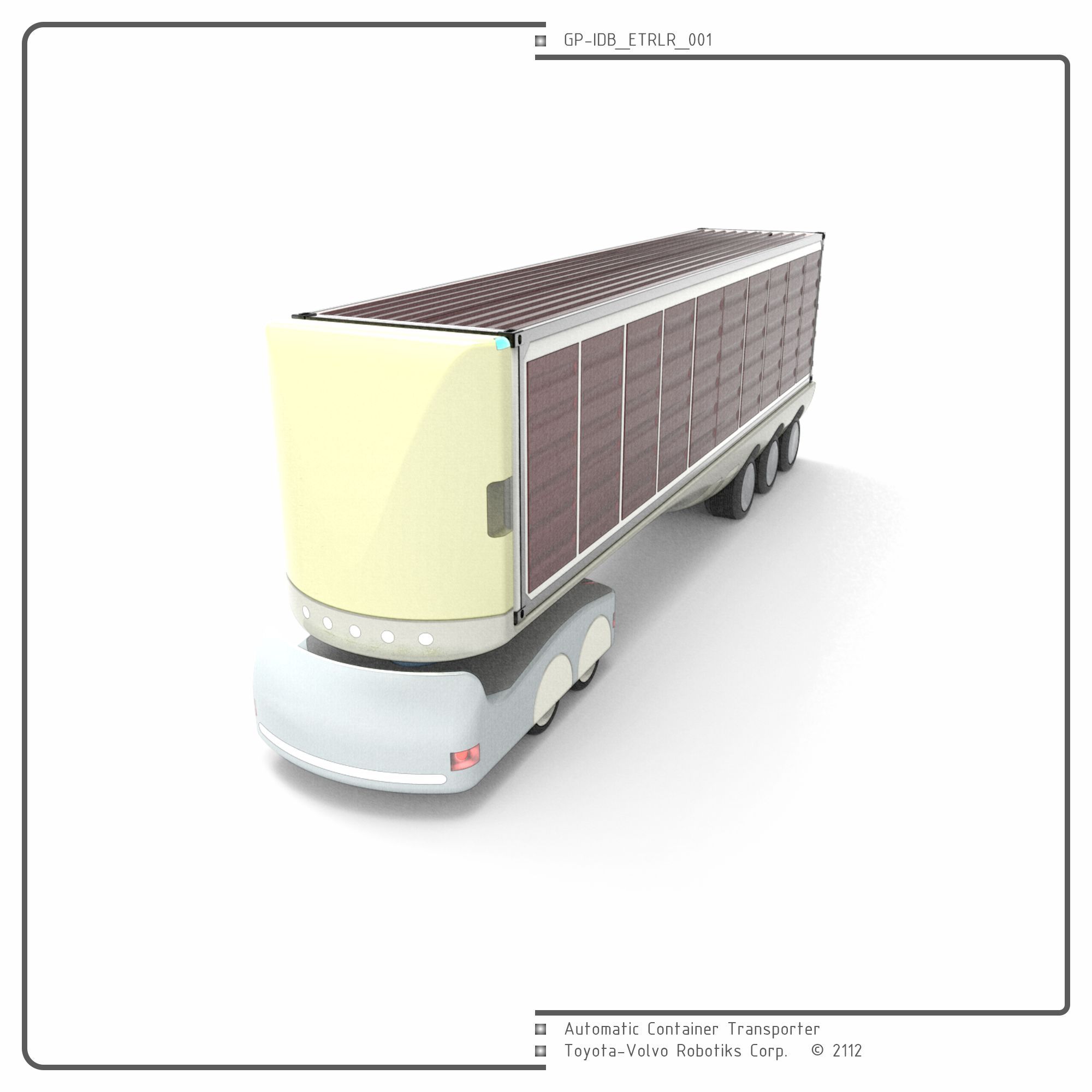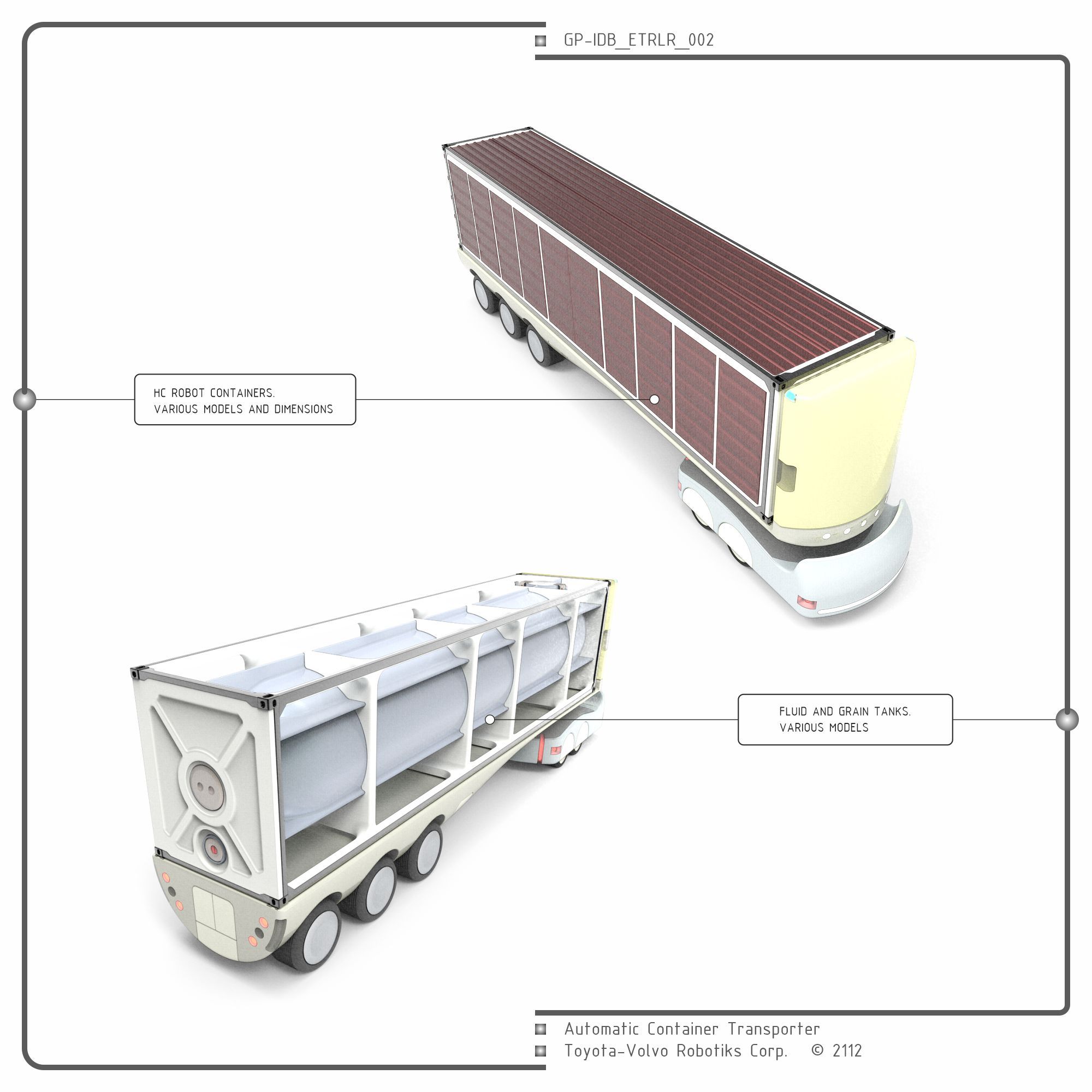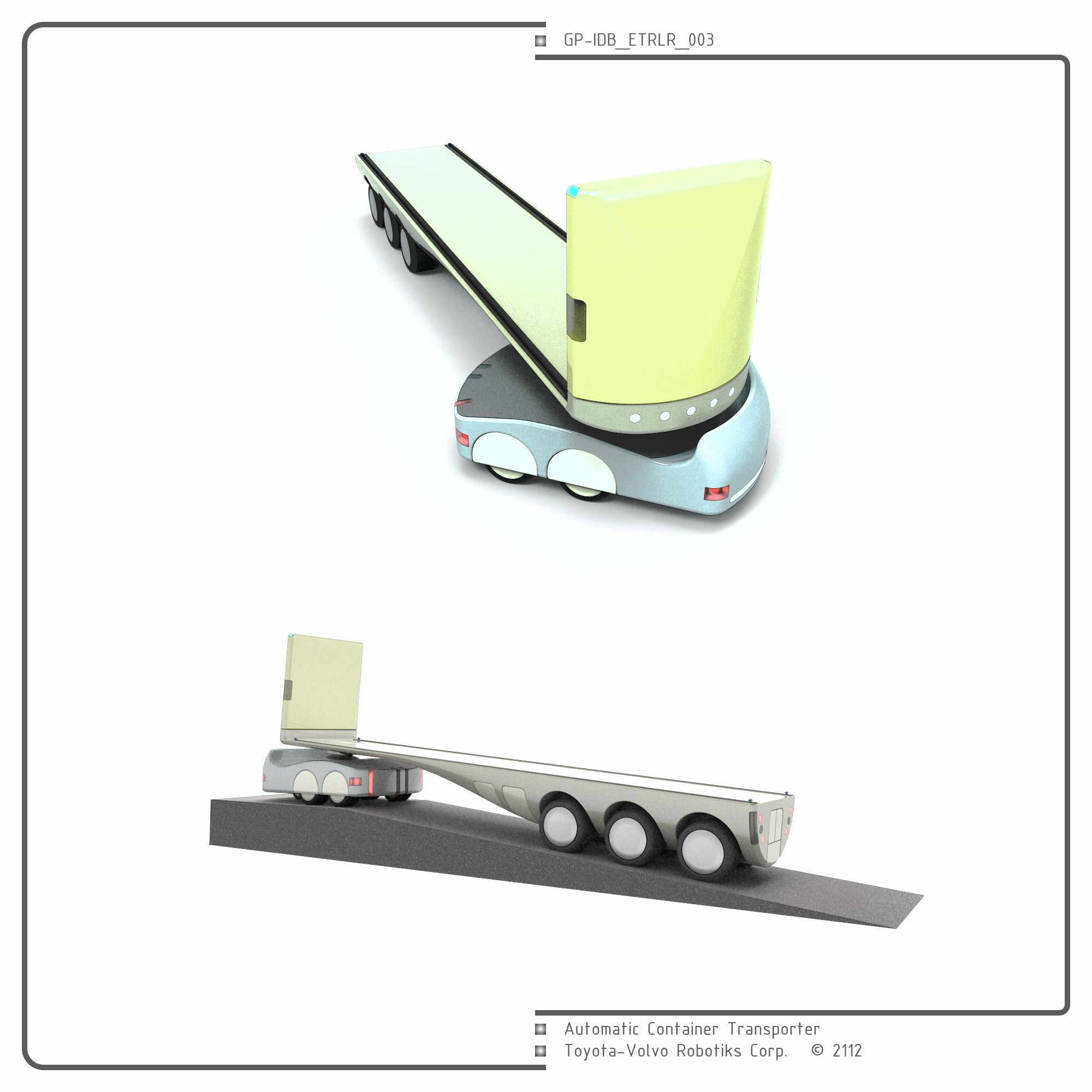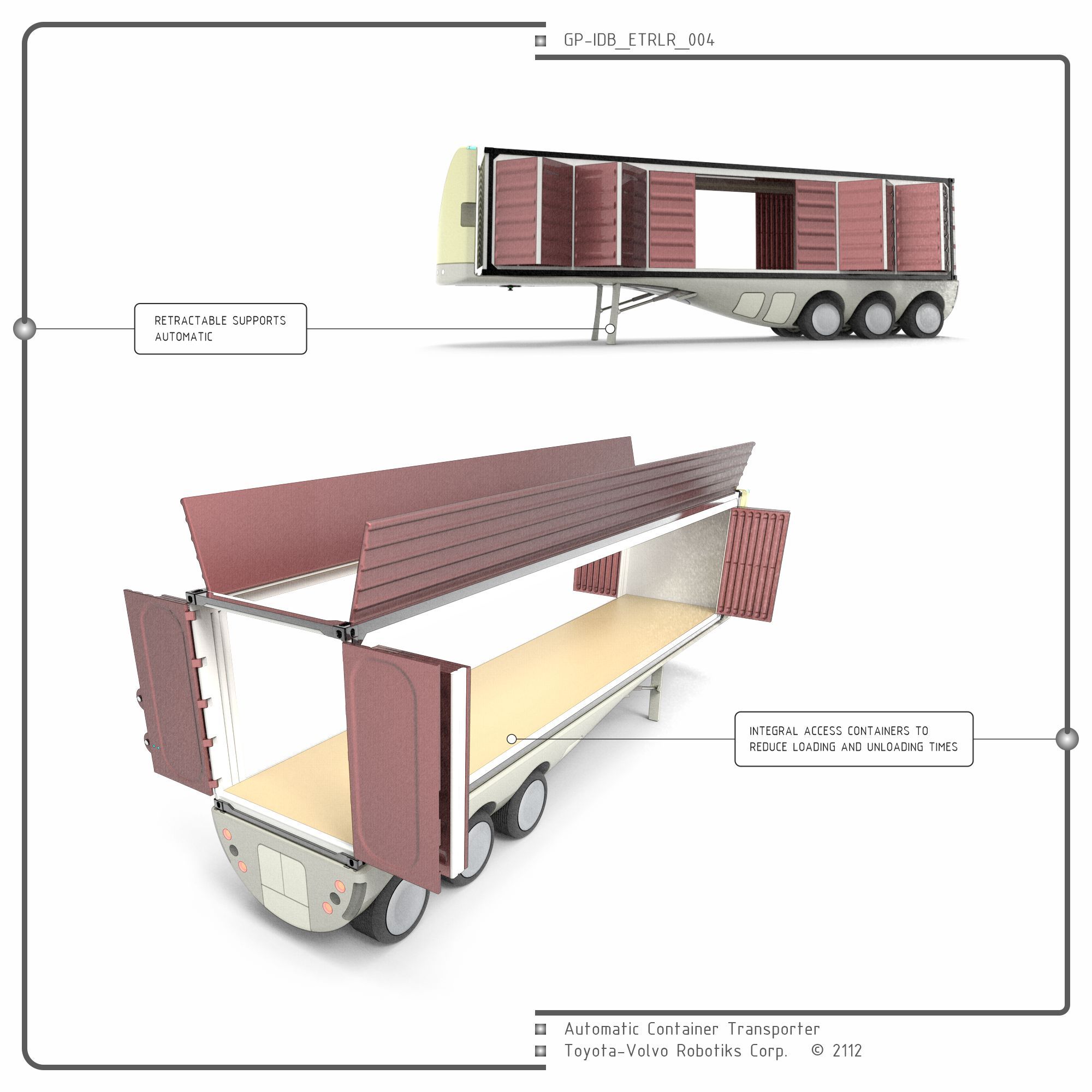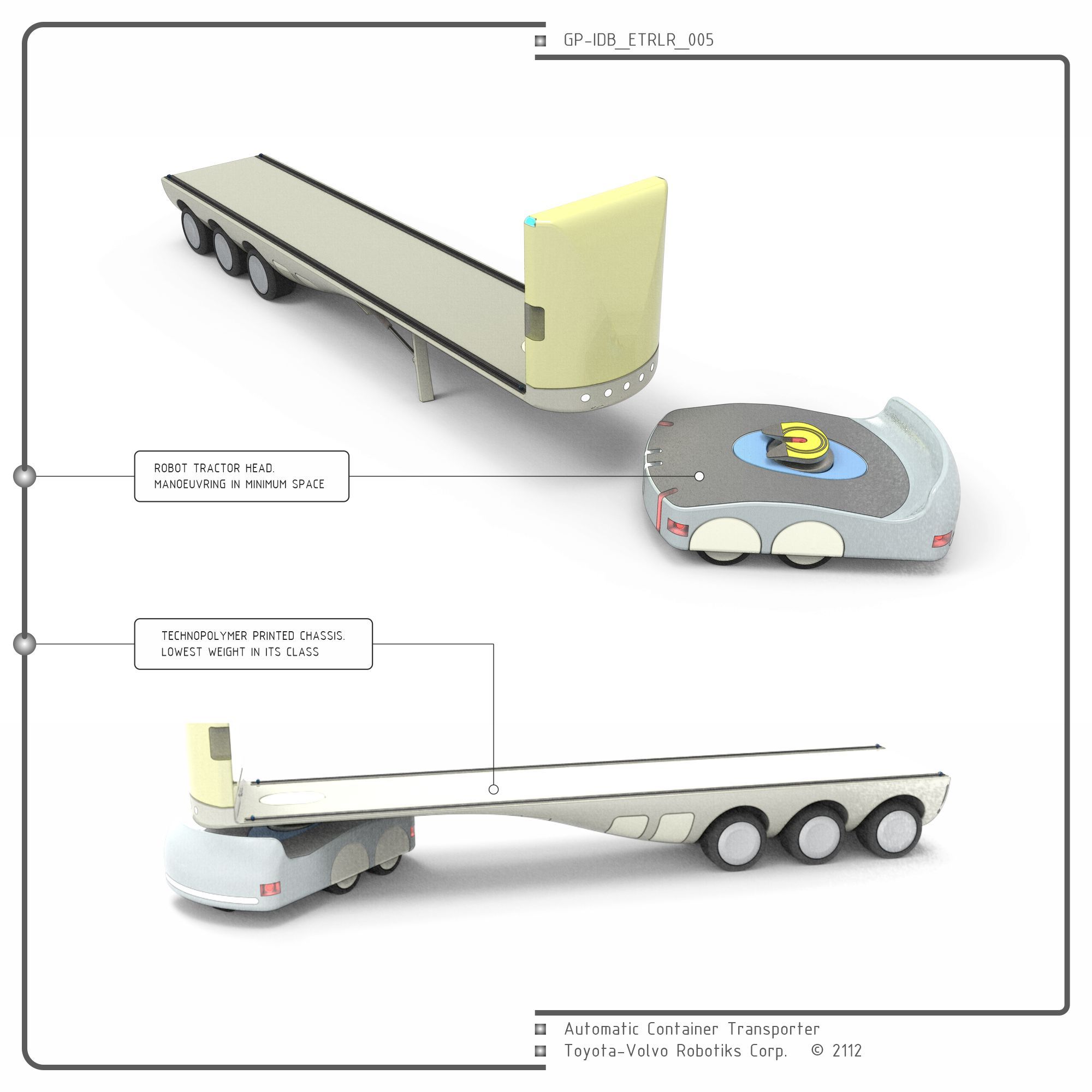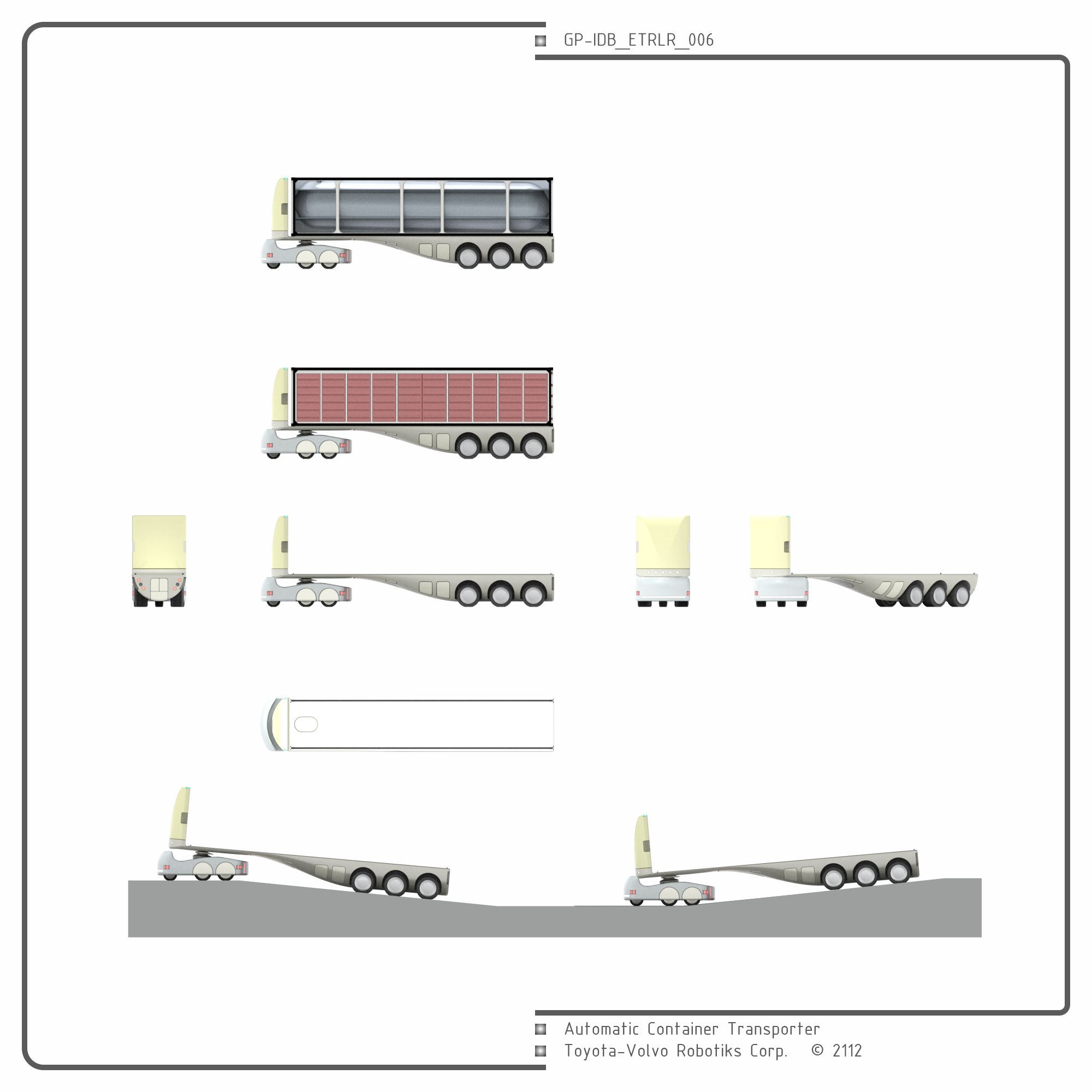
Automatic Container Transporter
Property
Copyright: Toyota-Volvo Robotiks Corp. / © 01/01/2112
History
The evolution of overland transportation of goods has undergone several changes over the last century. The 2040s saw the consolidation of the migration to electric tractor units, with no CO2 emissions, although refrigerated containers still consumed diesel. The typology did not change, with three seats in the cab and a sleeper for transnational journeys with relays.
It was not until the 2060s that robotics met all safety standards and it was now normal to see container trailers on the motorways of any landscape being pulled by tractor units without cabs or drivers. At that time, they only travelled at night on large, multi-lane motorways, with one lane reserved for robotic transport. They travelled at a constant speed and in a line at exactly the same distance from each other.
Today, with all road traffic on the planet governed by satellite, this means of logistical transport already rolls along any road, coexisting with the rest of the robot transport.
The model we are presenting, developed by the Toyota-Volvo Robotiks consortium, is the market leader in its segment. Great autonomy and aerodynamics, with the smallest and lightest tractor head on the market.
Characteristics
CAPACITY : 1 Container 40′ HC with Maximum Load (29 Tm).
AUTONOMY: 1,800 km at 120 km/h.
ENERGY SOURCE: Li-AnO2 Accumulators / SocioSystemic Electric Grid.
ECO-ENERGY RATIO: 0,829
EMPTY WEIGHT: 9.75 Tm.
DIMENSIONS:
e-Trail assembled: 13.487 x 2.460 x 4.200 mm.
Tractor head: 4.200 x 2.460 x 1.360 mm.
Trailer: 12,300 x 2,460 x 4,200 mm.