TALGO-V•Rail Photovoltaic High Speed Train
Property
Copyright: TALGO-Siemens Corporation / © 15/06/2099
History
The origin of the AeroTrain will always be linked to the famous energy debate at the SocioSystemic Conference on Sustainable Transportation in June 2101, at the United Nations HQ in Manhattan. The recently reGenerated Dr. Kaplan had asked the industrial elite gathered there to come up with new transport solutions using clean energy due to the growing demand for it. The new Council of Sages’ predicTological data forecasted a possible energy collapse in the medium term, and the proposal of new nuclear fission plants was already considered unsustainable.
Out of more than 300 attendees, an elderly engineer dared to interrupt the Doctor during her speech. He said, challenging her:
“Give us access to the photovoltaic fabric technology that the United Nations is using in lunar architecture, and in 10 years I will take it from here to the West Coast on a new railway concept, at 650kmh and powered exclusively by the Sun. I’m talking about zero operating energy costs.“
The dialogue that continues is already part of the collective memory, considered by many sociologists as the real moment of birth of the transCapitalist mentality, when Dr. Kaplan, with some incredulity, replied:
“Doctor Goikoetxea, if what you propose is viable, tomorrow I will give you absolute access to that technology. And if you are capable of building that train in half the time, I promise to always have my head shaved from the day on which that ecological marvel of which you speak can transport me without energy costs”.
And to the surprise of all present, the old professor answered him:
“Mrs. Kaplan, get used to the idea of being bald for the rest of your life. You’re talking to a man from Bilbao.”
The truth is that Dr. Gaizka Goikoetxea, Chief Engineer at the Institute of High Technology for Transportation in the Basque SocioSystem, already had a patented prototype of the electro-pneumatic-powered monorail. However, destiny wanted the old Basque to remain in the project. A plane crash took his life a few months before the New York-Los Angeles line was inaugurated on 14 February 2105. Dr. Kaplan, just after inaugurating the first AeroTrain route in history, flew from Los Angeles to the Basque Country and shaved her head at the old master’s grave. Since then, the route of each new AeroTrain line has been tattooed on her bald head, forming its famous media icon, in homage to the creator of Humanity’s only totally ecological means of transportation.
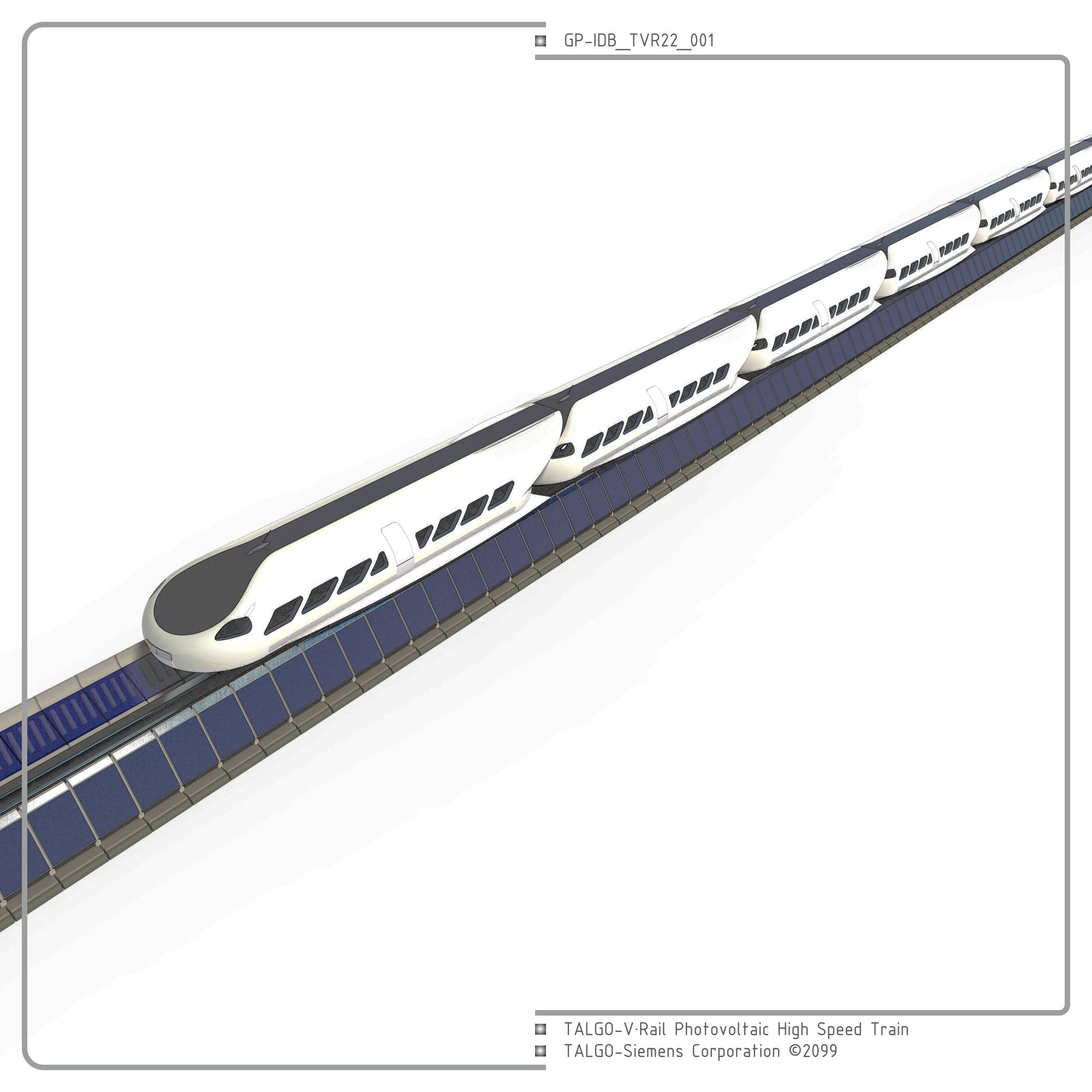
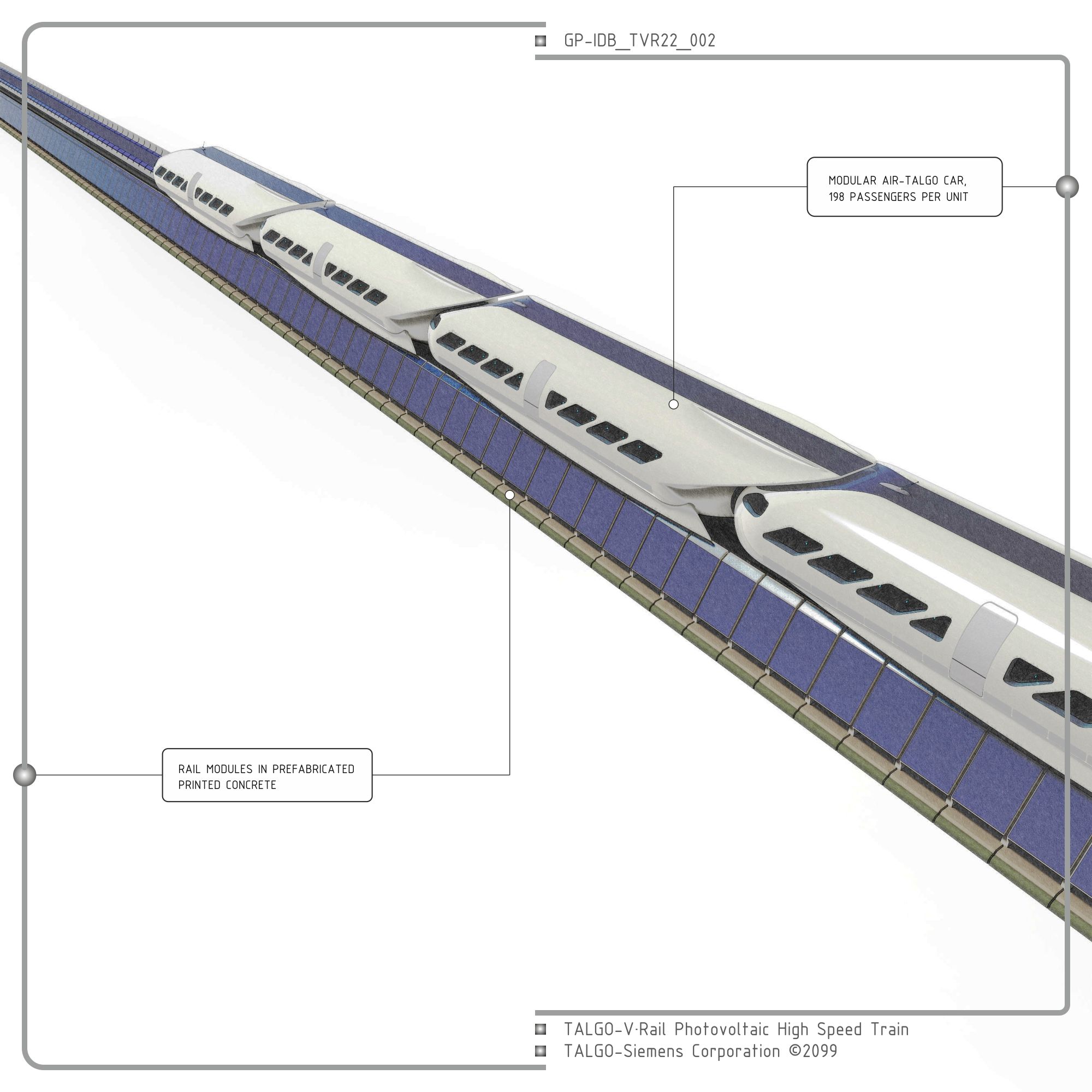
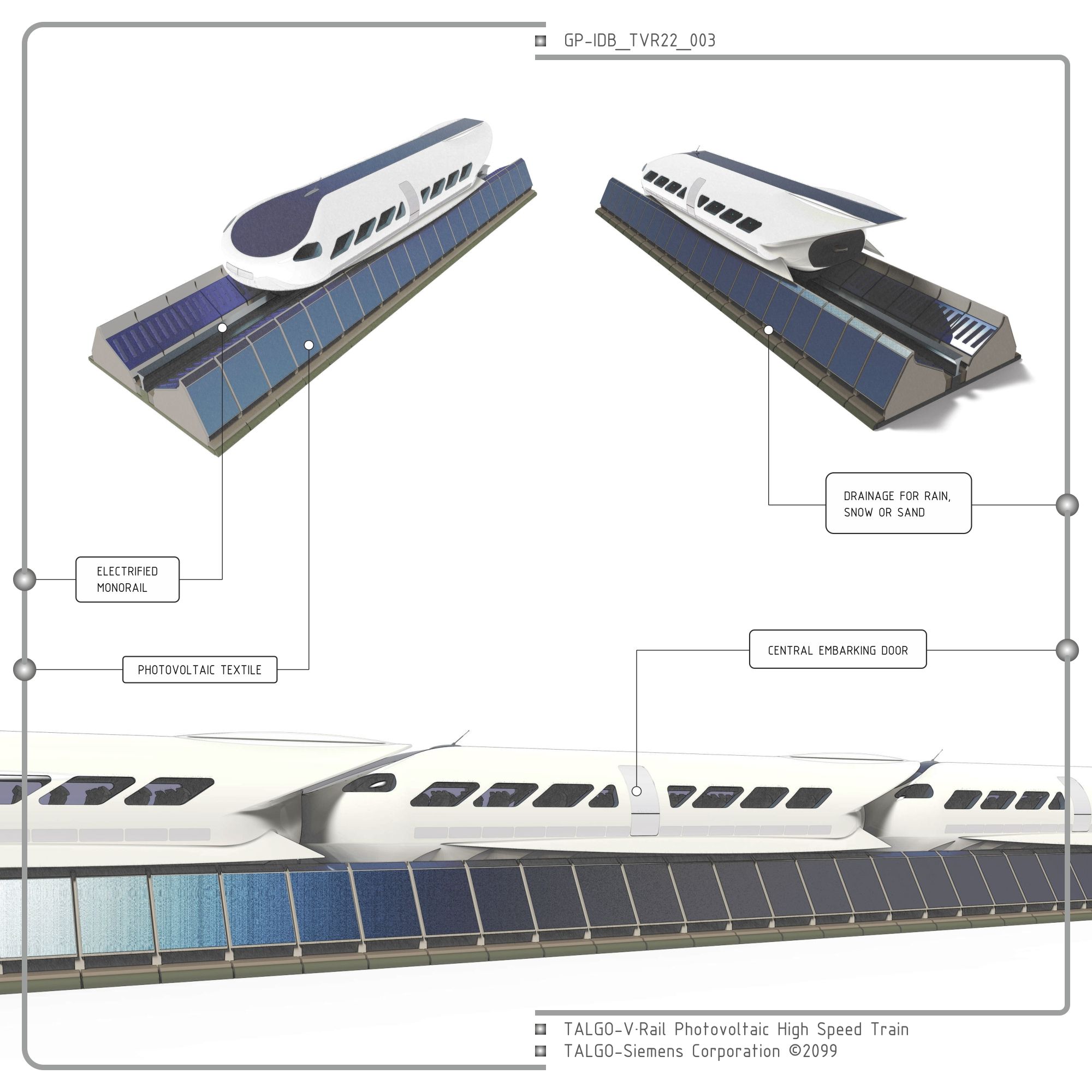
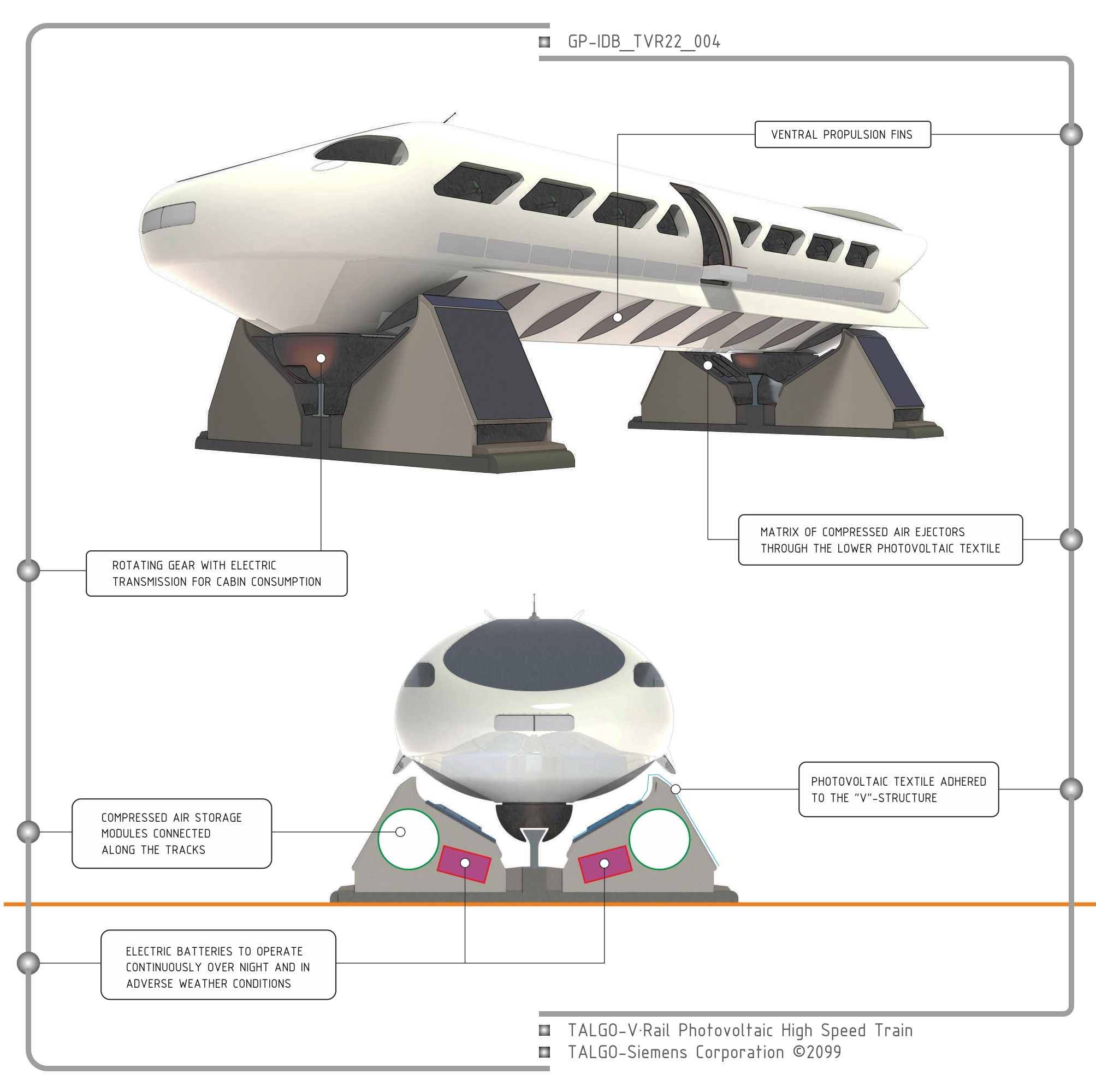
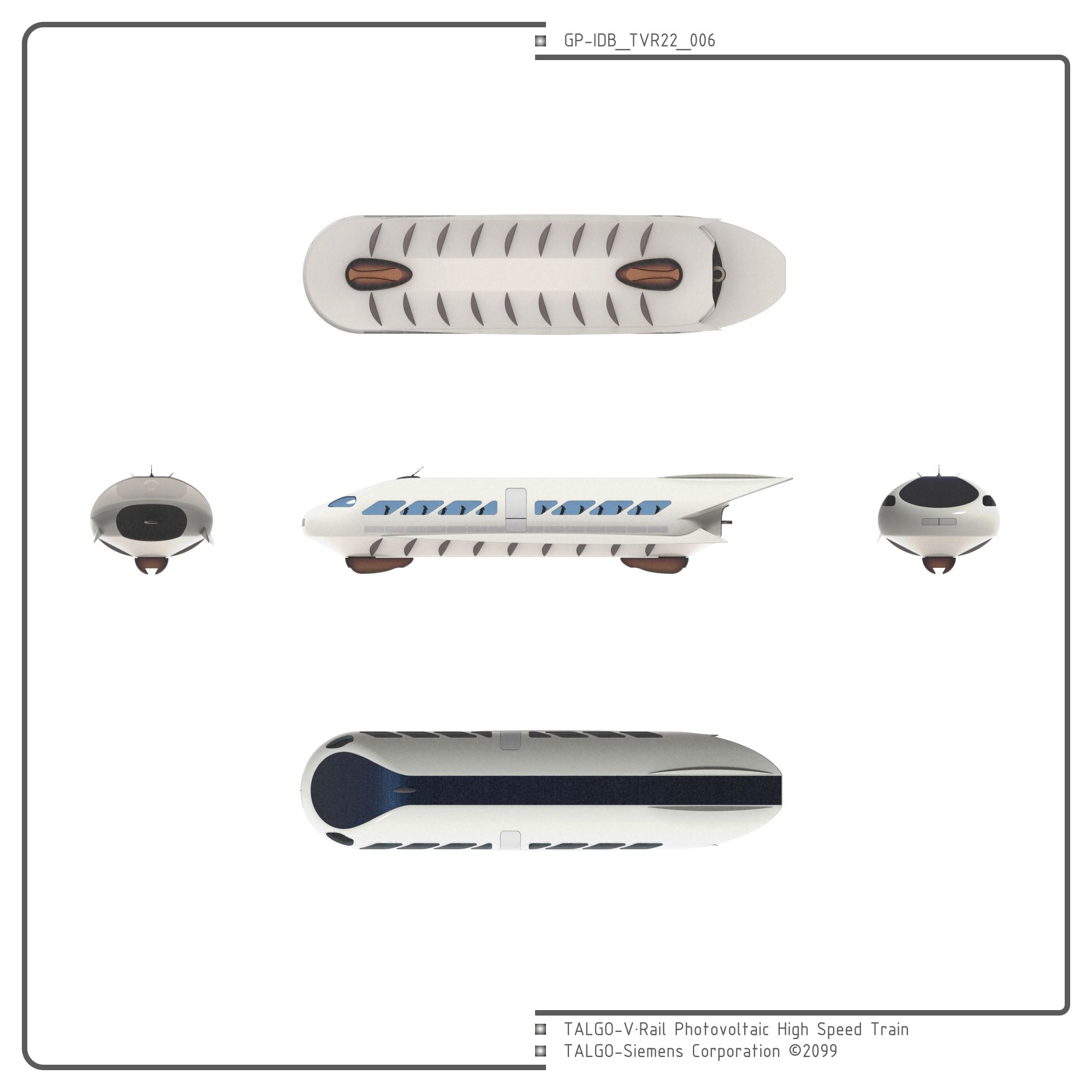
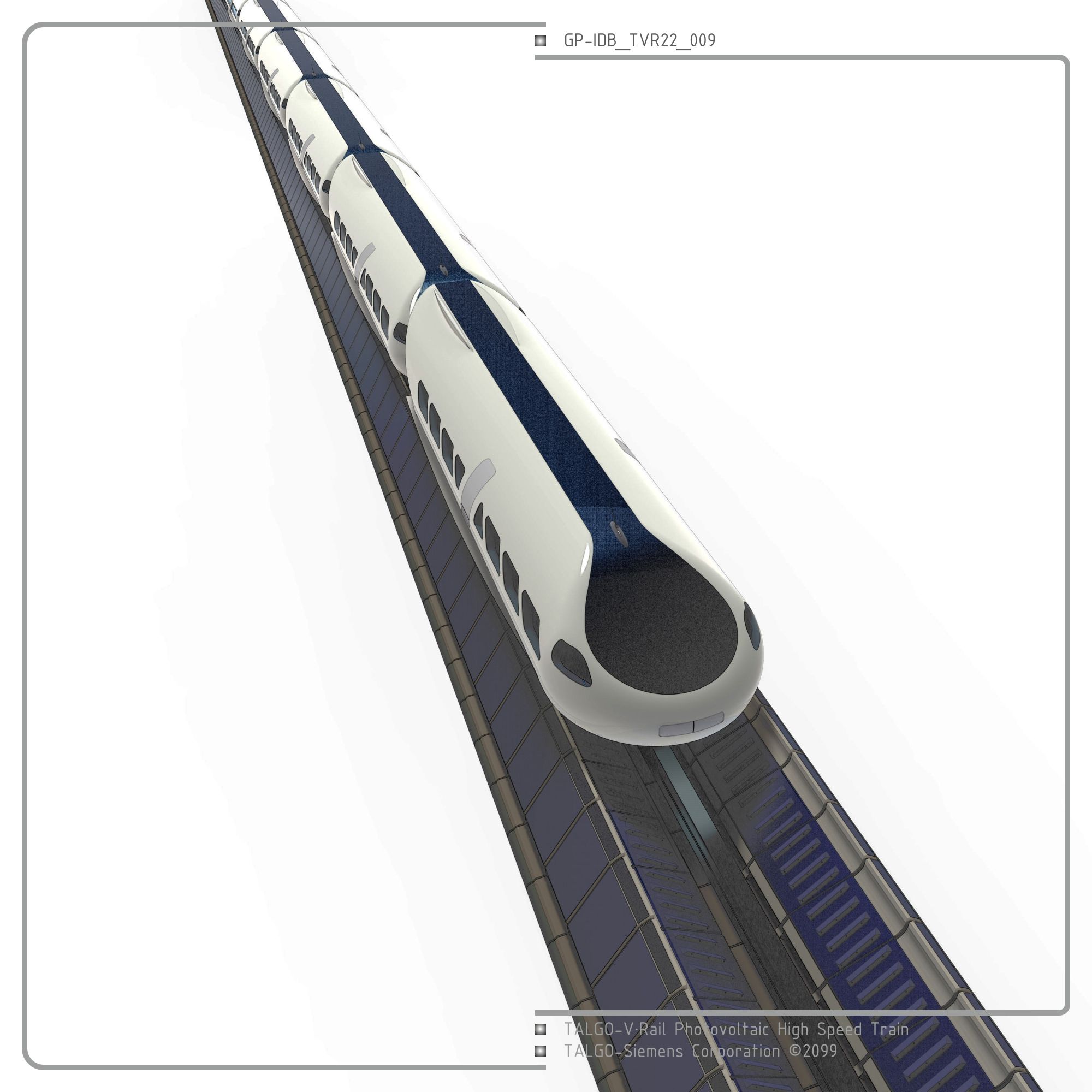
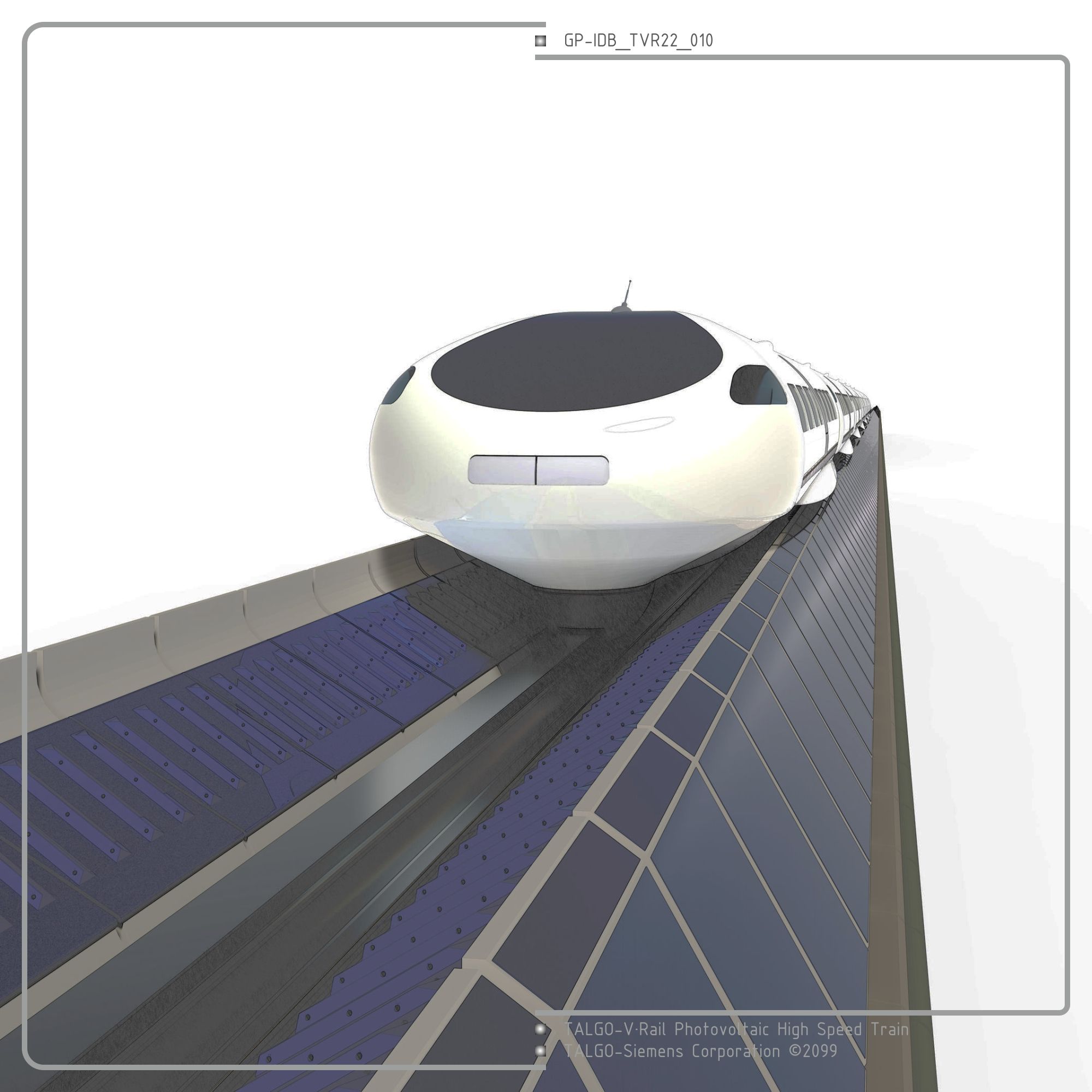
Professor Goikoetxea’s original approach is based on the inversion of concepts, as the V-track is what drives a chain of modular ultra-lightweight wagons, joined to a steel rail by means of two running gears. The ventral fins along the fuselage are the ones that receive the impulse from thousands of injectors of very high pressure compressed air, which is stored in the side tanks of each trapezoidal section. The photovoltaic fabric used to line the surface of the V-profile provides sufficient energy to compress and liquefy the air from the outside. Millions of synchronized electrovalves shoot compressed air against the bottom of the wagon hull just as it passes by, providing the necessary impulse with controlled acceleration.
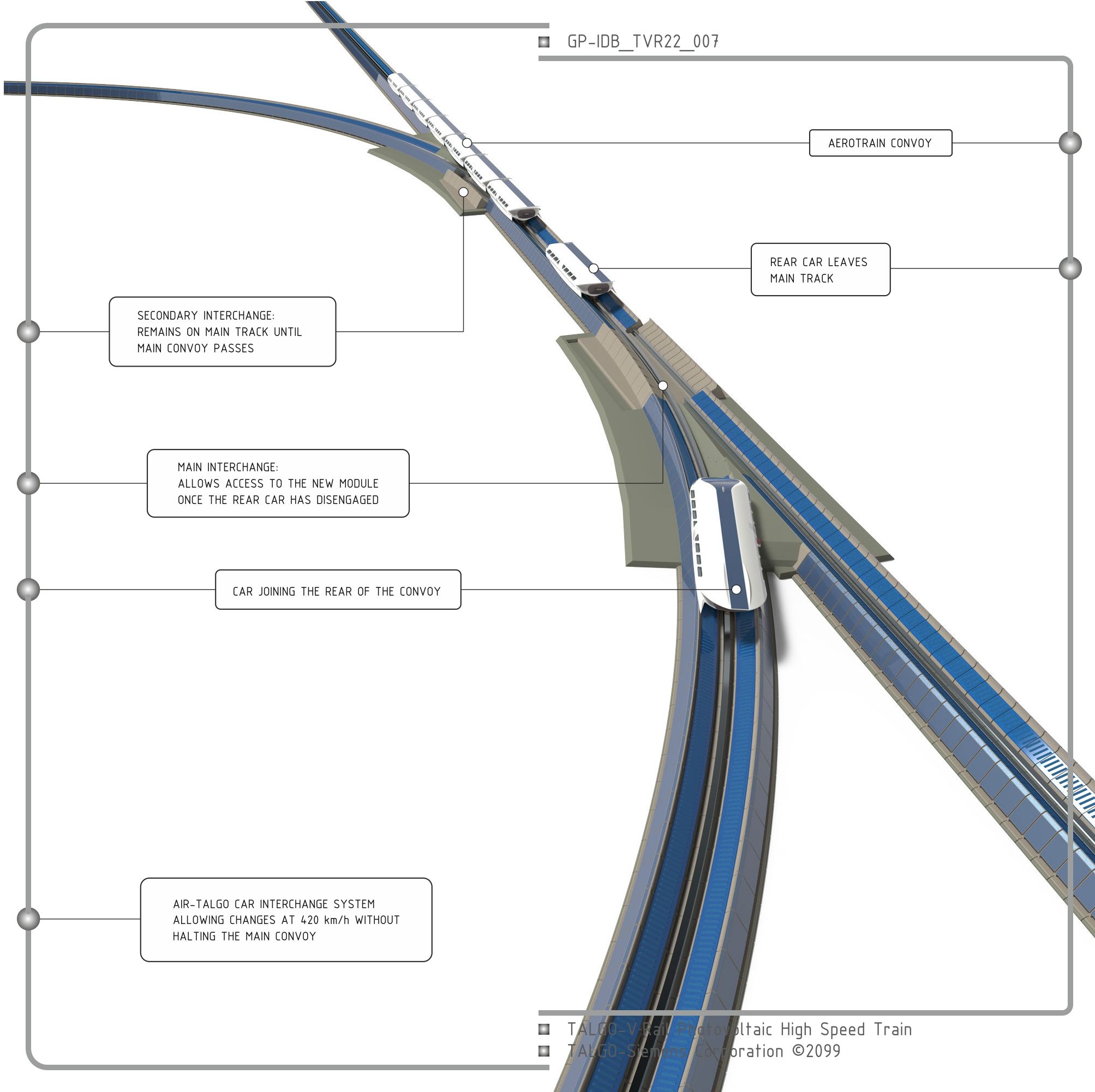
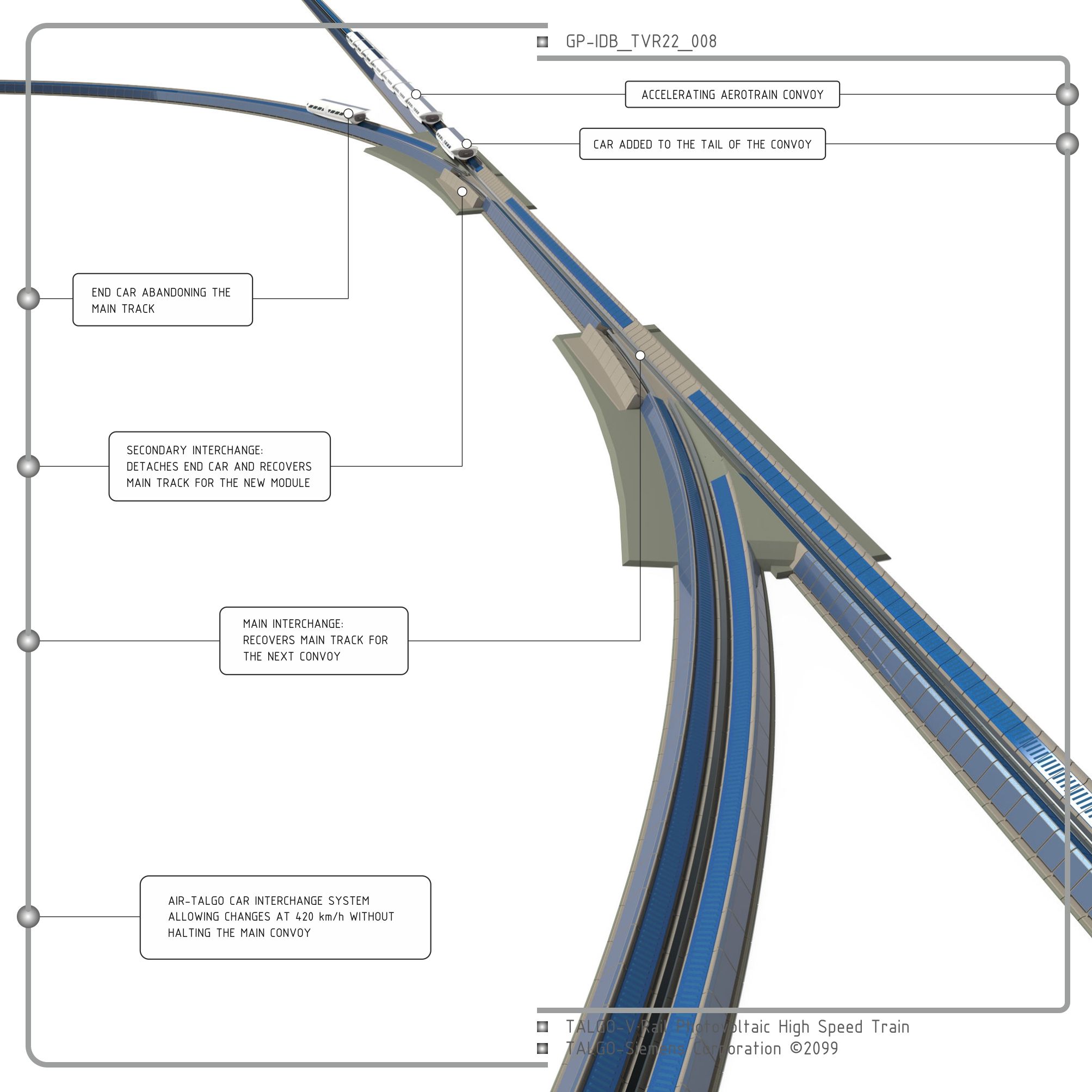
The modular performance of the AeroTrain allows various convoy configurations, even move individual cabins, although the greatest efficiency is achieved in configurations of between 20 and 40 cabins. The longer it is, the faster it can travel and the consumption is optimized due to the inertia reached.
The spectacular economic growth of African socioSystems from 2103 onwards were undoubtedly thanks to this technology, as it is the geographical area with greatest photovoltaic performance. The AeroTrains on that continent exceed by far the value “1” for the Universal Eco-Energy Coefficient, reversing the surplus of electrical energy to the adjacent electric grids.
The absence of overhead lines reduces environmental impact and installation costs. The other virtue is that the greater the number of kilometers of rail installed, the greater its efficiency. Extensive solar farms are growing along the geographical space used by the old existing railway lines.
The latest UN estimates put the number of replaced railway lines at 37%. The aim is to completely reconvert all trains on the planet by the year 2140.
Characteristics
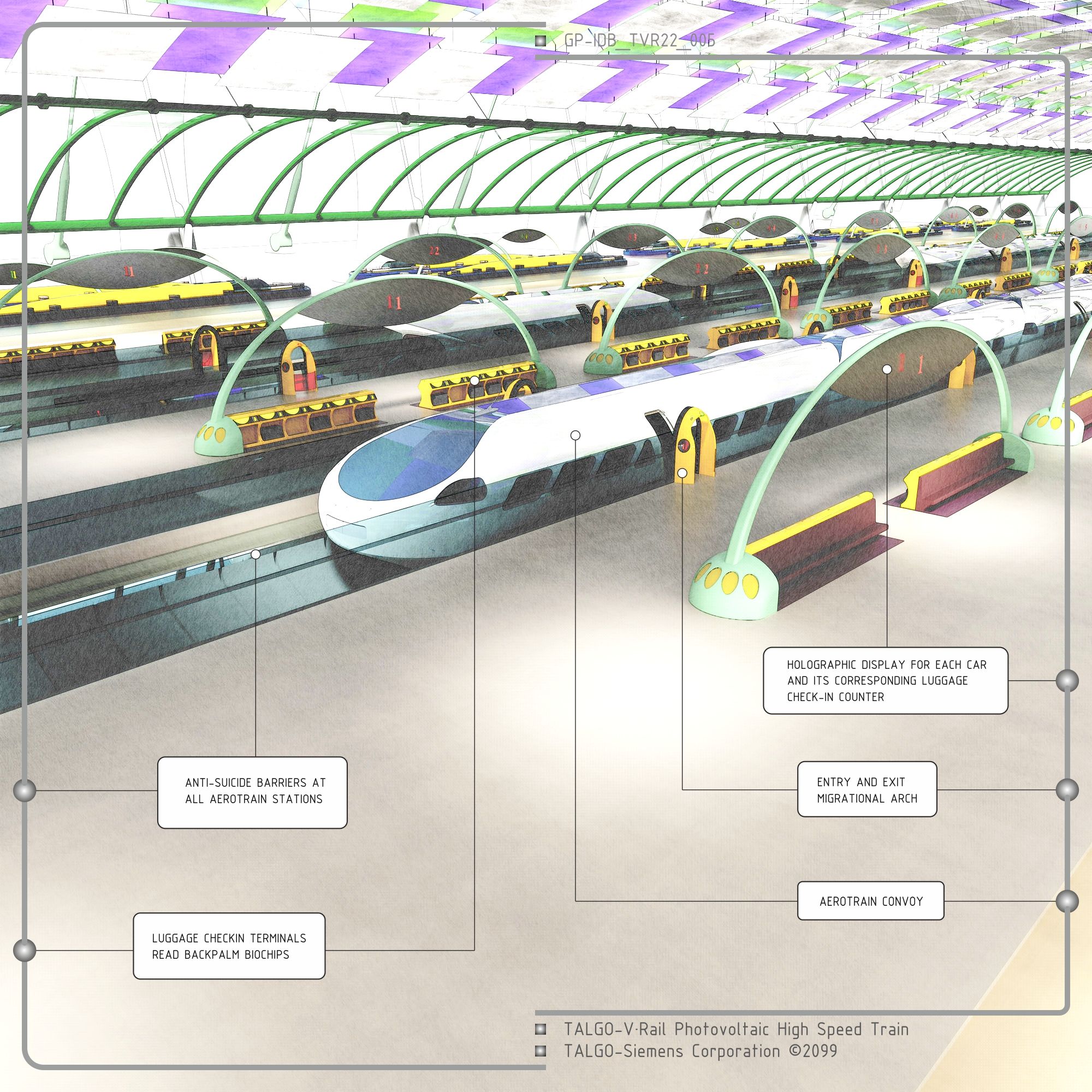
CAPACITY: 198 passengers / 198 suitcases 850 x 550 x 350mm / per cabin.
PAYLOAD: 175 m3 / 12 Tm / per cabina.
POWER SOURCE: Photovoltaic.
ECOENERGETIC RATIO: 0,915 – 1,339
CABIN DIMENSIONS: 28,445 x 4,848 x 7,120mm