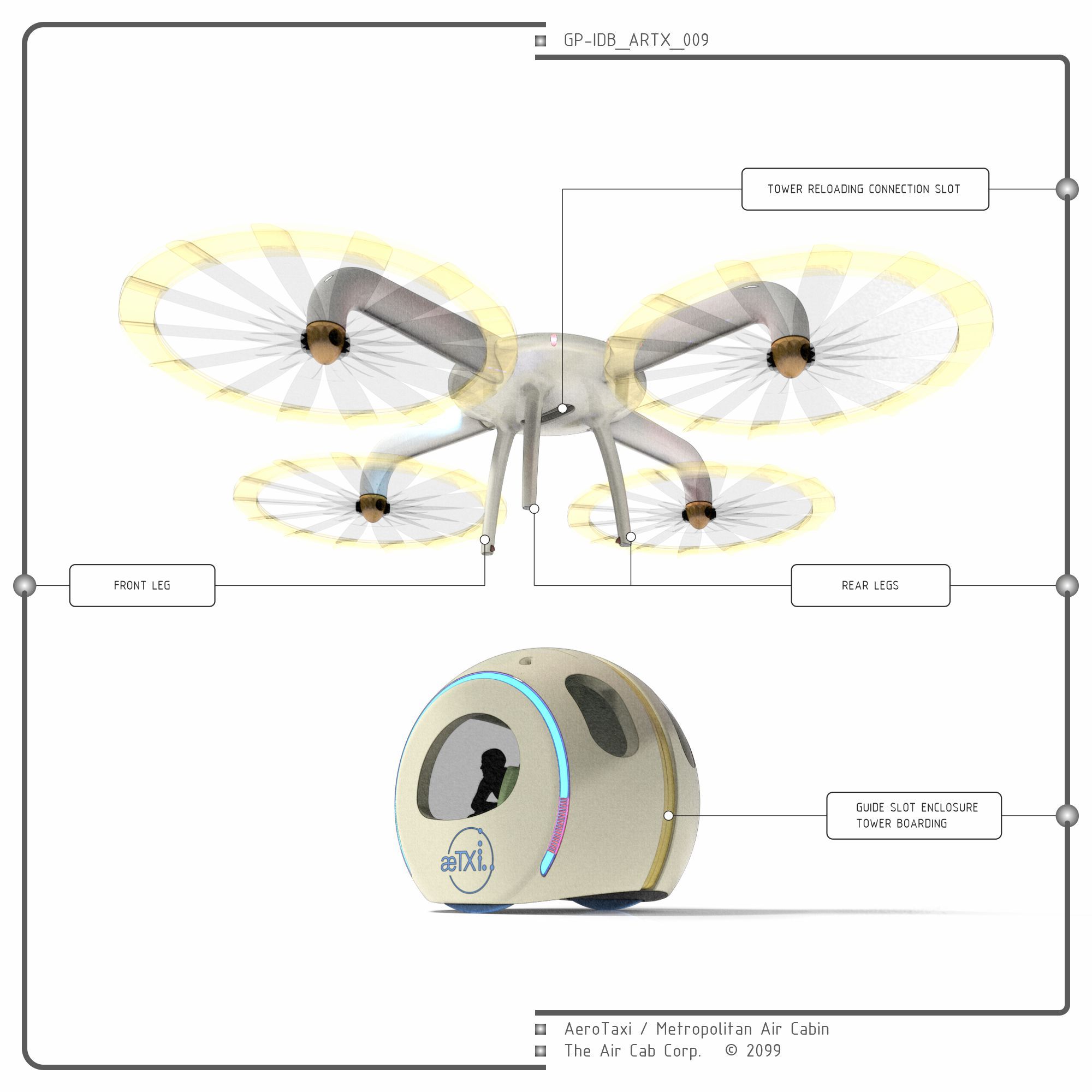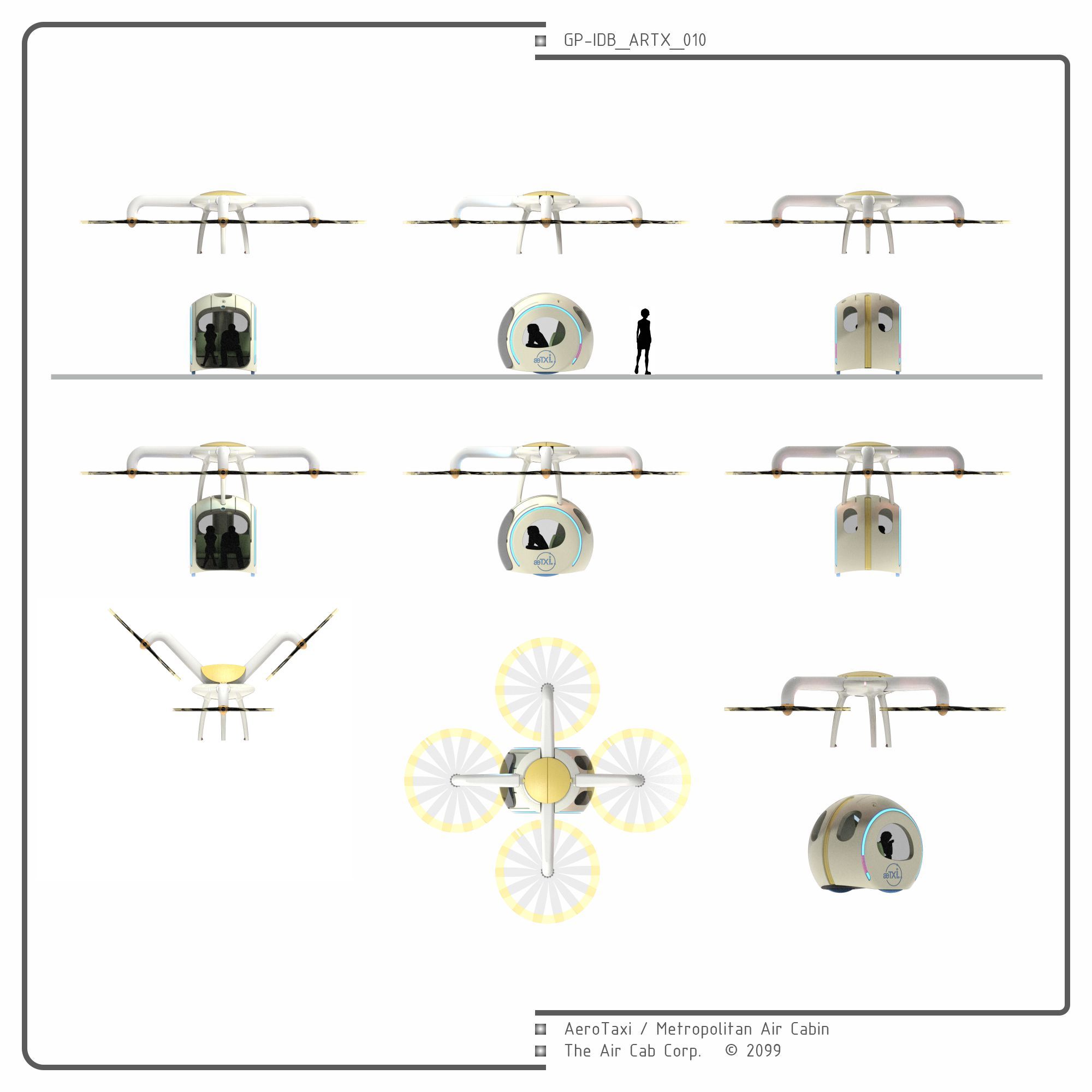
Metropolitan Air Cabin
Property
Copyright: The Air Cab Corp. / © 01/12/2099
History
The evolution of the electric air taxi concept, heir to the old luxury helicopters of the great metropolises of the 20th century, underwent different and controversial phases. Energy crises, technological evolution and Artificial Intelligence went hand in hand throughout the past decades.
Despite the fact that land transport will always be more economical than air transport, the big technology companies up to the 2050s, and the CapitalScience funds since then, tried to convince politicians of the great advantages of a cosmopolitan, electric and clean air transport for their cities.
After several implementations with very sophisticated devices, for users with very high purchasing power, in the 2070s the system was discarded in almost all the world’s capitals. Airspace conflicts with the new generation of parcel drones, technical failures and the occasional headline-making accident put an end to the insistence of the tech companies. Another drawback was the progressive visual pollution of city skies, as a multitude of flying devices kept appearing behind historic or emblematic buildings.
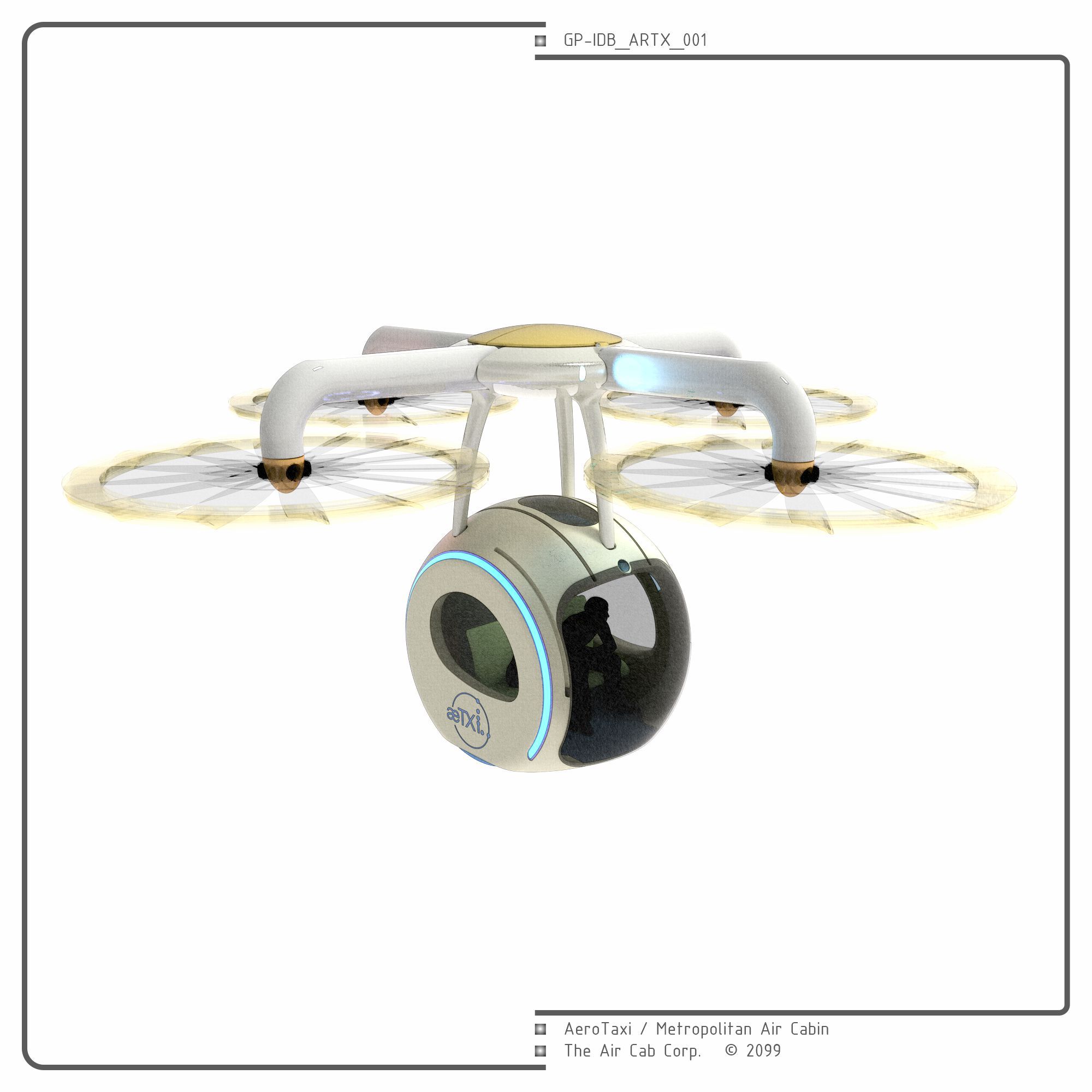
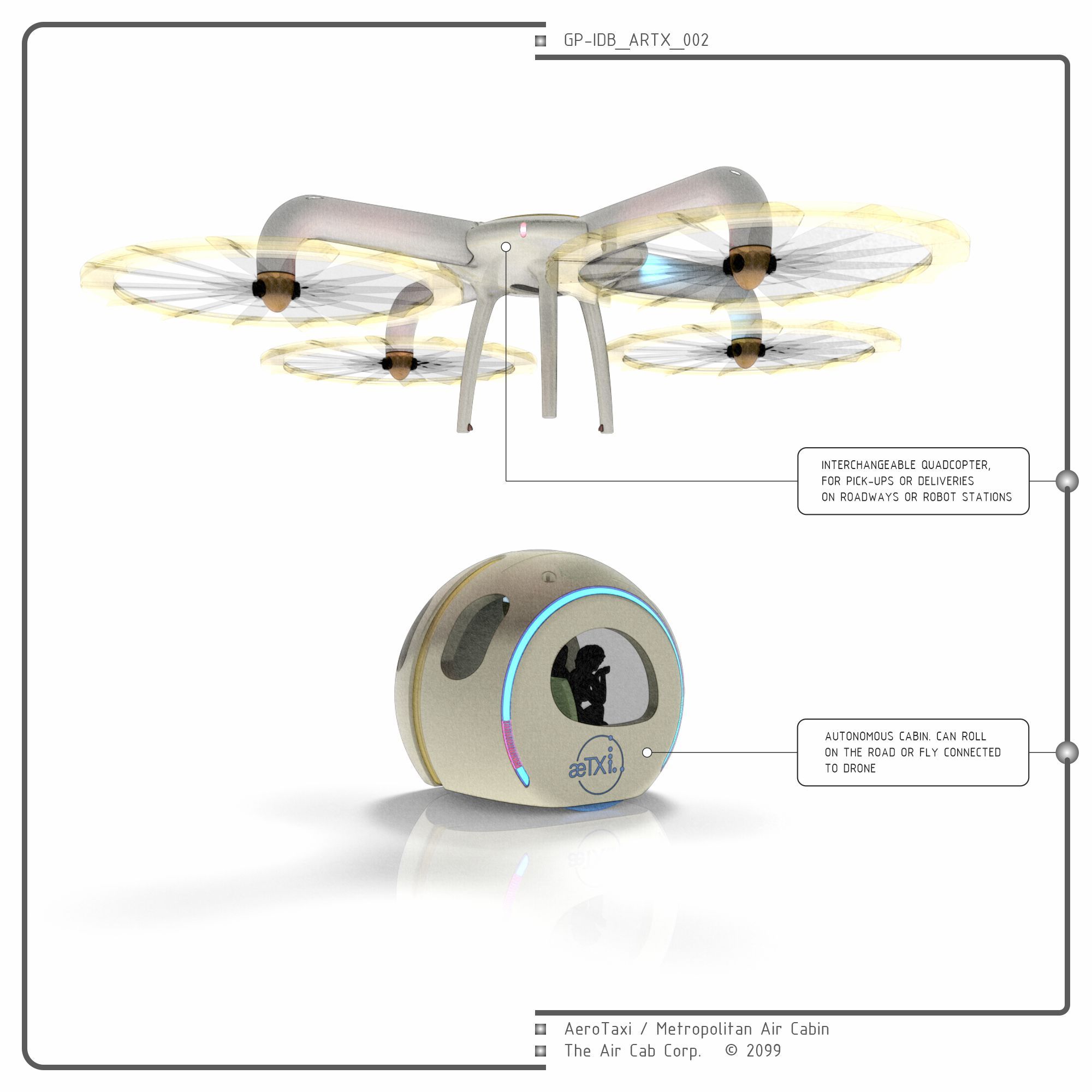
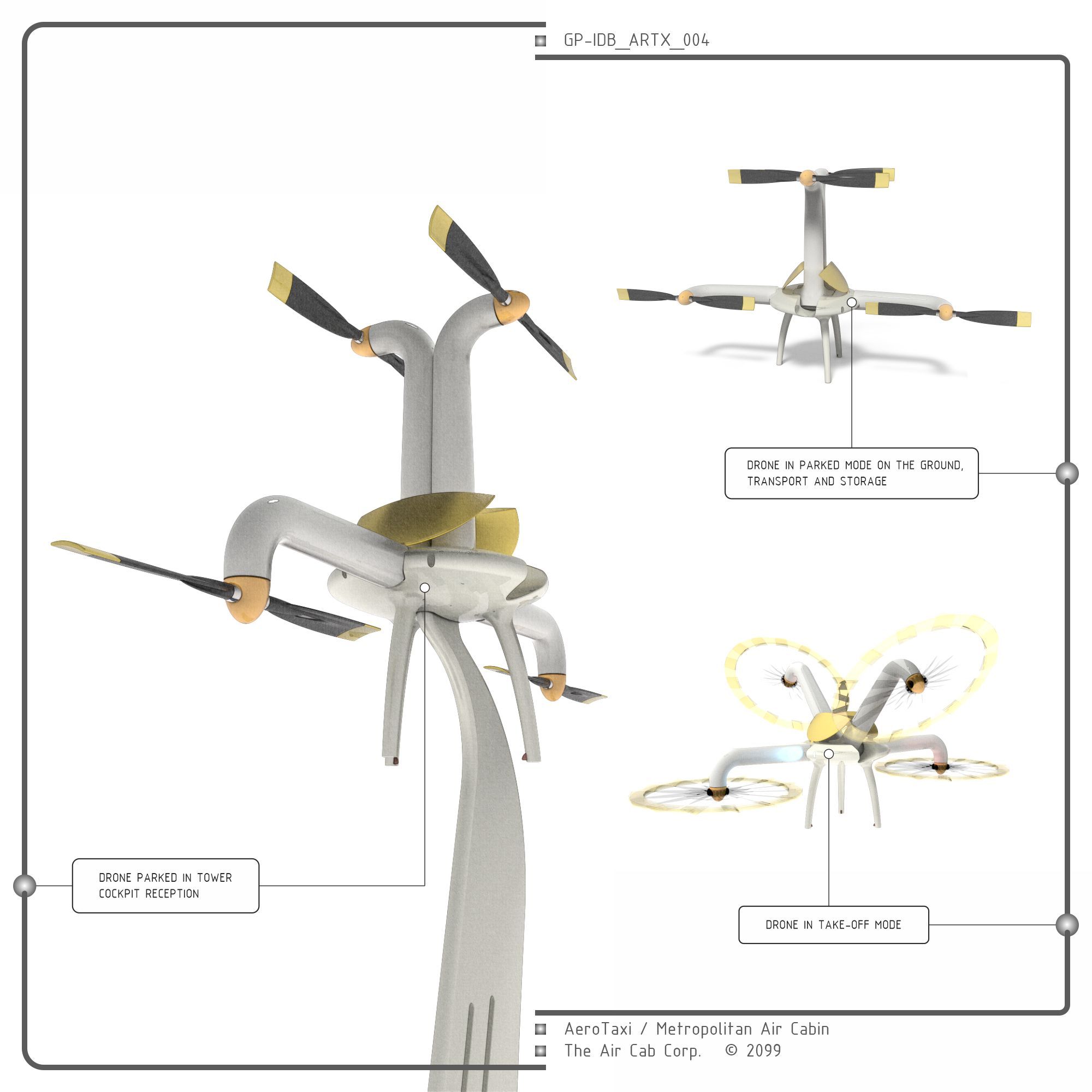
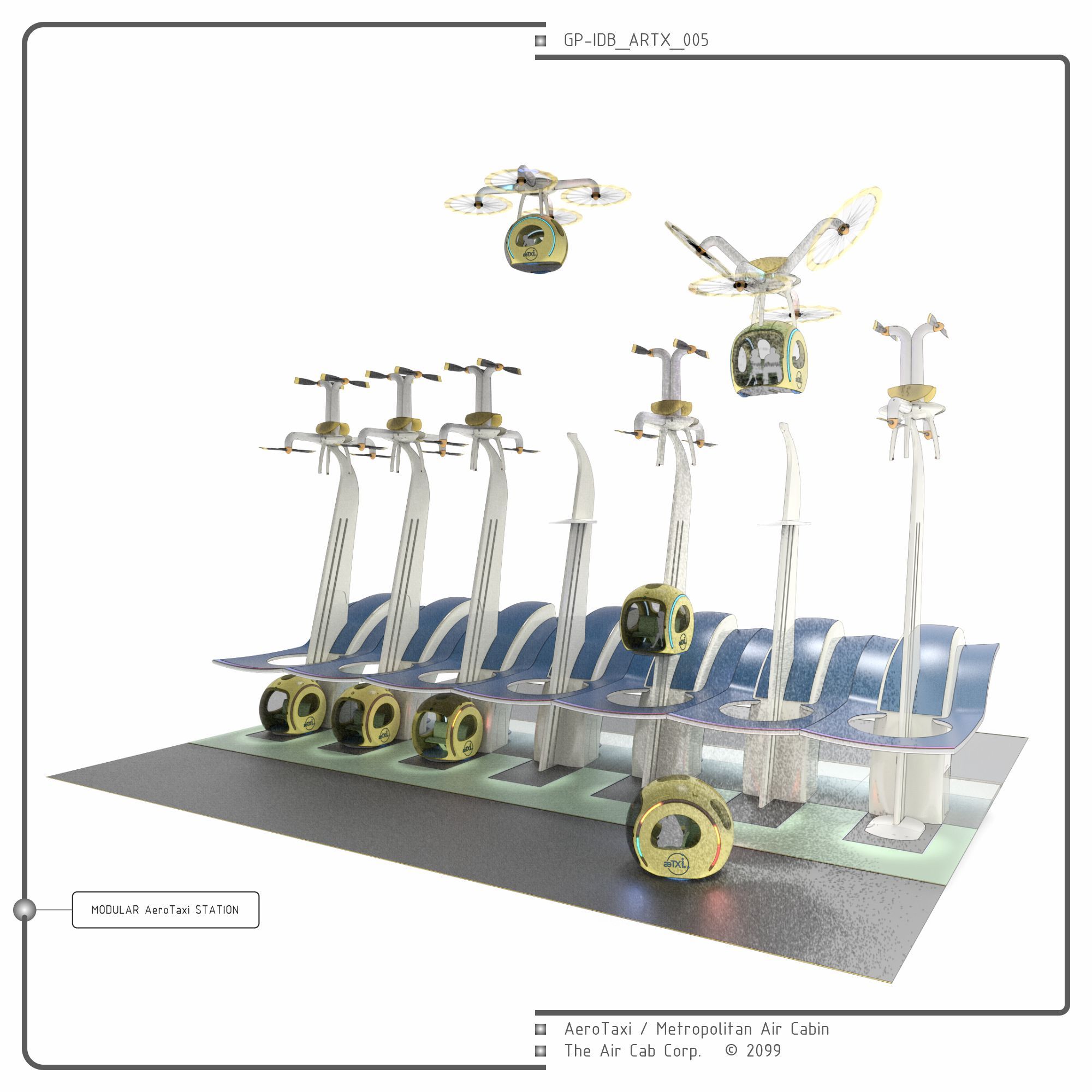
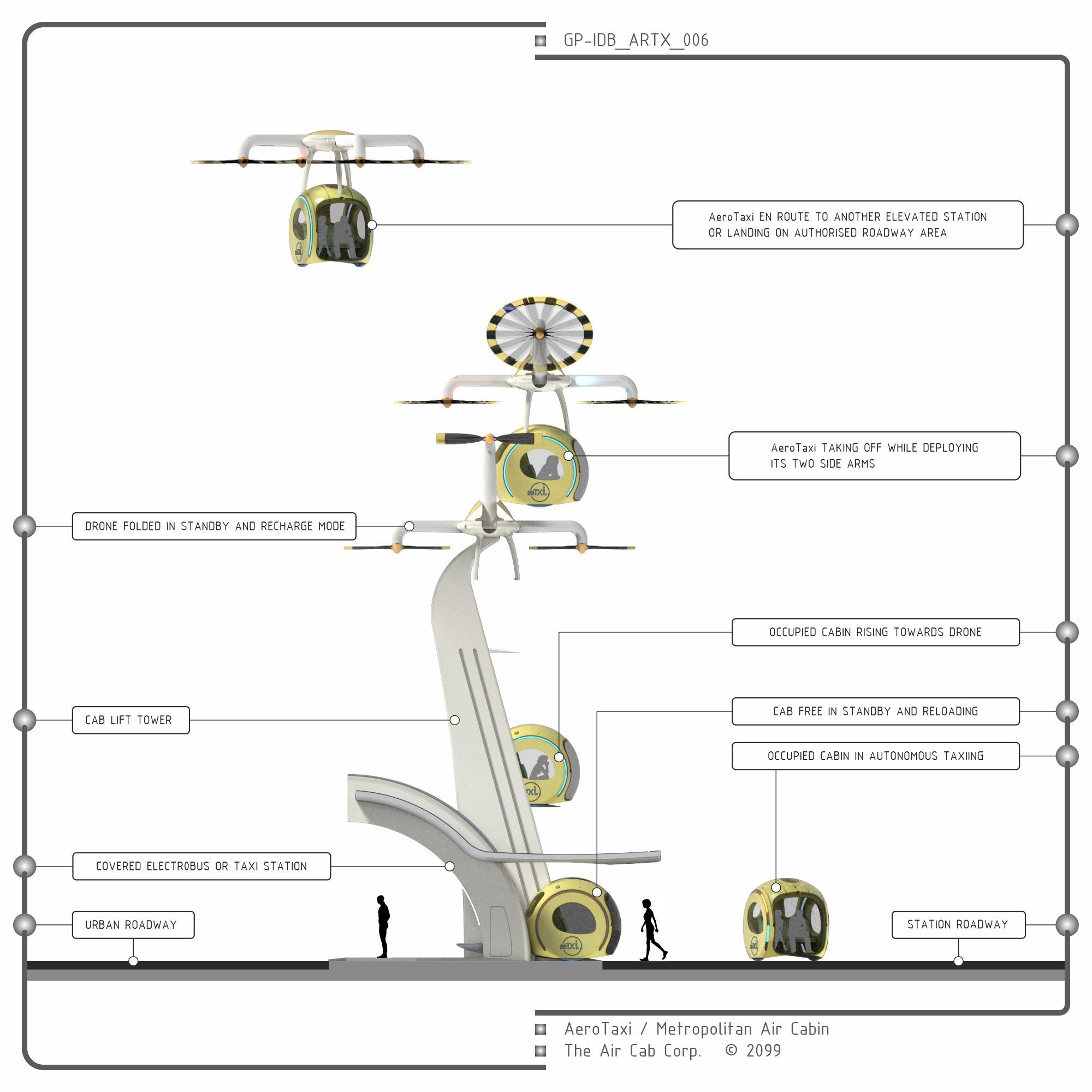
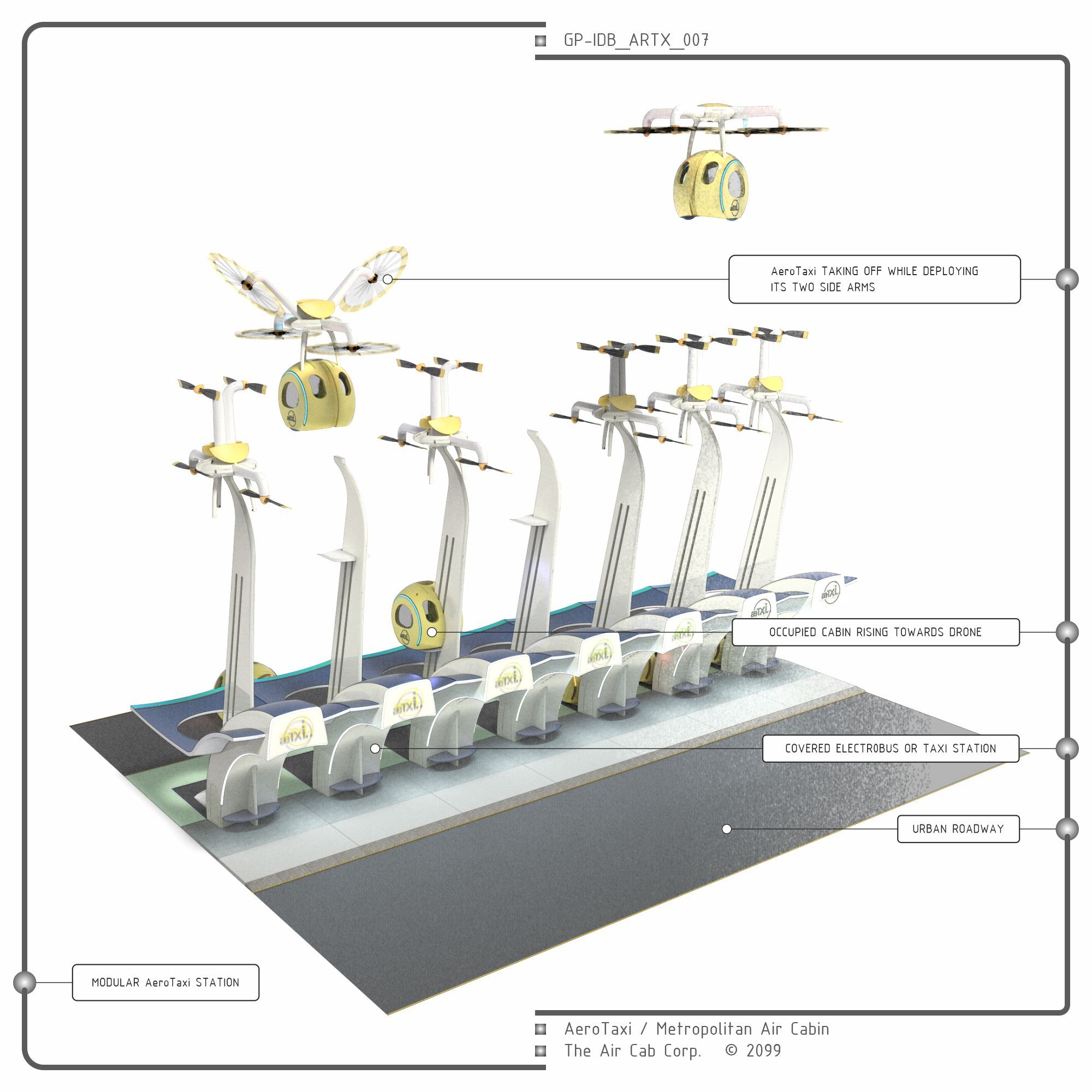
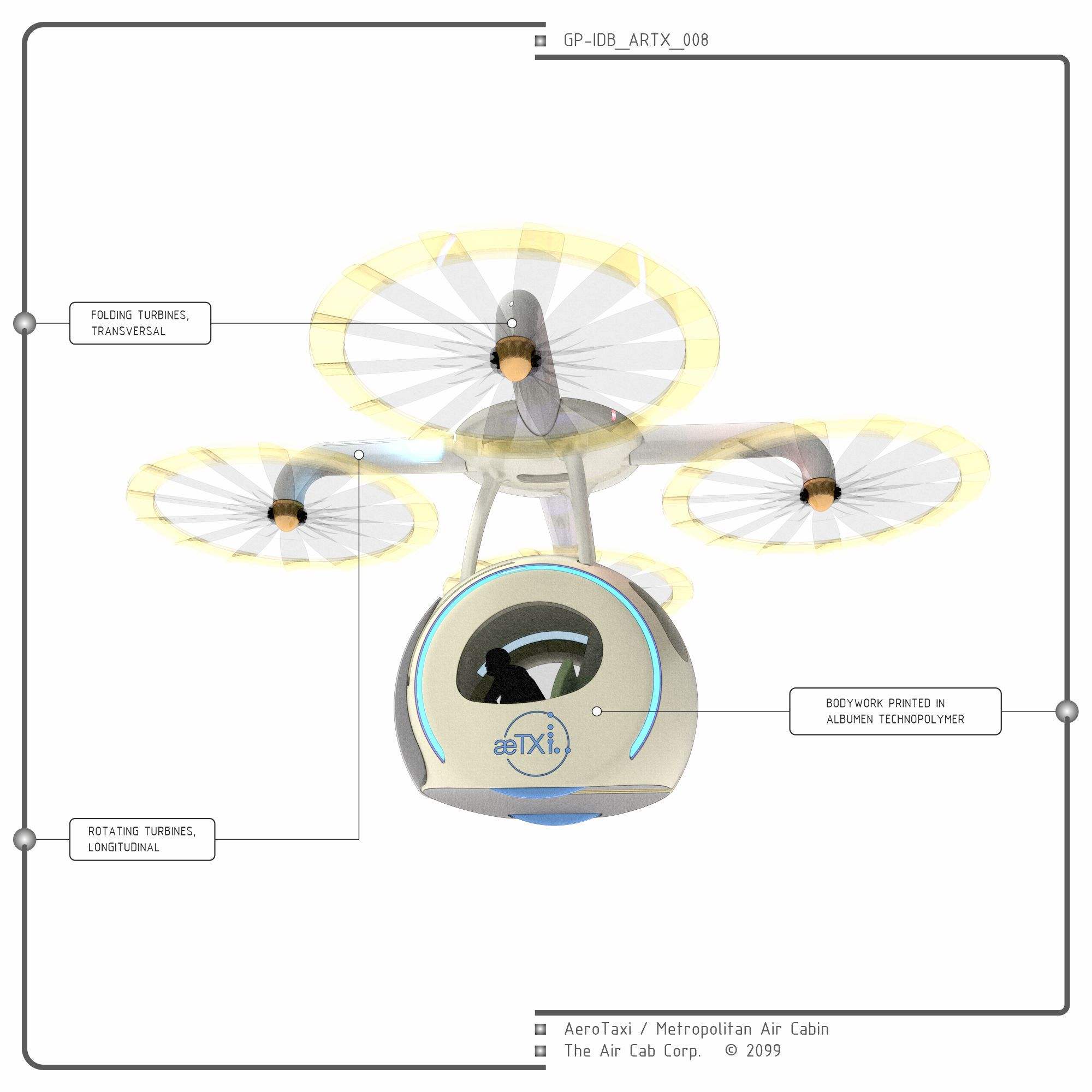
It was not until the turn of the century that a new CapitalScience consortium, The Air Cab Corp. was licensed to operate in today’s capital city of Berlin-Civitas. They set up the first AeroTaxi station in the new MerkelPlatz district, a very fashionable expansion area at the time. The new concept of an interchangeable, cab-independent drone, parked on aerodynamic poles at a height of over 9 metres, solved the issue of compatibility with existing road traffic in a very small space. The autonomous cabs can travel on the road like any other surface taxi, with the difference that they can be attached to the drone and move through the metropolitan airspace. They will then park at another tower station or on certain ground areas with a safe landing area.
Air Cab’s AeroTaxi system is currently deployed in all major capital cities around the world, connecting the city centre with peripheral areas such as ports, airports or bus stations.
AeroTaxi customers still have a higher purchasing power than public transport users.
Characteristics
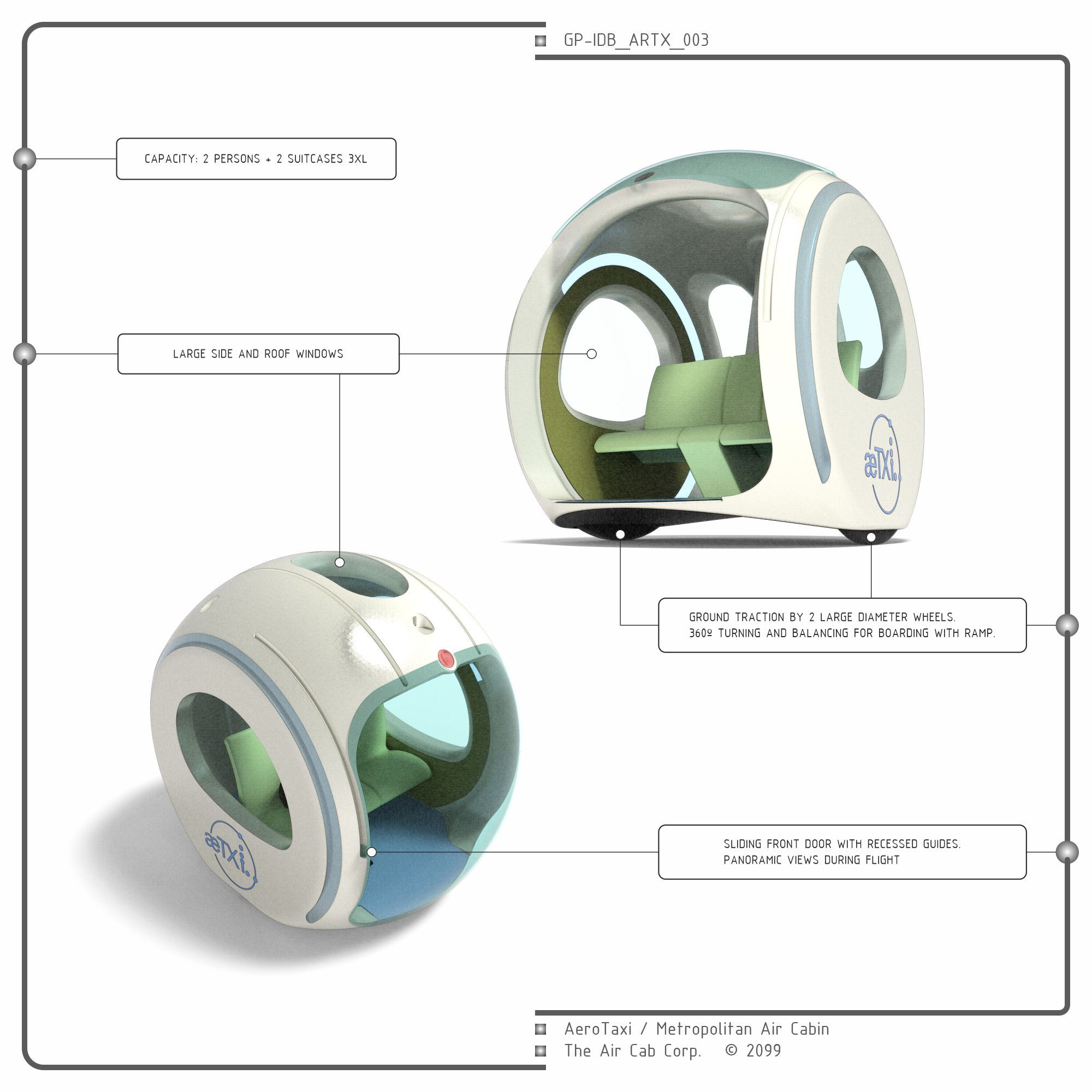
CAPACITY : 2 passengers with hand luggage + 2 suitcases 3XL
FLIGHT AUTONOMY AeroTaxi: 1 hour at 85 km/h.
FLIGHT AUTONOMY Drone: 1 hour at 150 km/h.
CABIN AUTONOMY (on road): 3 hours at 60 km/h.
FUEL: Lithium-Anamadium batteries.
ECO-ENERGY RATIO: 0.829.
DIMENSIONS:
Autonomous Cabin: 900 x 1.365 x 2.350 mm.
Drone Unfolded: 8.217 x 8.217 x 1.812 mm
Drone Folded: 8.217 x 6.832 x 5.472 mm
Aerotaxi in Flight: 8.217 x 8.217 x 3.872 mm
Blade Diameter: 3.000 mm