VTMS-600
Property
Copyright: SocioSystemic Confederation of Metropolitan Transports / © 27/12/2094
History
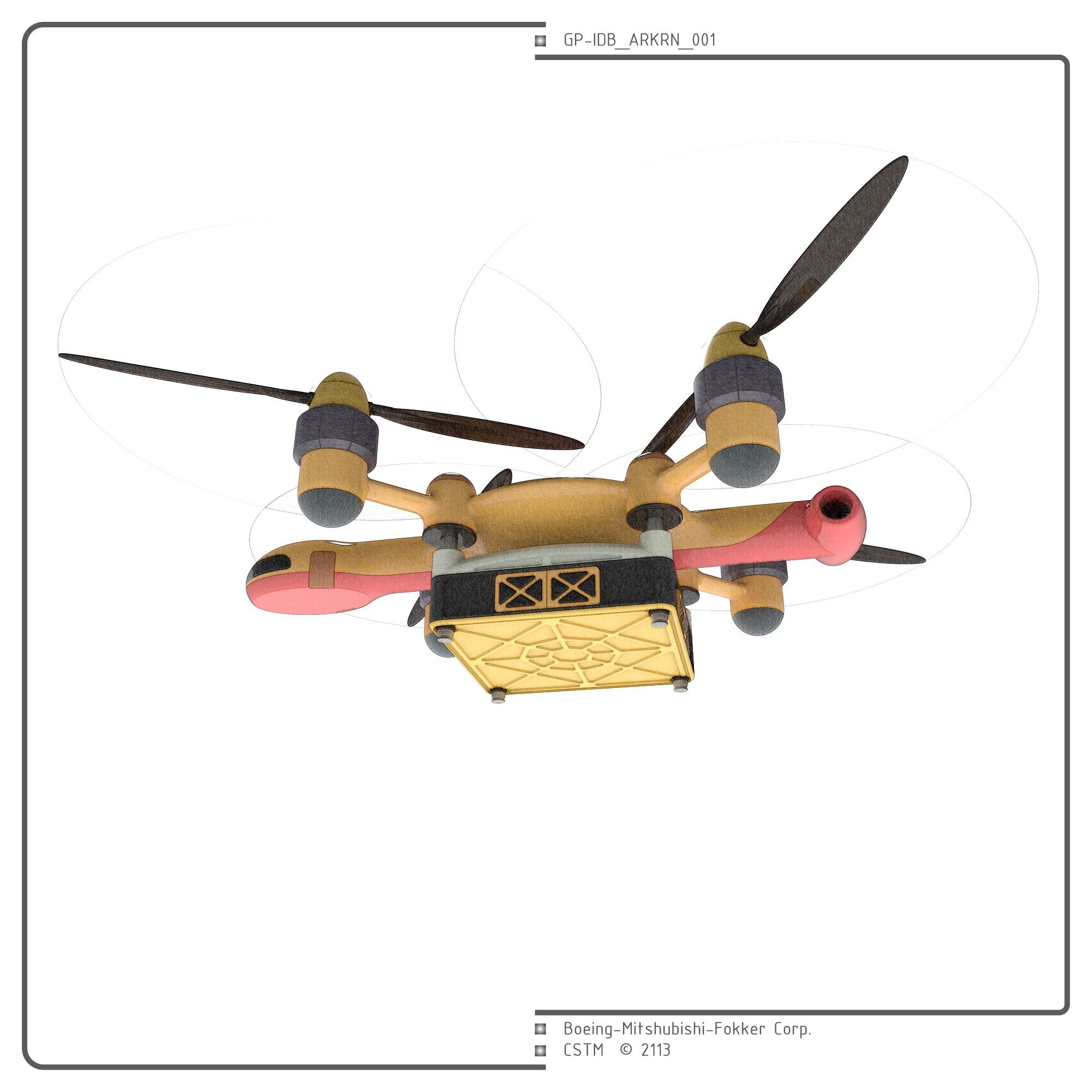
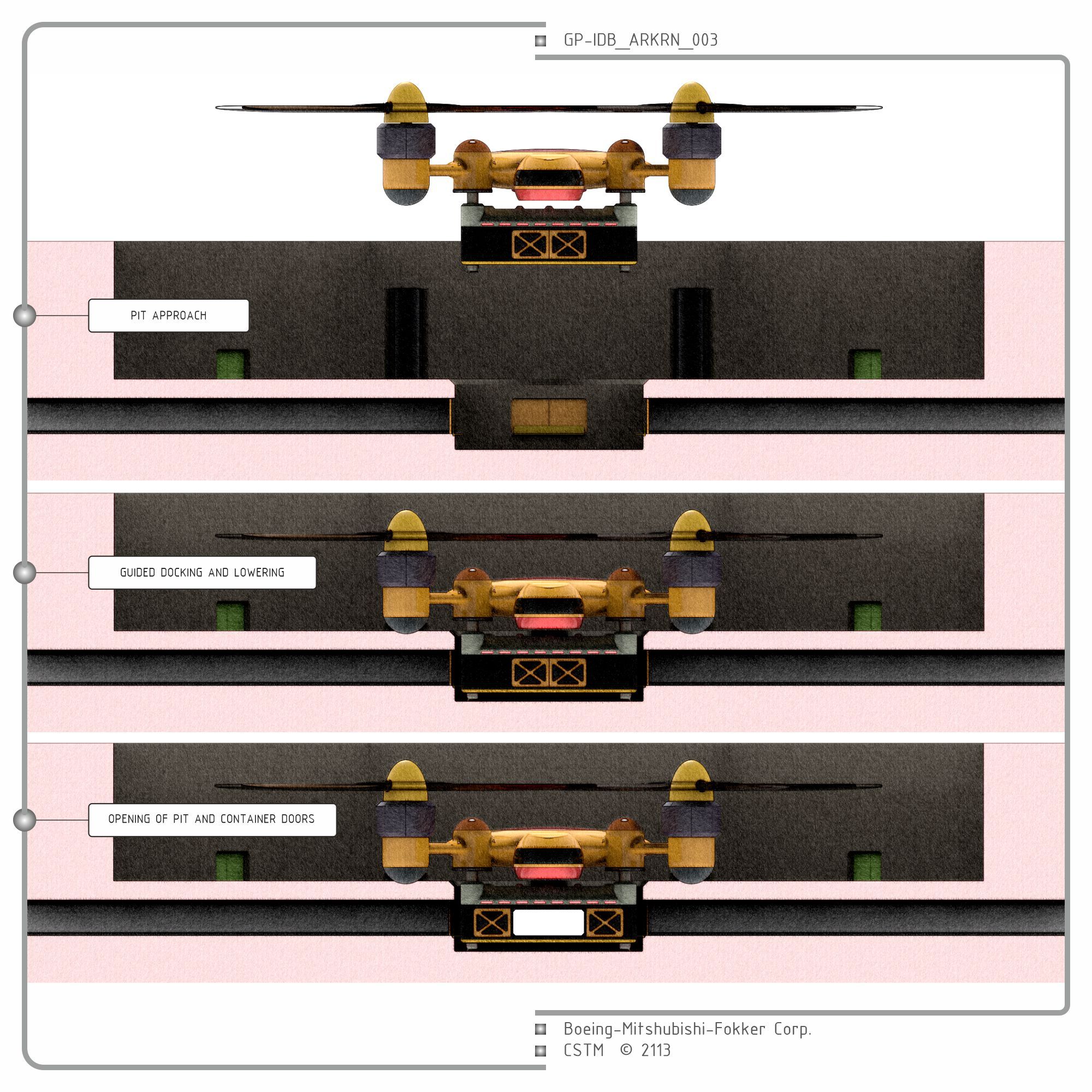
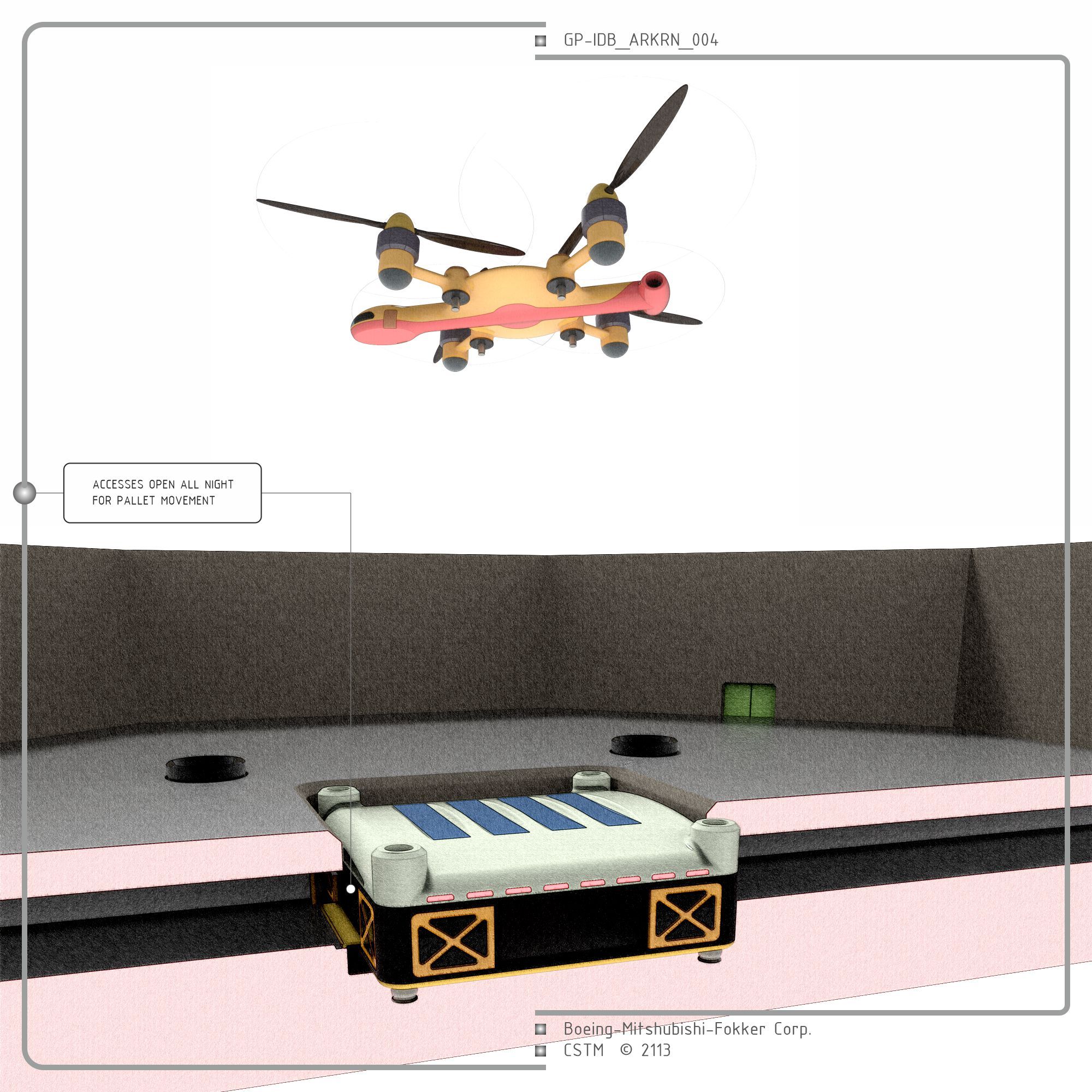
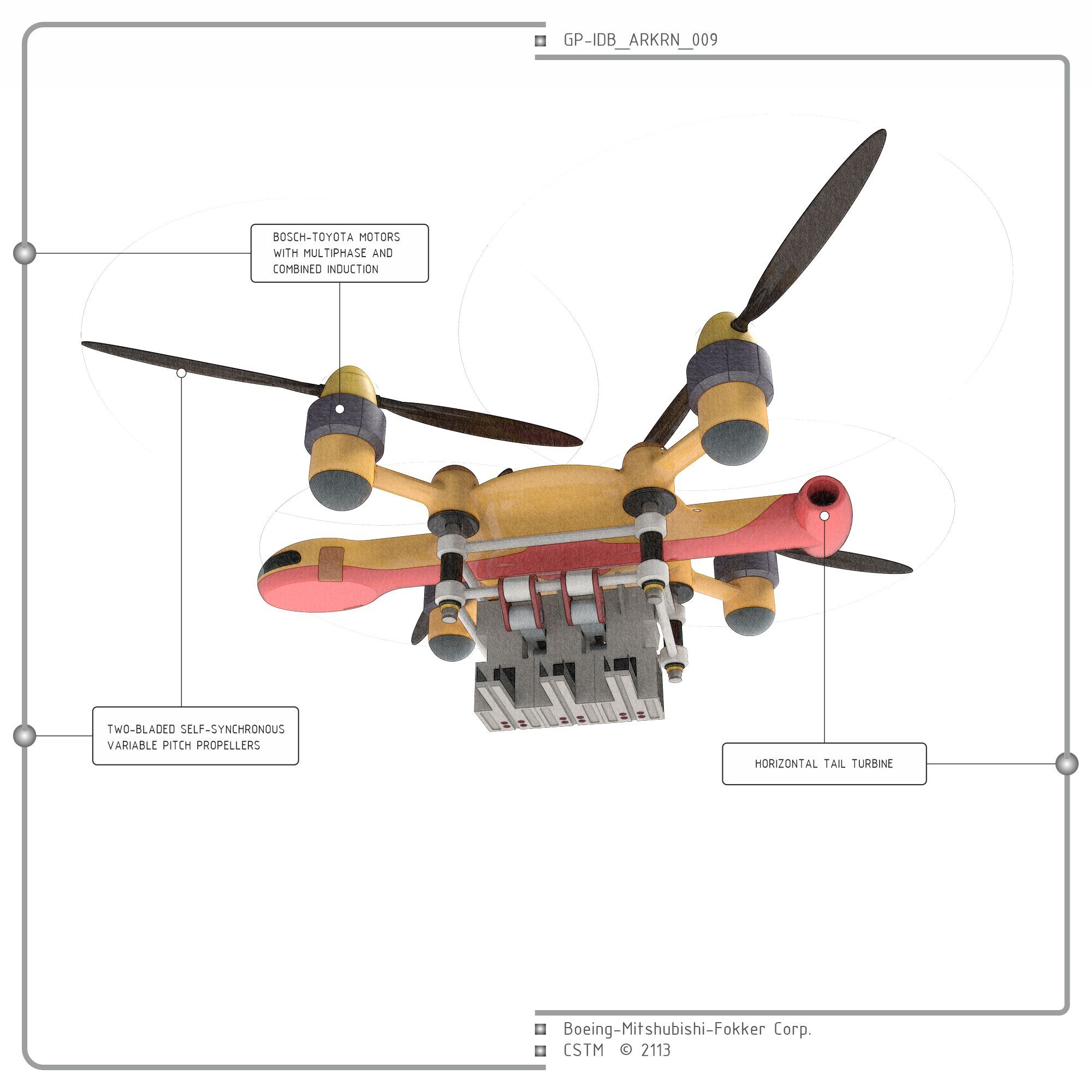
The concept of urban mass air transport connecting the main metro stations of the major cities became feasible in 2094 with the inauguration of the Berlin AeroBus line between AlexanderPlatz and the outlying MerkelPlatz. The pilot test made it possible to measure the ecological impact of the huge combined induction turbines needed to lift 300 passengers in a 15×15-metre square cabin. The huge drone, assisted by a pilot on board, required a large pit and new underground facilities to make the concept viable. Its four, closer-than-normal twin-bladed propellers intersect in the centre of the aircraft without colliding with each other, causing additional horizontal airflow as they hit the lenticular part of the fuselage. This results in greater flight stability, which is beneficial for standing passengers, but very dangerous for boarding and disembarking. The double-pit solution, isolating the passenger cabin from the drone, which does not stop its propellers during passenger changes, proved to be the most effective and the one adopted at the other stations.
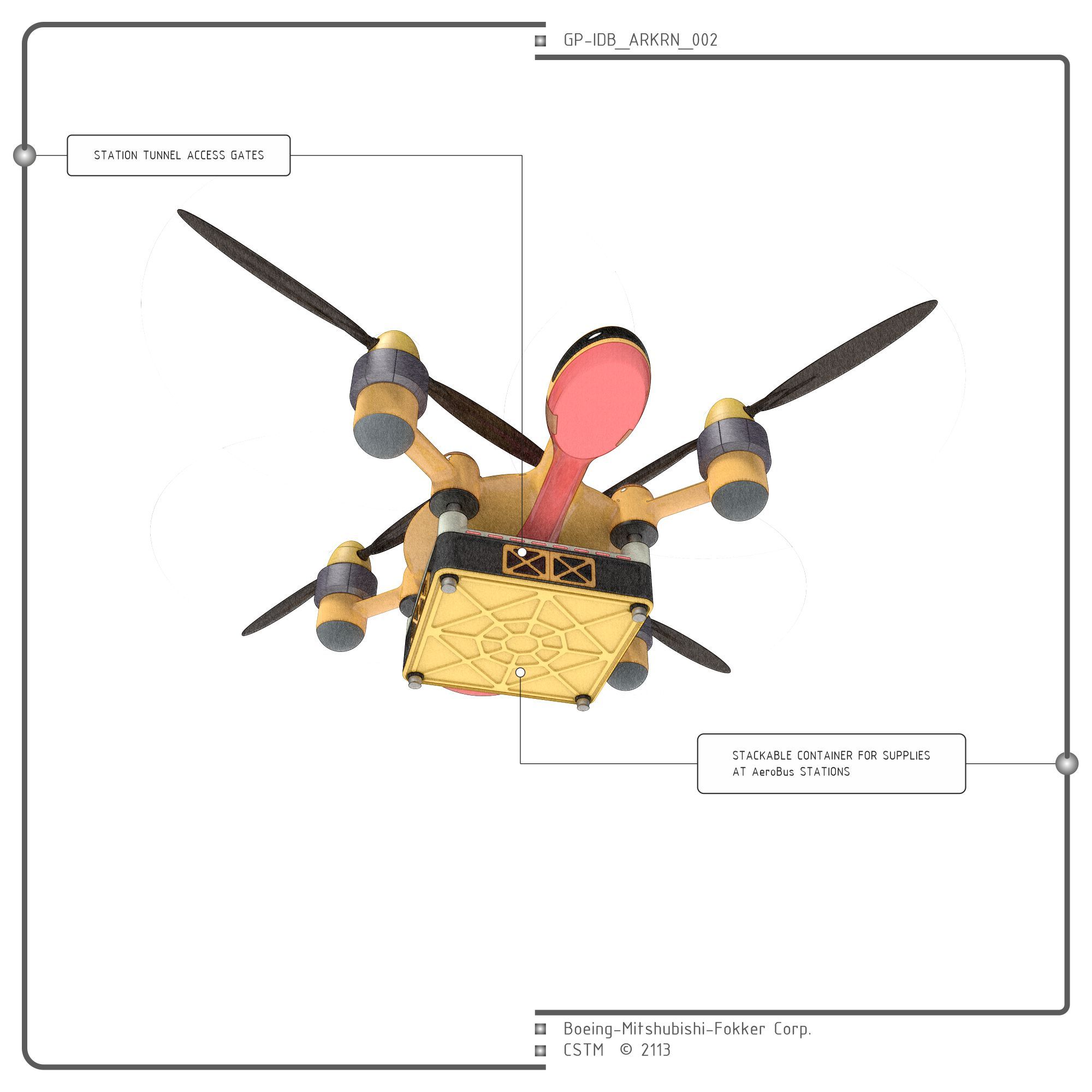
Once the mass production of this type of drone had been activated, the company that won the competition, the Boeing-Mitsubishi-Fokker consortium, licensee of the UN patent, proposed alternative uses to metropolitan passenger transport. Their powerful rotors, consuming paraffin and electric power in hybrid mode, far outperformed old-fashioned cargo helicopters in eco-energy ratio. They proposed different types of logistical transport, all of which were accepted by the Confederation of Metropolitan Transport.
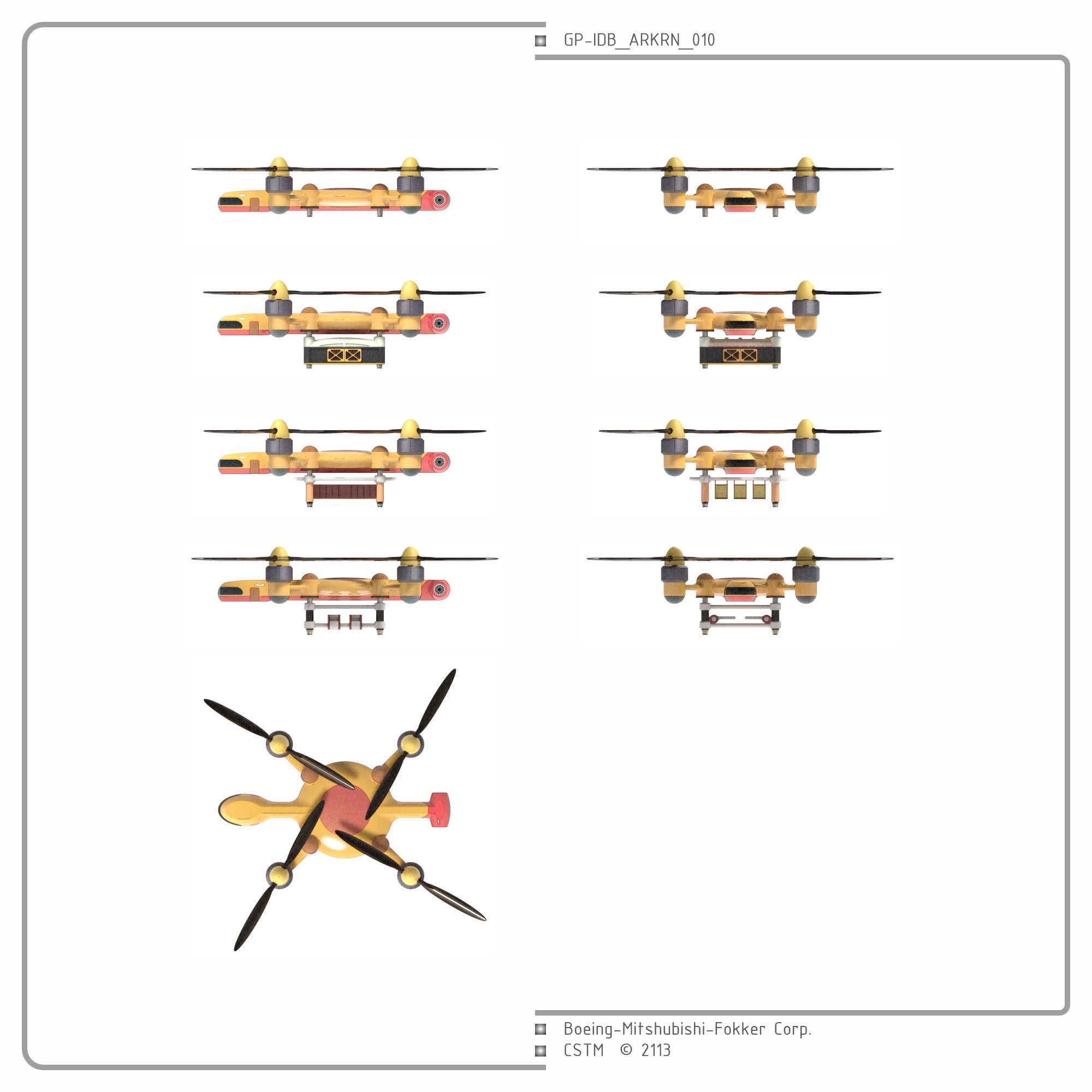
Here are the 3 most commonly used configurations today:
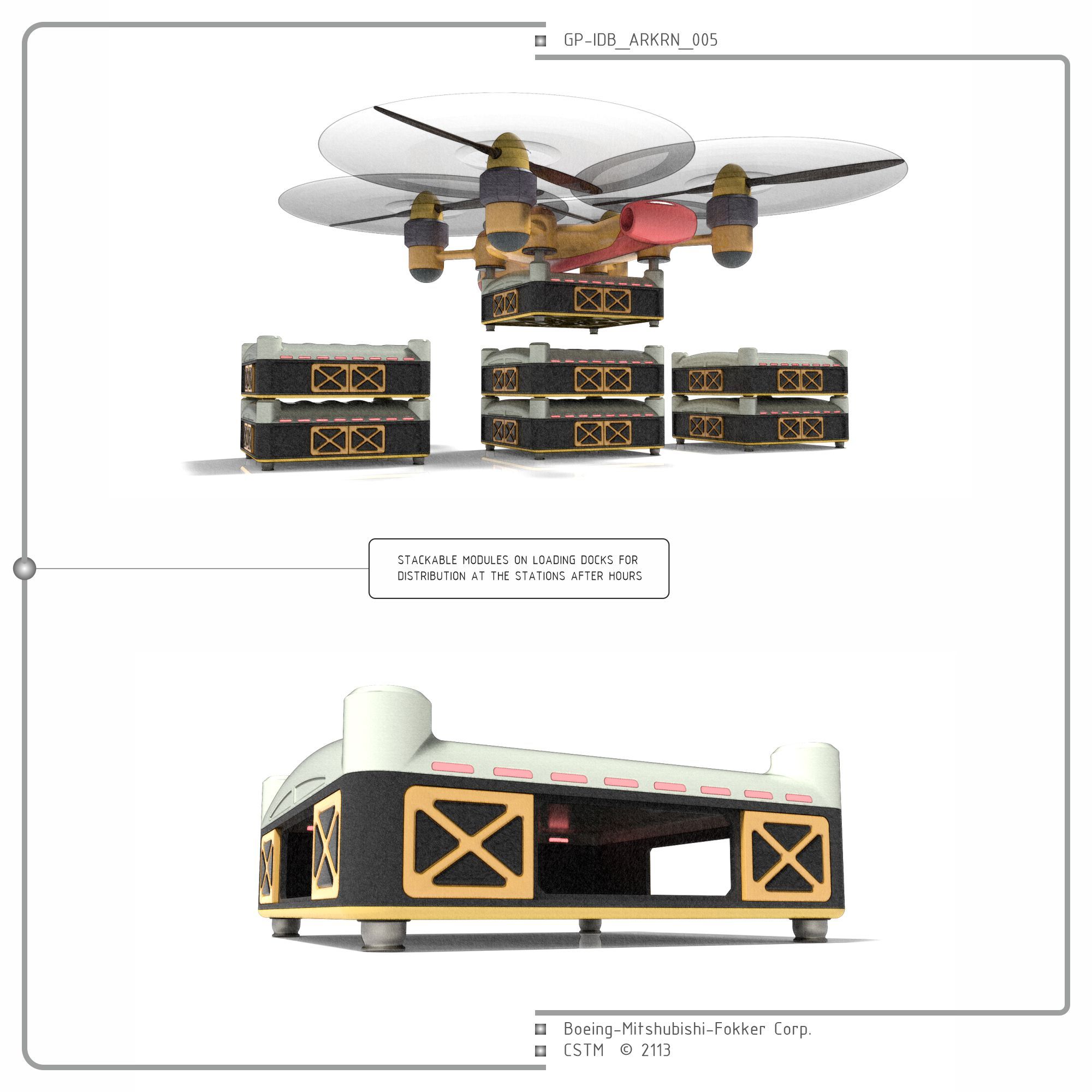
– AeroBus container.
Designed for the logistics of supplying commercial premises in underground metro networks. It is installed when the station closes and is removed half an hour before opening to the public. The palletising robots take care of delivery through the tunnels, even using special metro lines to access intermediate stations without AeroBus.
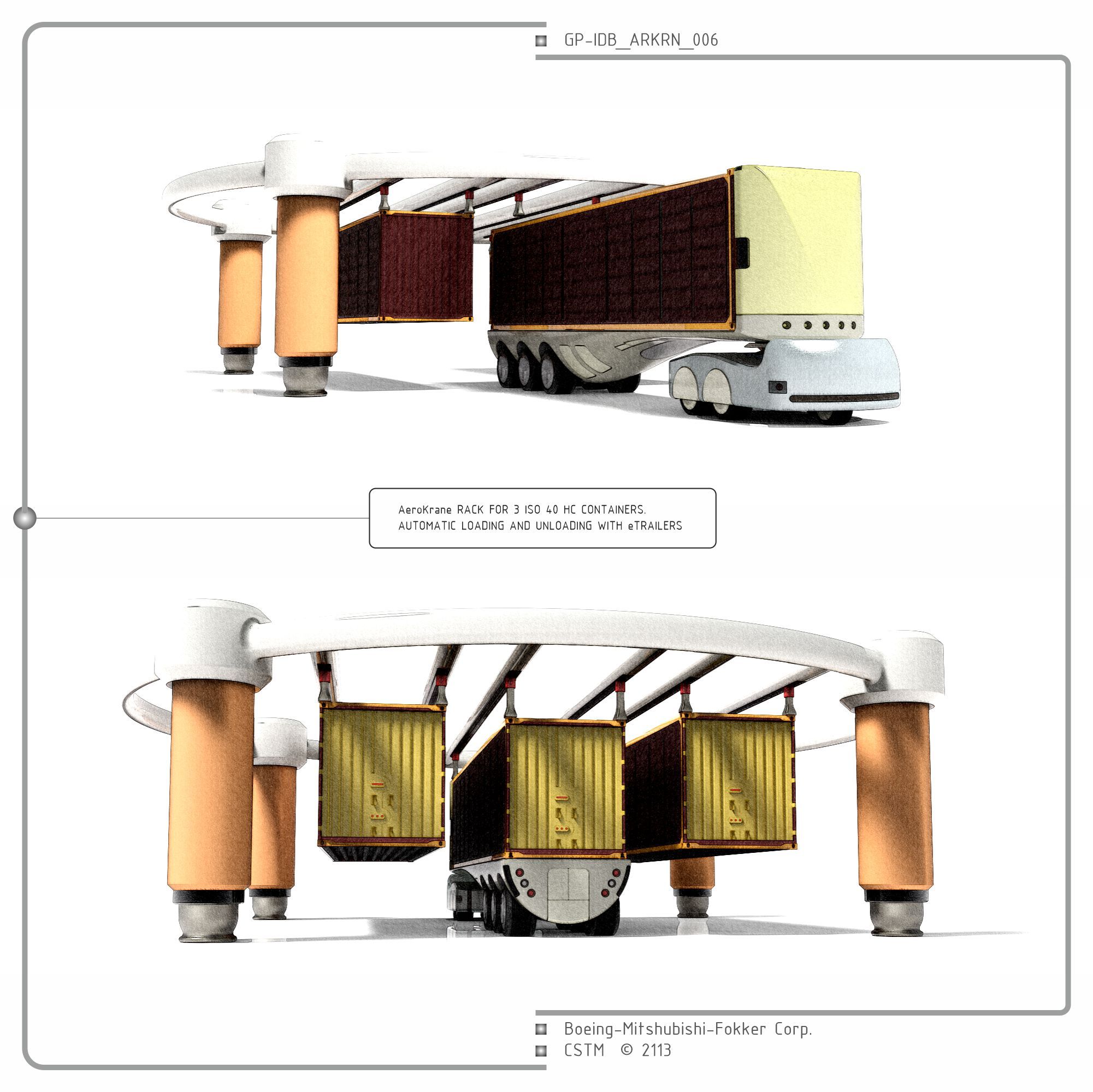
-Container rack.
With capacity for three 40-foot High Cube units. Used for special transports to areas that are difficult to access or affected by climatic catastrophes.
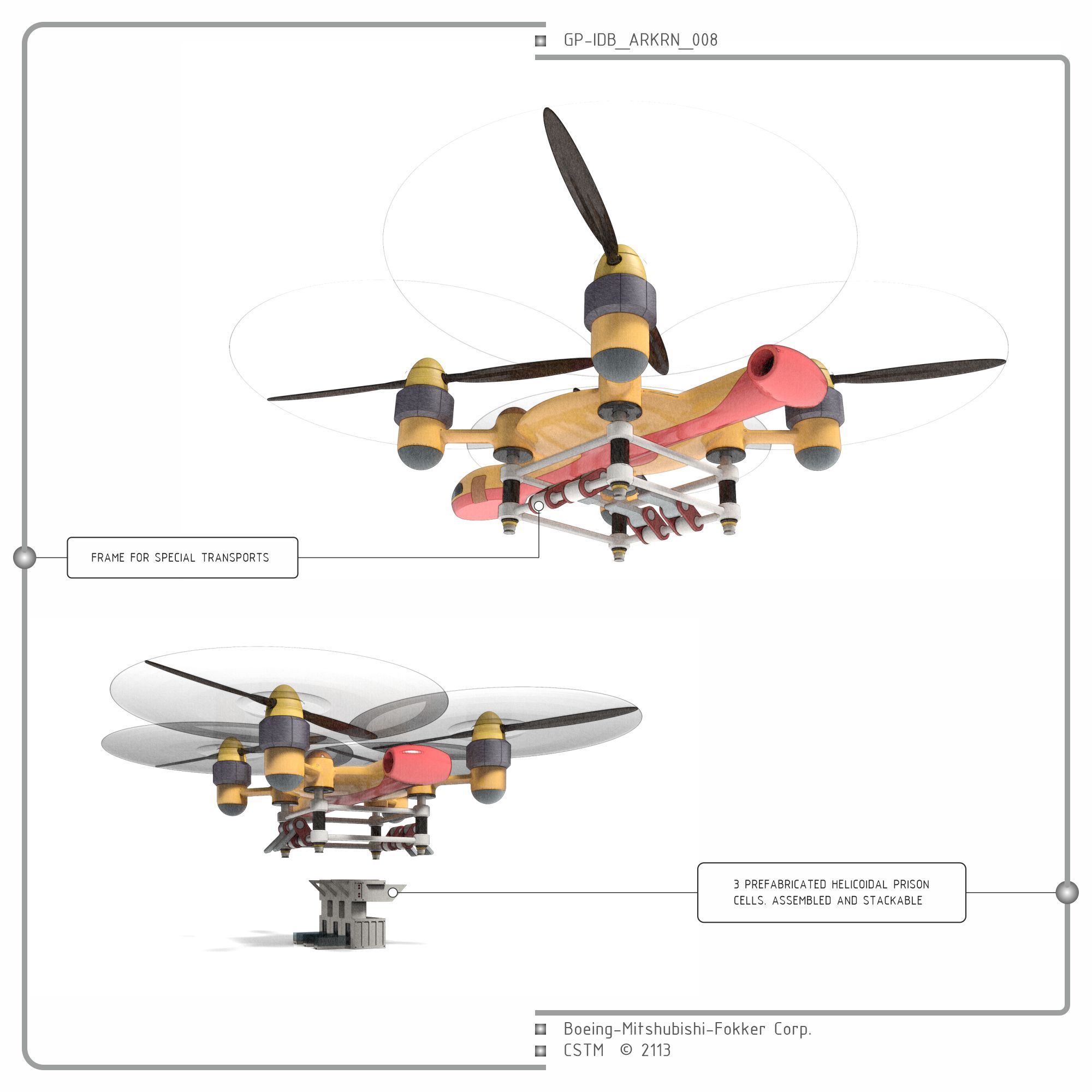
-Rack for prefabricated architecture.
Although HelioTrans airships have been used for this type of work since the late 2080s, the AeroKrane is the only vehicle approved for transporting the cells of the new helicoidal prisons. As these are TripleZero installations, their use, routes and destinations are never disclosed.
Characteristics
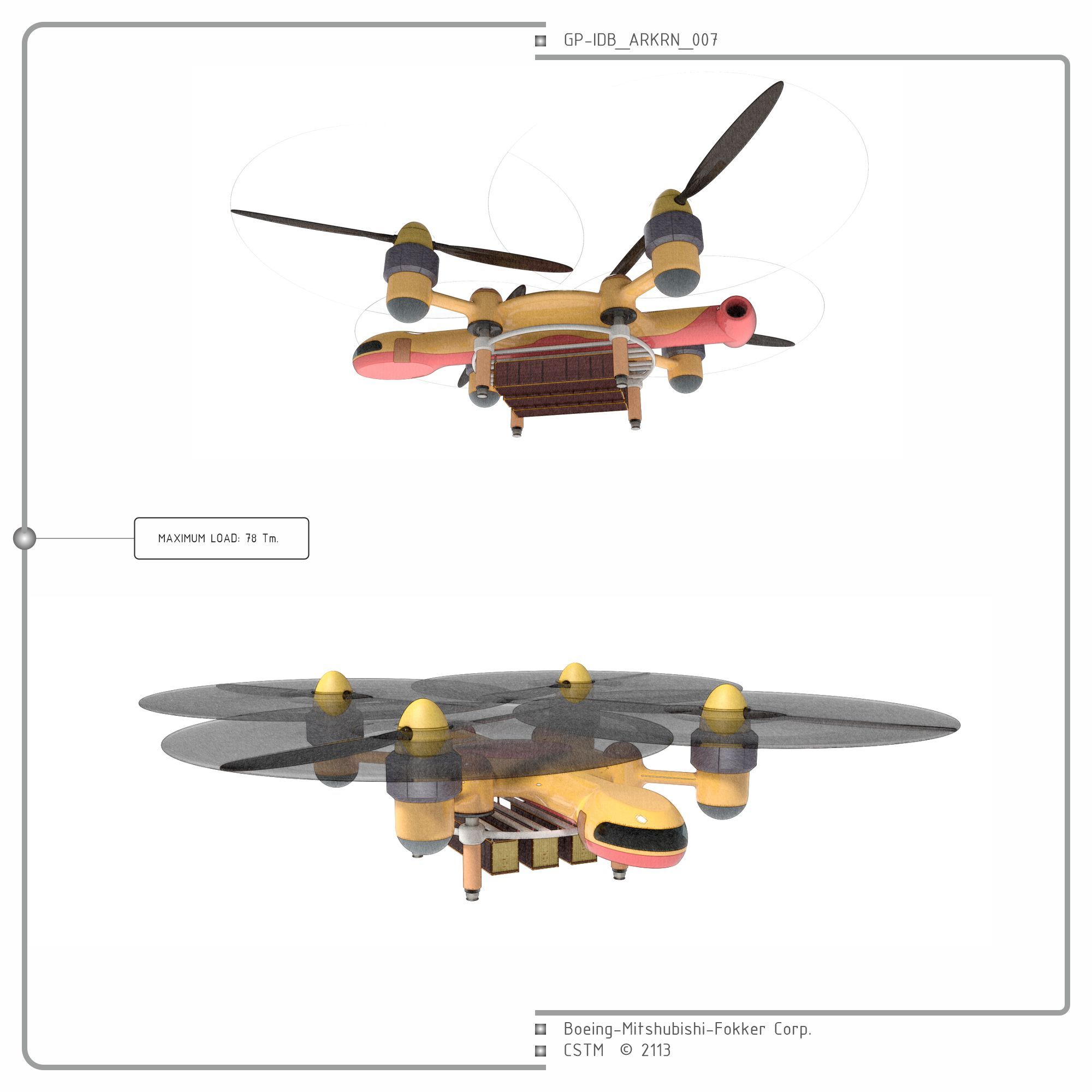
CAPACITY: 78 Tm / 1 AeroBus Container / 3 ISO- 40 HC / Special Containers
AUTONOMY: 780 km at 290 km/h
FUEL: Kerosene 57% – SocioSystemic Electricity Grid 43%.
ECO-ENERGY RATIO: 0,783
DIMENSIONS:
Quadcopter: 56.815×56.815×11.000 mm
Cabin: 15.000×15.000×5.220 mm
Ø TURBINES: 32.500 mm