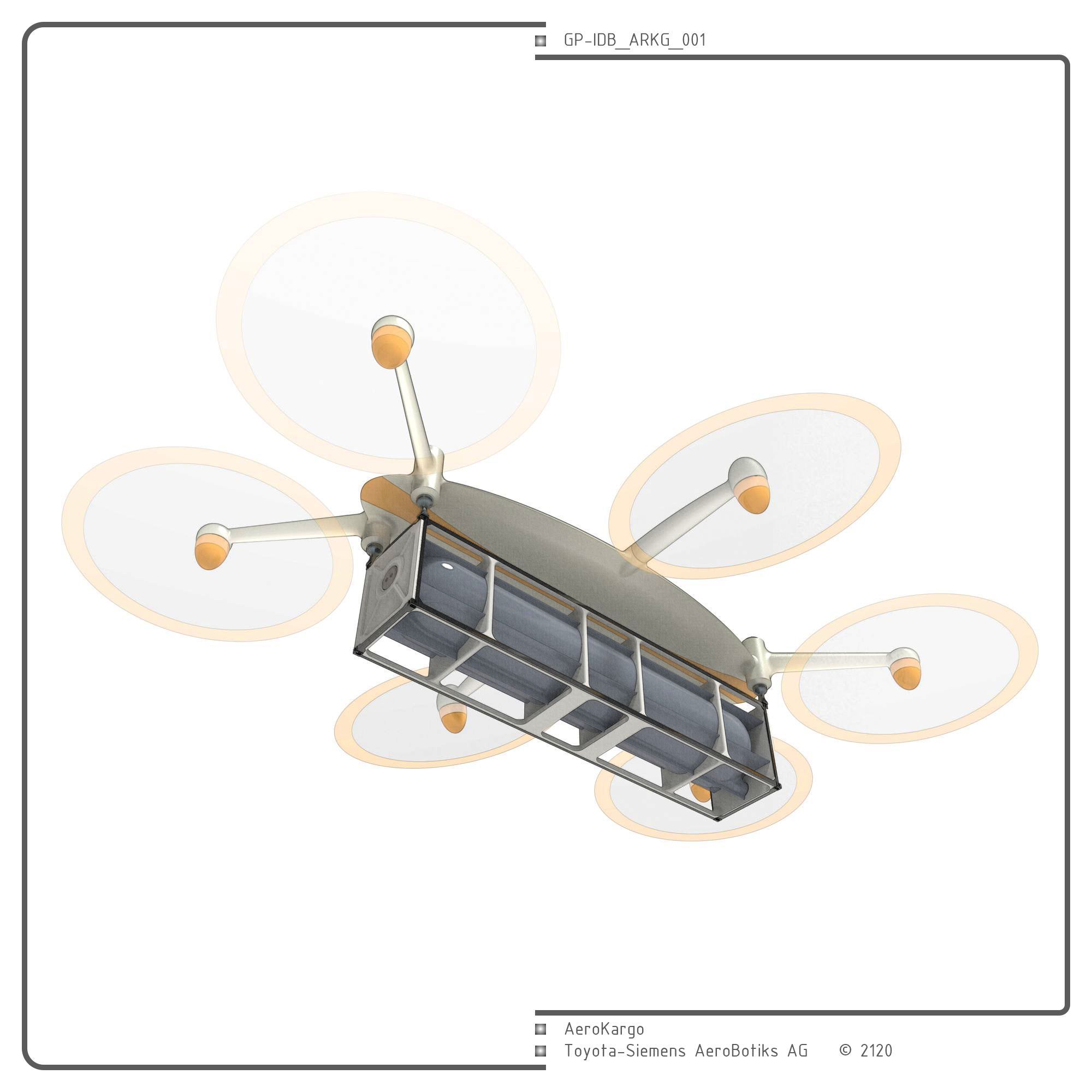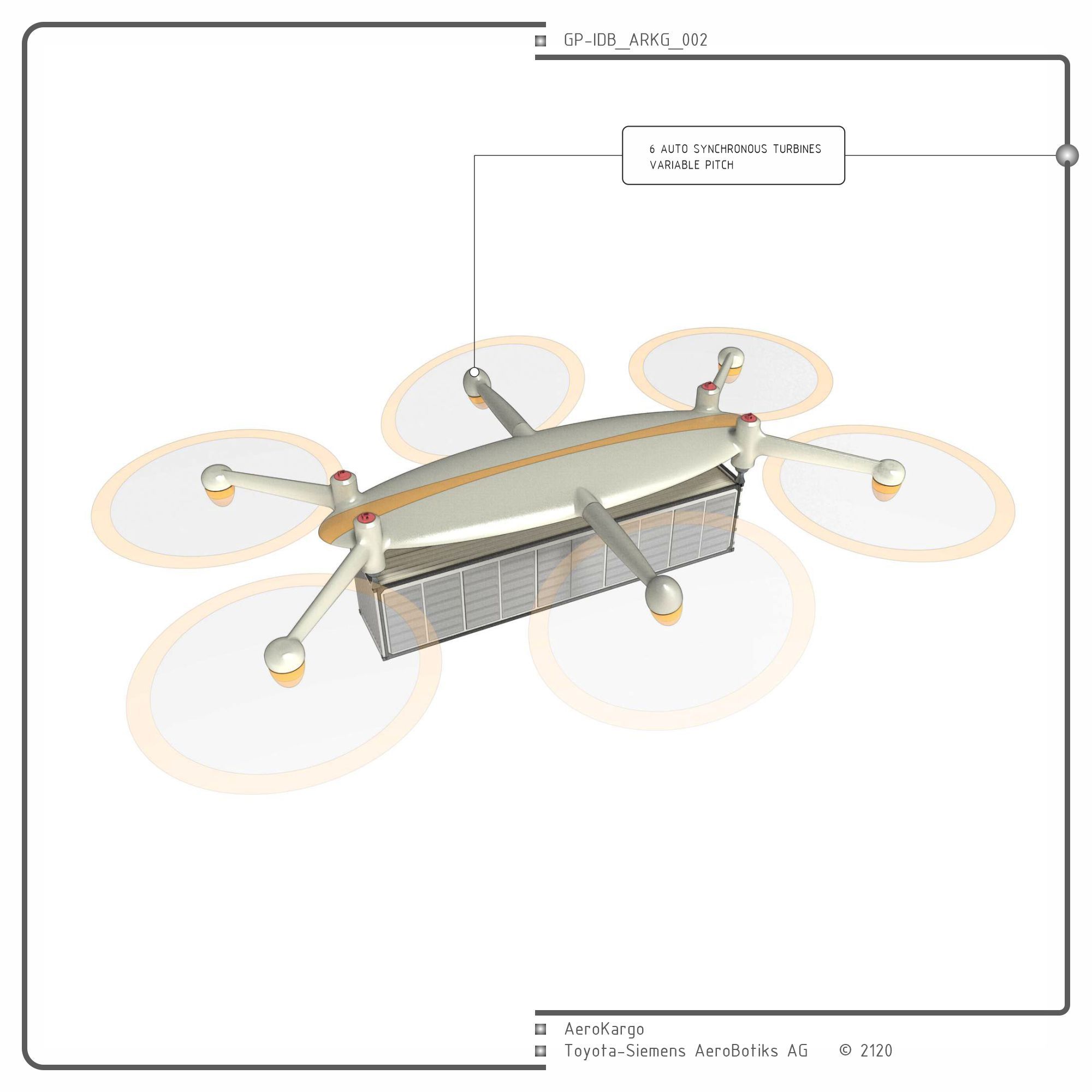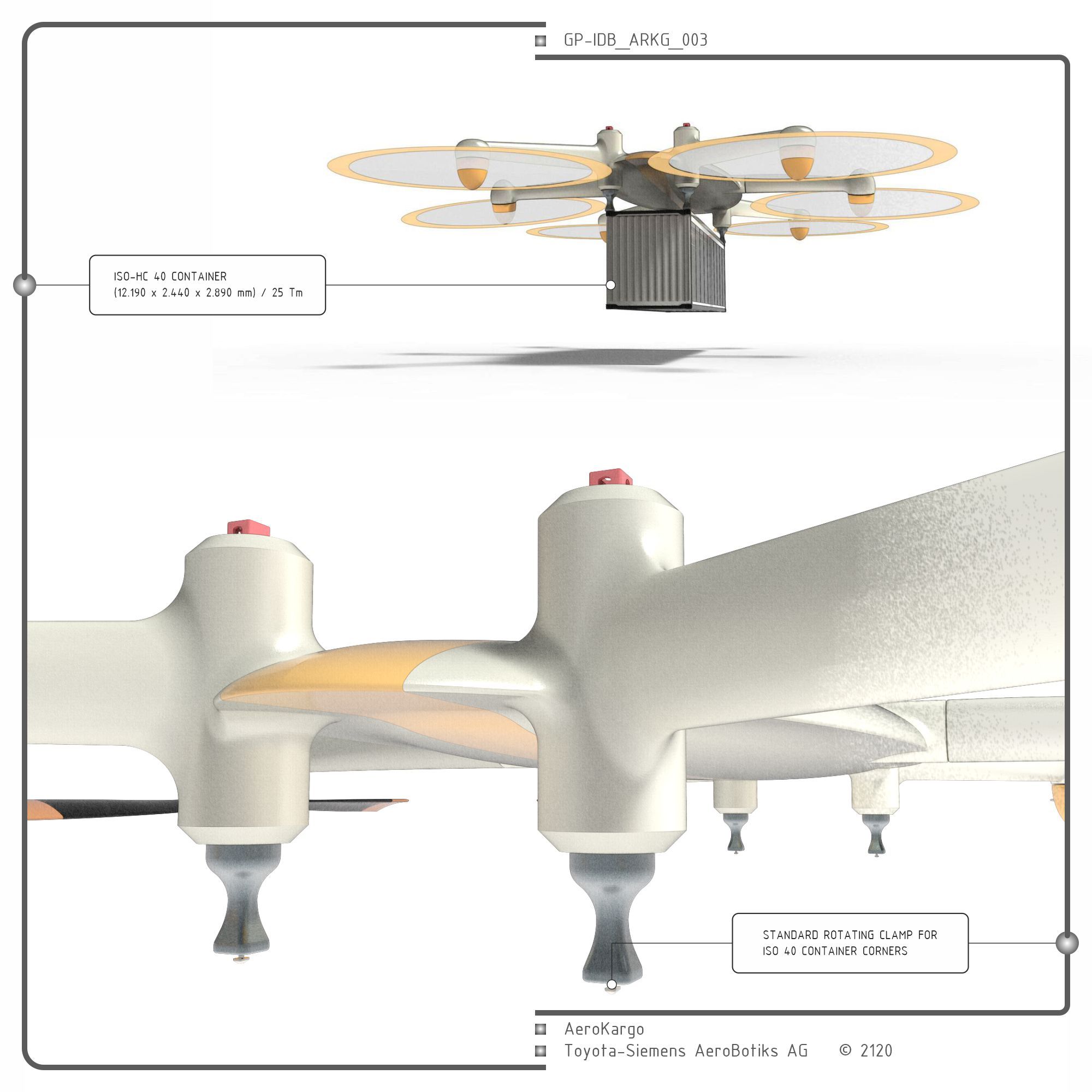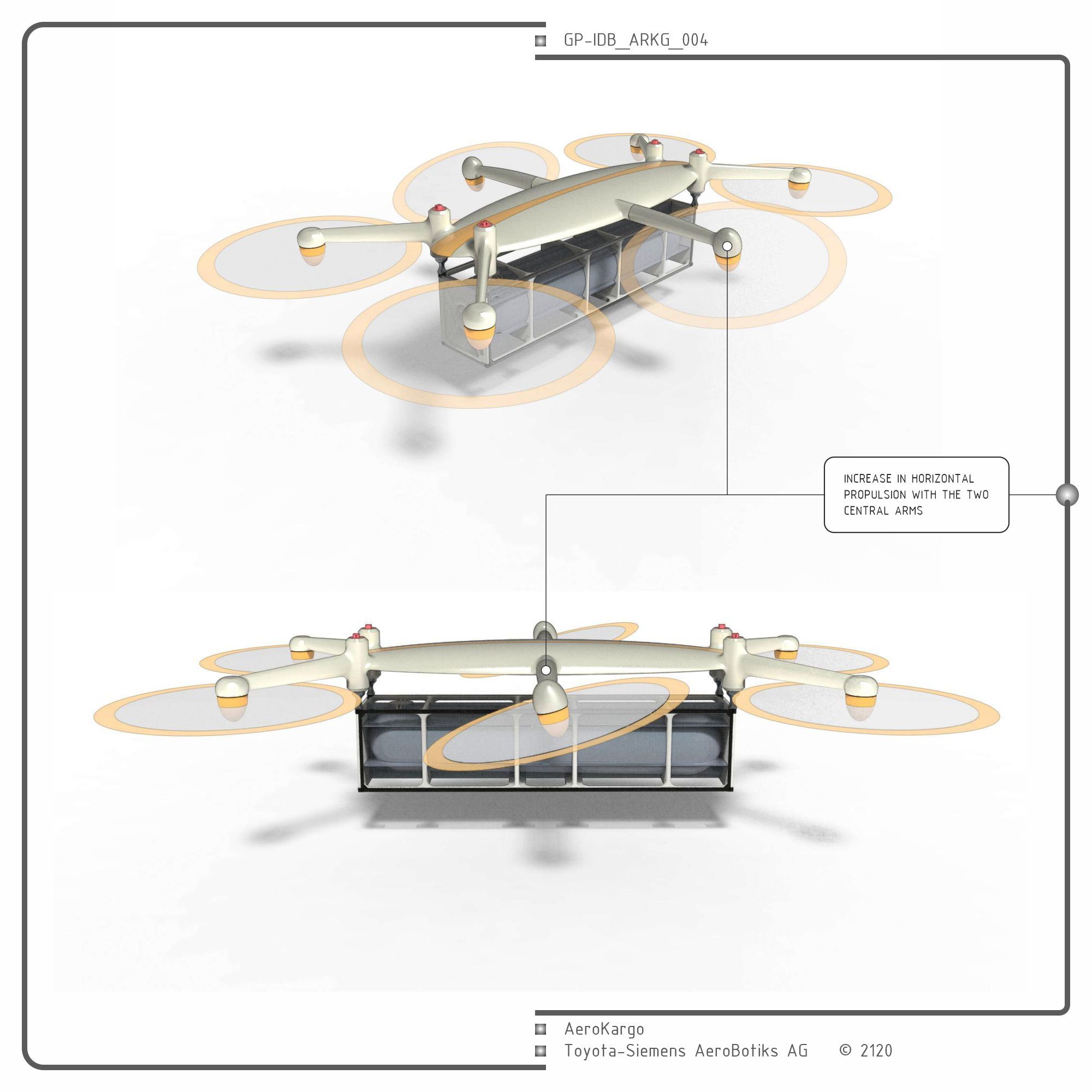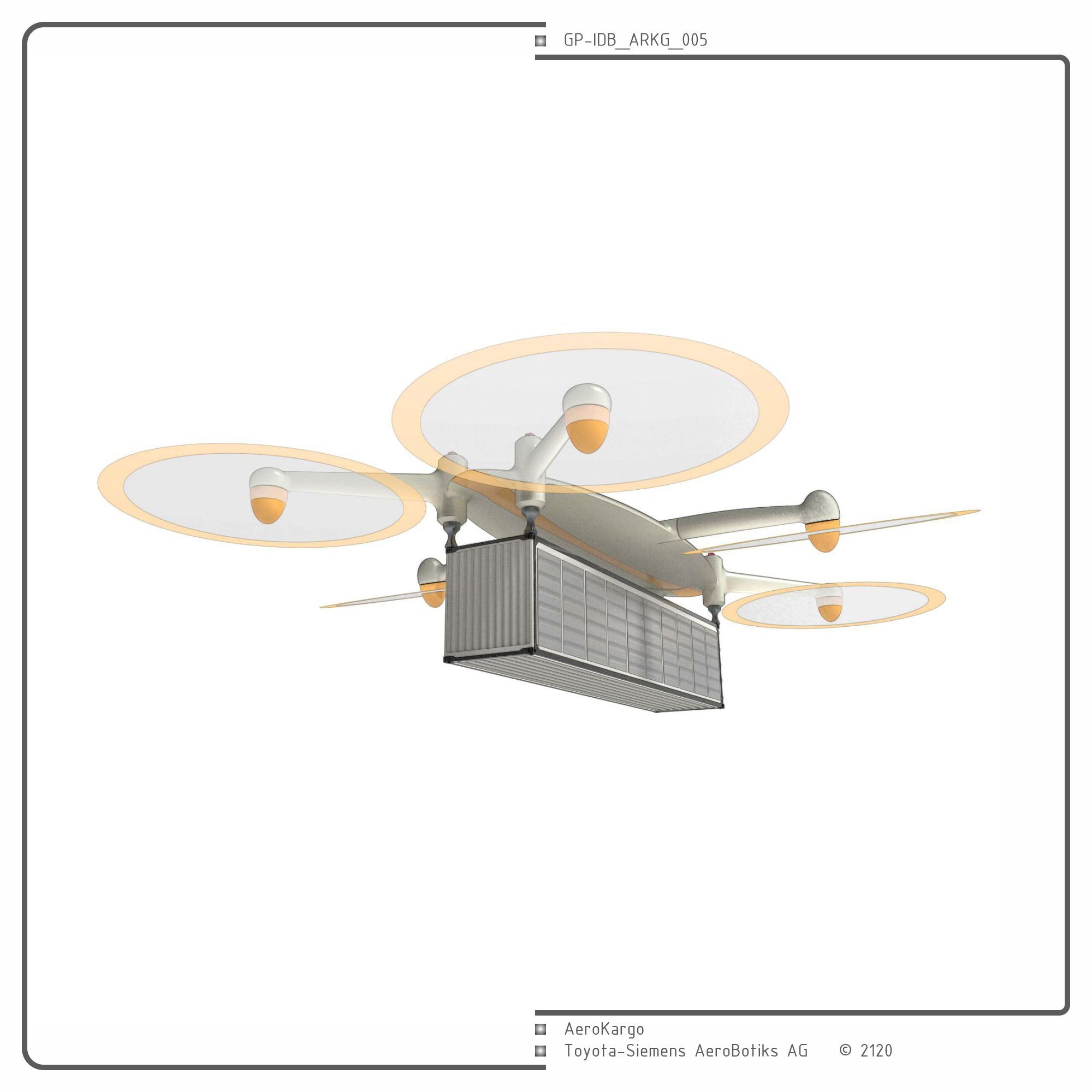
Container Air Transport Drone
Property
Copyright: Toyota-Siemens AeroBotiks AG / © 27/11/2120
History
Aerial container transport with autonomous drones, one of the great pipe dreams of the last century, has never been a viable logistics solution, neither from an economic nor an ecological point of view, until very recently. Excessive consumption, compared to conventional overland transport, has always kept it in the realm of speculation and science fiction. When it has been necessary to transport a container to inaccessible areas, the solution has always been a conventional helicopter with an internal combustion engine.
Advances in new ultra-light materials and MetaWave energy transmission, thanks to the newly completed SkyKover satellite array, have finally made this possible. In early 2118, the United Nations launched a restricted competition to streamline certain types of container transport, primarily for assistance in climate disaster areas. It involved the redesign of existing containers with new, lighter polymeric materials and the design of a drone capable of lifting at least 20 tonnes at an altitude of 50 metres, with a minimum range of 200 km.
The winning design came from Toyota and Siemens, with the lightest and strongest model. The first tests were conducted a few days after the inauguration of the SkyKover Global Network, allowing the new drone to be powered 43% wirelessly. The rest of the power is supplied by slim Li-An batteries integrated into a highly aerodynamic fuselage.
As early as January 2120, these new “insects of the air” can already be seen transporting containers or prefabricated living quarters to flooded or earthquake-affected areas. The new violent eruption of Vesuvius was the most recent example, modifying the geometry of its cone and partially burying the town of Ottaviano. The new AeroKargo enabled the supply of food and shelter to the displaced people in the area, which was completely isolated by the volcanic ash during the first days of the catastrophe.
Characteristics
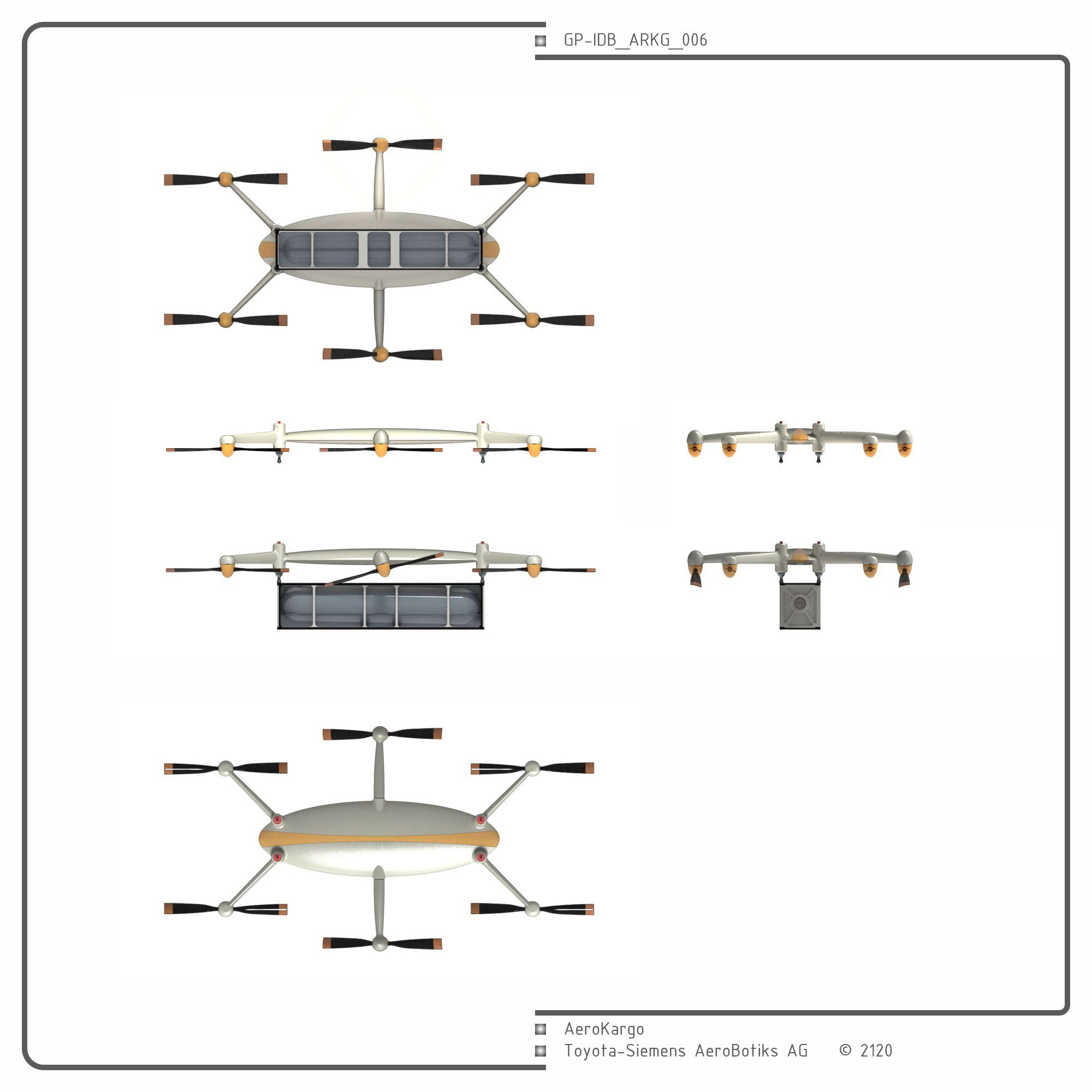
CAPACITY : 1 ISO-HC 40 Container (12.190 x 2.440 x 2.890 mm) / 25 Tm
AUTONOMY : 580 km at 90 km/h
ENERGY SOURCE: Accumulators / MetaWave Dissipation Network
ECO-ENERGY RATIO: 0.824
FUSELAGE DIMENSIONS: 18.785 x 13.130 x 2.460 mm
Ø TURBINES: 7.180 mm